
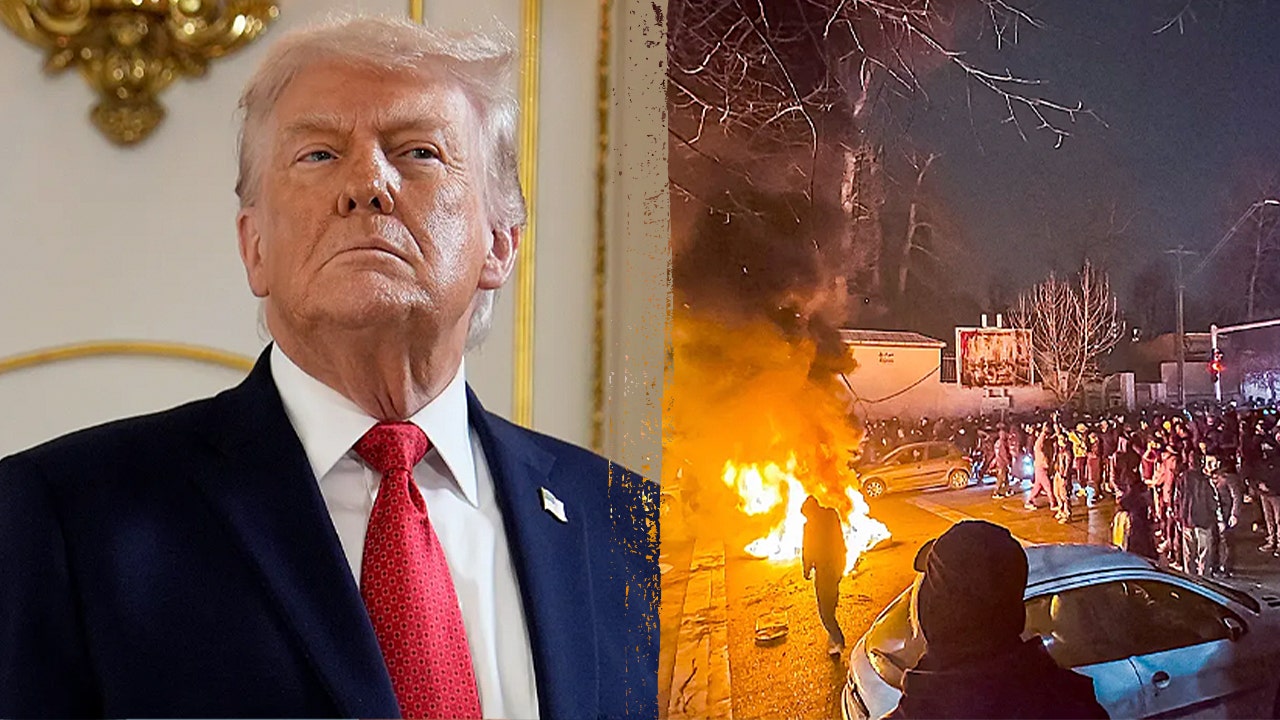
Donald Trump and Iran: Power and Bad Bluffs
To wield power and control, it is often enough to claim them where they do not actually exist. It becomes a problem once the truth comes out.
Part of exercising power is maximizing the effectiveness of one’s own instruments of power. To intimidate thousands of people of color or those with an alternative appearance into avoiding certain areas of cities and towns, the neo-Nazi gangs of the 1990s did not need hundreds of thugs. It was enough to create the impression that punks or people of color were better off not showing up at Berlin’s Lichtenberg train station. A handful of neo-Nazi thugs were sufficient to control a major city hub.
Iran is doing much the same with the Strait of Hormuz. Would the militarily weakened Iranian state really have the capacity to attack every single ship passing through the strait? No. But for shippers, the uncertainty alone is enough to keep ships from departing at all.
A related tactic is to claim — or simply assert — power even where none actually exists. As long as no one sees through the bluff, the strategy can succeed. But anyone who tries that cannot afford to get caught too often.
Trump Spouts Nonsense and the Whole World Watches
But that appears to be exactly what happened to President Donald Trump in his handling of Iran. From the start of the war on Feb. 28, the U.S. president acted as though America’s military superiority could achieve virtually any desired outcome — from containing the regime to toppling it and ushering in a transition to democracy.
Two months later, the U.S. military has depleted its stockpiles of hugely expensive weapons, while the Iranian regime remains largely secure in power. Trump oscillates between declaring that a final agreement is imminent and threatening to bomb Iran back to the Stone Age. At this point, everyone around the whole world can see that both claims are simply ridiculous.
Even the U.S. military says it will take at least 10 years to replenish its ammunition stockpiles. But Trump is claiming in front of TV cameras that America now has twice as much ammunition as it did at the start of the war. And that is exactly the moment when the bluff can no longer be sustained. The confrontation over the Strait of Hormuz exposes the central mechanism behind Trump's foreign policy. The fact that it is the murderous regime in Tehran, of all governments, that is managing to do this amounts to a self-inflicted catastrophe.
Part of exercising power is maximizing the effectiveness of one’s own instruments of power. To intimidate thousands of people of color or those with an alternative appearance into avoiding certain areas of cities and towns, the neo-Nazi gangs of the 1990s did not need hundreds of thugs. It was enough to create the impression that punks or people of color were better off not showing up at Berlin’s Lichtenberg train station. A handful of neo-Nazi thugs were sufficient to control a major city hub.
Iran is doing much the same with the Strait of Hormuz. Would the militarily weakened Iranian state really have the capacity to attack every single ship passing through the strait? No. But for shippers, the uncertainty alone is enough to keep ships from departing at all.
A related tactic is to claim — or simply assert — power even where none actually exists. As long as no one sees through the bluff, the strategy can succeed. But anyone who tries that cannot afford to get caught too often.
Trump Spouts Nonsense and the Whole World Watches
But that appears to be exactly what happened to President Donald Trump in his handling of Iran. From the start of the war on Feb. 28, the U.S. president acted as though America’s military superiority could achieve virtually any desired outcome — from containing the regime to toppling it and ushering in a transition to democracy.
Two months later, the U.S. military has depleted its stockpiles of hugely expensive weapons, while the Iranian regime remains largely secure in power. Trump oscillates between declaring that a final agreement is imminent and threatening to bomb Iran back to the Stone Age. At this point, everyone around the whole world can see that both claims are simply ridiculous.
Even the U.S. military says it will take at least 10 years to replenish its ammunition stockpiles. But Trump is claiming in front of TV cameras that America now has twice as much ammunition as it did at the start of the war. And that is exactly the moment when the bluff can no longer be sustained. The confrontation over the Strait of Hormuz exposes the central mechanism behind Trump's foreign policy. The fact that it is the murderous regime in Tehran, of all governments, that is managing to do this amounts to a self-inflicted catastrophe.
Previous article
Next article