
Data Center Opponents Branded as Conspirators
Since January, protests in 42 U.S. states have blocked the construction of more than 100 data centers, which are even more unpopular than nuclear power plants because of their enormous energy and water consumption.
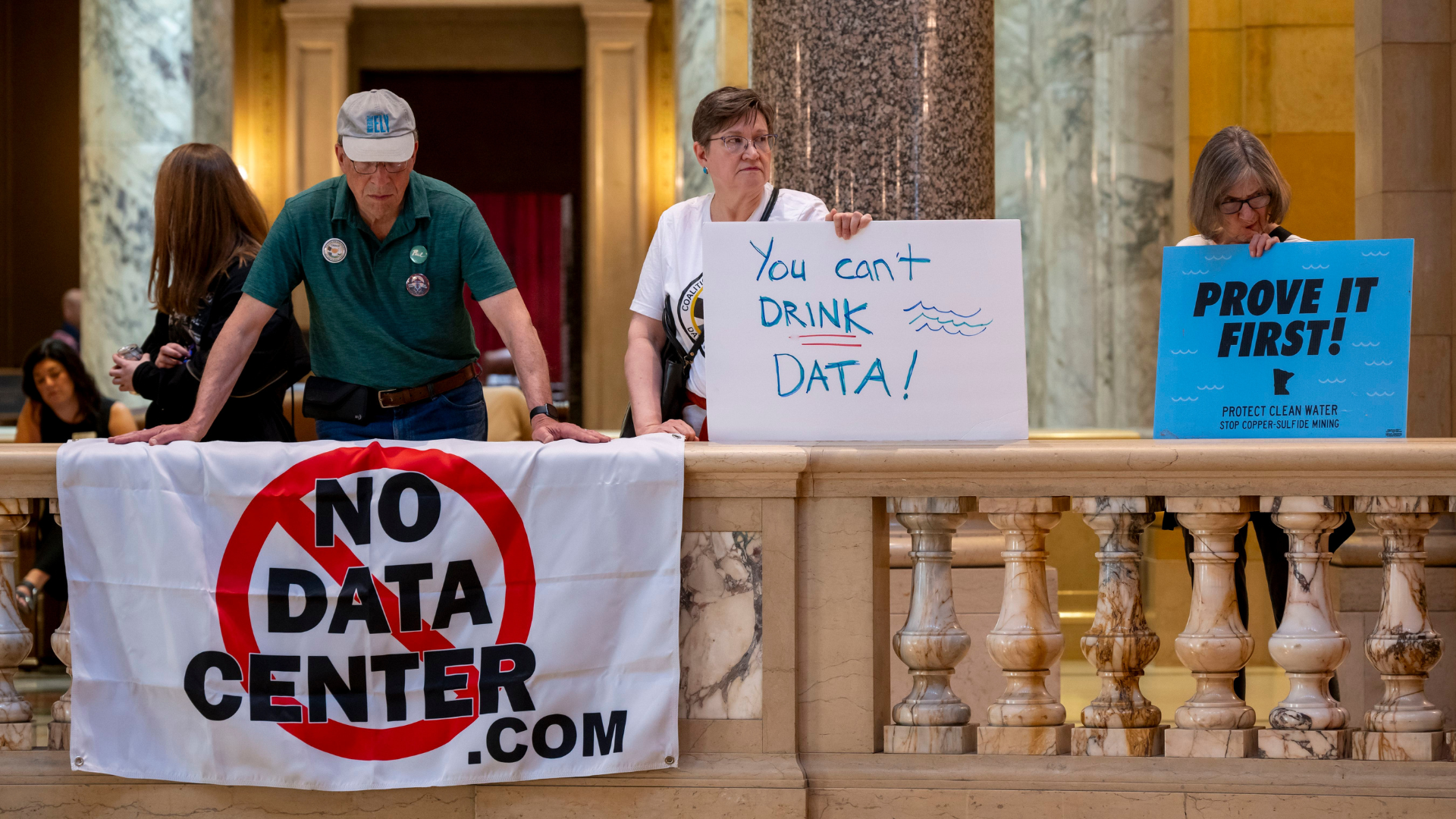
While Donald Trump receives Xi Jinping with full honors, Americans protesting the construction of massive data centers risk criminal prosecution on accusations that they are serving the interests of a foreign power — namely, China. Along with inflation and the doubling of fuel prices, data centers have become a pain in the neck for Republicans ahead of the midterms. Since January, protests in 42 U.S. states have blocked the construction of more than 100 data centers, which are even more unpopular than nuclear power plants because of their enormous energy and water consumption.
Alarmed by the scale of the protests, Republicans have urged Trump to back a halt to construction. But the president, determined to support AI’s unrestricted growth — which he considers the real engine of the U.S. economy — is pushing ahead. And that is not all: He is striking back, accusing opponents of AI of being traitors working with foreign powers. On Sept. 14, he wrote, “There is a SICK conspiracy going on against AI and Data Centers, and the only one that is happy about it is China.” He then warned, “Conspiracy Theorists, Treasonists, Traitors, and Leakers, BEWARE!”
Then, on Sept. 19, came the threat: “Existing criminal and civil law can handle bad actors.” Trump justified the threat by citing national security concerns — an emergency he frequently invokes, whether to impose tariffs or remove obstacles to the construction of the White House ballroom or his triumphal arch. The Justice Department also notes that, under the law, anyone who supports causes advocated by foreign powers must register with the authorities. Is Beijing really fanning the flames? Probably. Russia, China and other dictatorships invest heavily in channels of interference and propaganda aimed at weakening Western democracies by fueling internal conflict. Calls for investigations have come from Congress, so far without results.
But even if it receives outside support, the opposition of many citizens who fear the depletion of their water and energy resources is a spontaneous phenomenon that reflects genuine discontent. Data centers are opposed mainly by conservatives: 63% of Republicans, according to polls. Trump is accustomed to suppressing dissent by weaponizing fear. This time, such a strategy could prove costly for many Republican candidates.
While Donald Trump receives Xi Jinping with full honors, Americans protesting the construction of massive data centers risk criminal prosecution on accusations that they are serving the interests of a foreign power — namely, China. Along with inflation and the doubling of fuel prices, data centers have become a pain in the neck for Republicans ahead of the midterms. Since January, protests in 42 U.S. states have blocked the construction of more than 100 data centers, which are even more unpopular than nuclear power plants because of their enormous energy and water consumption.
Alarmed by the scale of the protests, Republicans have urged Trump to back a halt to construction. But the president, determined to support AI’s unrestricted growth — which he considers the real engine of the U.S. economy — is pushing ahead. And that is not all: He is striking back, accusing opponents of AI of being traitors working with foreign powers. On Sept. 14, he wrote, “There is a SICK conspiracy going on against AI and Data Centers, and the only one that is happy about it is China.” He then warned, “Conspiracy Theorists, Treasonists, Traitors, and Leakers, BEWARE!”
Then, on Sept. 19, came the threat: “Existing criminal and civil law can handle bad actors.” Trump justified the threat by citing national security concerns — an emergency he frequently invokes, whether to impose tariffs or remove obstacles to the construction of the White House ballroom or his triumphal arch. The Justice Department also notes that, under the law, anyone who supports causes advocated by foreign powers must register with the authorities. Is Beijing really fanning the flames? Probably. Russia, China and other dictatorships invest heavily in channels of interference and propaganda aimed at weakening Western democracies by fueling internal conflict. Calls for investigations have come from Congress, so far without results.
But even if it receives outside support, the opposition of many citizens who fear the depletion of their water and energy resources is a spontaneous phenomenon that reflects genuine discontent. Data centers are opposed mainly by conservatives: 63% of Republicans, according to polls. Trump is accustomed to suppressing dissent by weaponizing fear. This time, such a strategy could prove costly for many Republican candidates.
Previous article
