
So That We Stop Underestimating Trump
Published in ALArabi AlJadeed
(United Kingdom) on 16 September 2026
by Arnest Khory (link to
original)
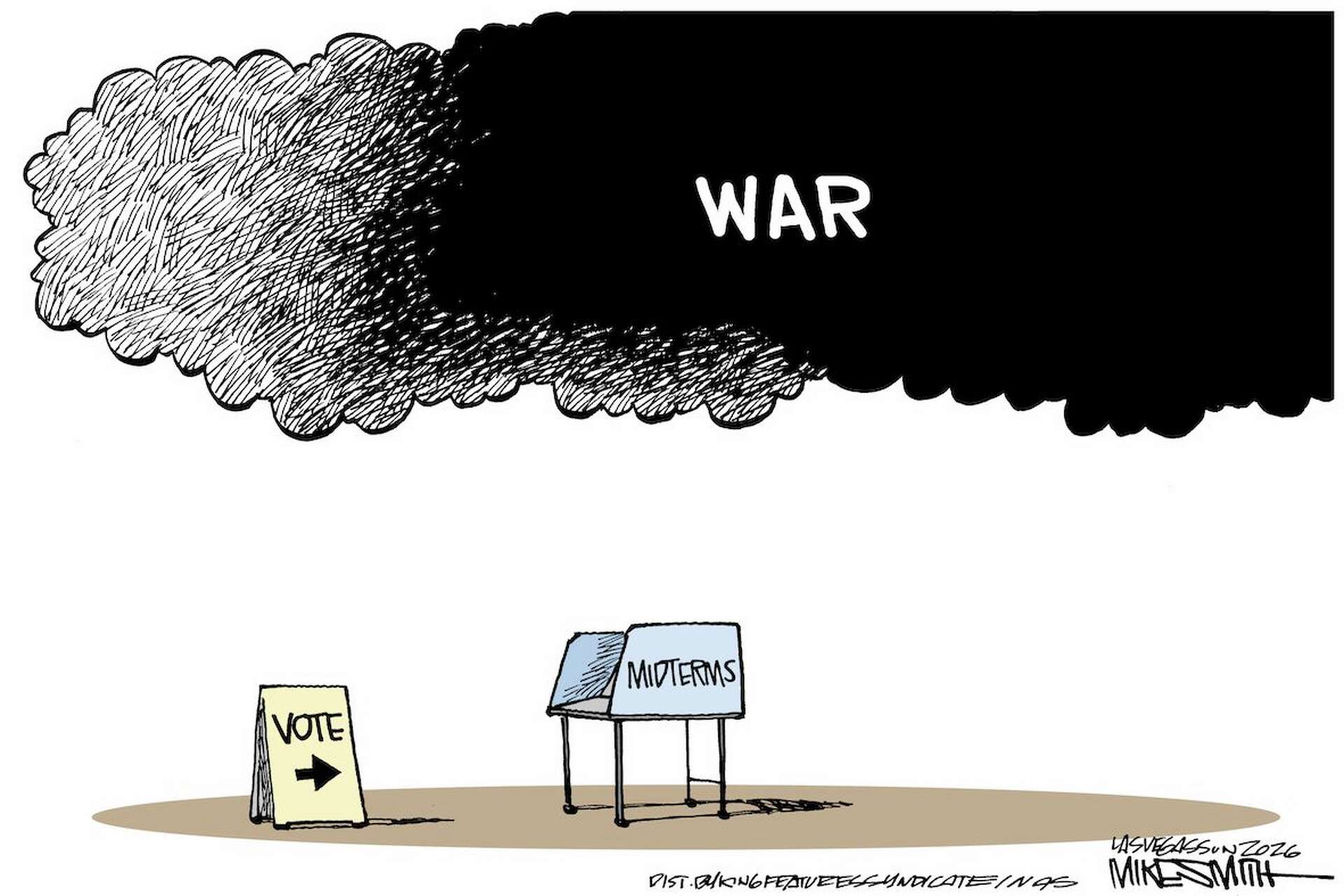
In the attempt to decode Donald Trump’s political code and his complex psychological map — in the hope of predicting his decisions — one often falls into the trap that only deepens the ambiguity surrounding our wretched Trumpian era. The error in question, in this brief reflection, is resorting to classical analytical tools to assess the decisions of an administration and a man in the White House who govern the world in the name of uncertainty, chaos, improvisation and populism — everything that is the opposite of the expected, of analysis, and classical cost-benefit calculations. Since Trump launched his war on Iran six and a half months ago, a wide spectrum of analysts and journalists have been preoccupied with a sideshow: linking the fate of the war to the midterm elections scheduled for Nov. 3 for seats in both houses of Congress in the middle of the president’s second term.
The logic of political science and international relations holds that in democratic countries, major foreign policy decisions are tied to domestic factors reflected in the ballot box, opinion polls and partisan interests. What many miss in the American context, specifically the Trump administration, however, is that the 47th U.S. president, especially in his second term, shatters logic and classic analytical tools with every decision. He has gained near-absolute control over the American executive branch and discovered that the U.S. constitutional system becomes monarchical when a populist, anti-democratic and anti-establishment figure like Donald Trump reaches the presidency.
Consequently, the man rarely weighs domestic gains and losses before making foreign policy decisions. On that basis, Trump declared months ago, after launching the war on Iran, that he expected the Republican Party to lose the midterm elections in both the House and Senate regardless of how the war turned out, and that he did not care much about it — just as he was not obsessed with the impact of his war on rising fuel and commodity prices and inflation rates in general for the American taxpayer.
Although we are talking about a serial liar who can fire off a hundred falsehoods in a half-hour speech, in cases like this it is worth believing him, because his behavior confirms his disregard for domestic political and popular pressure, given that he has tightened his grip on the levers of the American executive branch and marginalized whatever he could not control. It is worth noting in this context the number of instances in which Trump has defied Supreme Court rulings on immigration, tariffs, rights and other issues — something unimaginable before the world was afflicted with the nightmare of Trump, a man convicted of 34 felonies and yet still elected president.
The point is that in his war on Iran, the last thing Trump is likely thinking about is a Republican loss in the Nov. 3 elections. Guardian columnist Jonathan Freedland was right when he asked a few days ago whether Trump actually wants the party to lose those elections, or at least whether he is indifferent to the possibility of the party losing its majorities in both houses of Congress. And if that theory is wrong — that is, if Trump truly wants the Republican Party to win — then he is relying on cheating, fraud and overturning the results, not on popular sentiment. He openly said as much during a campaign rally last Friday in Dallas, when he had the crowd repeat after him, in essence: “I don’t care if I’m registered or not. I’m going to try and cheat like hell like they do.”
The Trumpian upheaval has many facets, among them decoupling domestic and foreign policy having evaded any accountability within the halls of American constitutional and judicial institutions. The Republican Party will lose the midterm elections, and the administration’s war, economic and political decisions will face wholesale vetoes in Congress. Trump will nullify their effects with presidential decrees executed by the security, military and intelligence agencies. This is one of the lessons we should have learned by now, late as it is.
The logic of political science and international relations holds that in democratic countries, major foreign policy decisions are tied to domestic factors reflected in the ballot box, opinion polls and partisan interests. What many miss in the American context, specifically the Trump administration, however, is that the 47th U.S. president, especially in his second term, shatters logic and classic analytical tools with every decision. He has gained near-absolute control over the American executive branch and discovered that the U.S. constitutional system becomes monarchical when a populist, anti-democratic and anti-establishment figure like Donald Trump reaches the presidency.
Consequently, the man rarely weighs domestic gains and losses before making foreign policy decisions. On that basis, Trump declared months ago, after launching the war on Iran, that he expected the Republican Party to lose the midterm elections in both the House and Senate regardless of how the war turned out, and that he did not care much about it — just as he was not obsessed with the impact of his war on rising fuel and commodity prices and inflation rates in general for the American taxpayer.
Although we are talking about a serial liar who can fire off a hundred falsehoods in a half-hour speech, in cases like this it is worth believing him, because his behavior confirms his disregard for domestic political and popular pressure, given that he has tightened his grip on the levers of the American executive branch and marginalized whatever he could not control. It is worth noting in this context the number of instances in which Trump has defied Supreme Court rulings on immigration, tariffs, rights and other issues — something unimaginable before the world was afflicted with the nightmare of Trump, a man convicted of 34 felonies and yet still elected president.
The point is that in his war on Iran, the last thing Trump is likely thinking about is a Republican loss in the Nov. 3 elections. Guardian columnist Jonathan Freedland was right when he asked a few days ago whether Trump actually wants the party to lose those elections, or at least whether he is indifferent to the possibility of the party losing its majorities in both houses of Congress. And if that theory is wrong — that is, if Trump truly wants the Republican Party to win — then he is relying on cheating, fraud and overturning the results, not on popular sentiment. He openly said as much during a campaign rally last Friday in Dallas, when he had the crowd repeat after him, in essence: “I don’t care if I’m registered or not. I’m going to try and cheat like hell like they do.”
The Trumpian upheaval has many facets, among them decoupling domestic and foreign policy having evaded any accountability within the halls of American constitutional and judicial institutions. The Republican Party will lose the midterm elections, and the administration’s war, economic and political decisions will face wholesale vetoes in Congress. Trump will nullify their effects with presidential decrees executed by the security, military and intelligence agencies. This is one of the lessons we should have learned by now, late as it is.
Previous article
Next article
