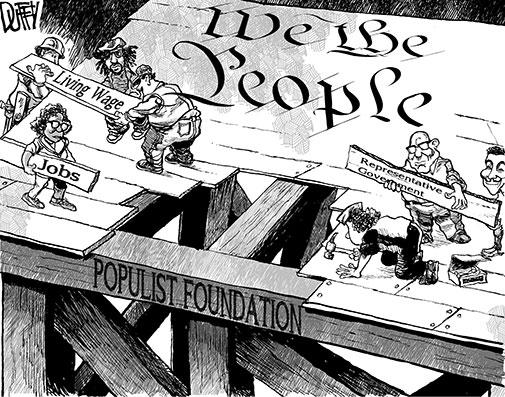
Down with the elites! The American presidential election, in the most disparate ways possible, is increasingly mobilizing the revolt of a large group of people against the politics that have been imposed on them by the most powerful in the biggest democracy in the world. Out of the four candidates who are capable of winning, Donald Trump has created an immense surprise by rolling out a nationalist, xenophobic discourse, punctuated by anti-establishment, provocative statements. Ted Cruz, the tea party style moral crusader, has denounced the decadence apparently organized by the Liberals and by Wall Street. Finally we have Bernie Sanders, situated in the opposite direction to this reactionary debauched celebration, who has succeeded against all odds in fighting against the extraordinary inequalities of post-Reagan America to introduce an audacious and convincing socialist discourse to the land of economic liberalism. And yet Hillary Clinton, heir to the pro-business "new center" theorized by her husband, counts on the support of minorities to defeat her Democrat rival, whilst making her discourse more left wing with an inborn sense of opportunism. The people’s revolt can, in the worst-case scenario, lead to the disastrous victory of an irresponsible millionaire or even of a militant monk from the religious right. It could also lead to the victory of a Democrat, male or female, who is finally aware of the excesses of American capitalism, a claim which may or may not be sincere. As Ted Cruz would say: let’s pray…
Révolte populaire
Sus aux élites ! De plus en plus, l’élection présidentielle américaine, sous des formes disparates au possible, traduit la révolte d’une grande partie du peuple contre la politique imposée depuis trente ans par les puissants du pays à la plus grande démocratie du monde. Sur quatre candidats désormais capables de l’emporter, Donald Trump a créé une immense surprise en déroulant à coups de provocations anti-establishment un discours nationaliste et xénophobe ; Ted Cruz le croisé de l’ordre moral façon Tea Party a fustigé la décadence soi-disant organisée par les libéraux et par Wall Street ; Bernie Sanders, enfin, situé à l’opposé de cette bacchanale réactionnaire, a réussi, contre toute attente, à s’appuyer sur les inégalités extraordinaires de l’Amérique post-reaganienne pour introduire dans la patrie du libéralisme économique un discours socialiste audacieux et convaincant. Et encore Hillary Clinton, héritière du «nouveau centre» probusiness théorisé par son mari Bill, compte-t-elle sur les minorités pour l’emporter contre son rival démocrate, tout en gauchisant son discours avec un sens inné de l’opportunisme. Cette révolte populaire peut déboucher sur le pire : la victoire désastreuse d’un milliardaire irresponsable, ou bien celle d’un moine-soldat de la droite religieuse. Elle peut aussi mettre au pouvoir un ou une démocrate enfin conscient, sincèrement ou non, des excès du capitalisme yankee. Comme dirait Ted Cruz : prions…
This post appeared on the front page as a direct link to the original article with the above link
.