A Window of Opportunity for Ukraine? What Is Kyiv To Do Next?
Our security is in our hands. It is an upsetting thought, but it is closer to reality than euphoria.
I keep a keen eye on the development of Russian-Czech relations and what is going on right now with the expulsion of diplomats from both countries. What’s interesting is the response of the Czech Republic’s allies, both in NATO and in the European Union. We hear from them that everyone is at one with it, everyone supports the Czech Republic, but so far there has been no response to the general call for actions adequate to what the Czech Republic has done. Only Lithuania and Slovakia responded.
There may be one or two countries that will do so, but it is a matter of solidarity within the North Atlantic Treaty Alliance. And there is no such solidarity. And who are the policymakers within this Alliance? It is France and Germany that determine the policy, which begs the question: if they are not in a great hurry to respond to what is happening to their ally, will they be in a great hurry to respond to what concerns Ukraine, which is relatively far from them? I do not think so.
Unfortunately, it is the cynicism of French and German foreign policy that we have been witnessing for a long time. In my opinion, the key reason is that the position of any chancellor (whether it is Angela Merkel, Helmut Kohl, Helmut Schmidt, or anyone else) or French president is much more influenced by economic interests than principles. Consequently, in my opinion, it is naive to expect them to be the first to fight for these principles. And it follows that we just have to conclude that our security is in our hands. It is an upsetting thought, but they are closer to reality than euphoria.
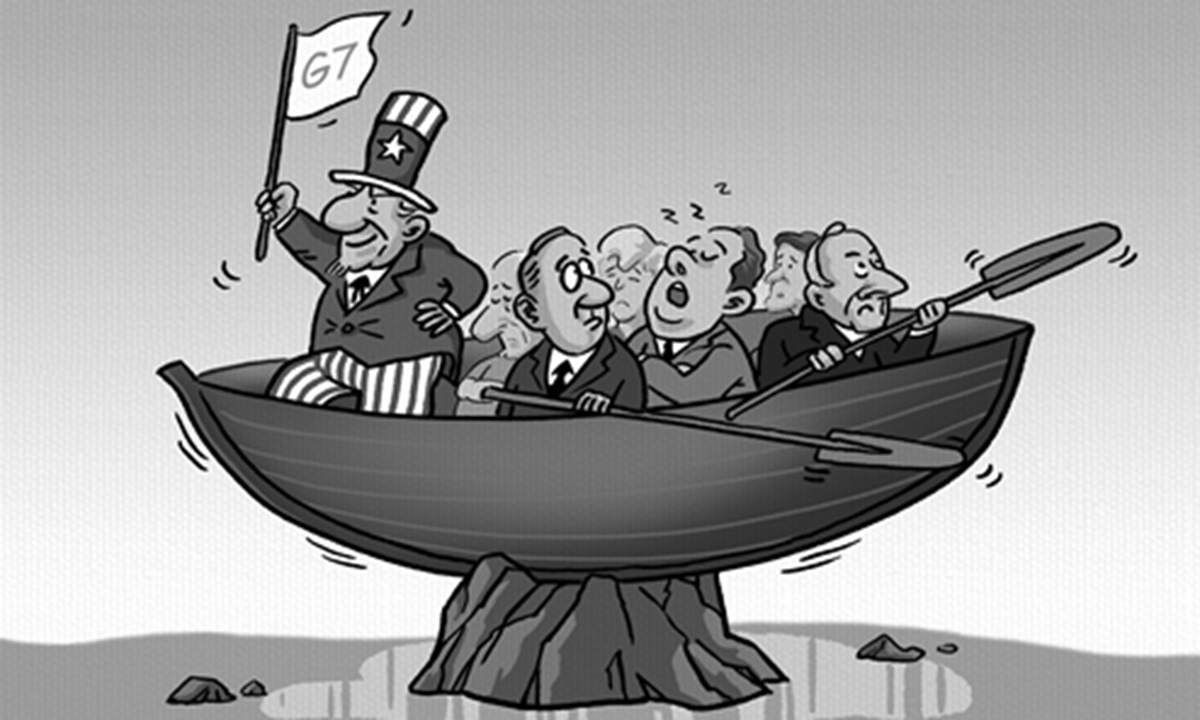
The Western world is slowly waking up. It reminds me of an idler, looking at the clock – it is time to get up and do something, but it thinks: “No, I will just stay in bed for a while.” It is the condition in particular of Western Europe right now; the Americans behave themselves a little bit differently. In Europe, this is reflected in the main points about dialogue with Russia. And dialogue turns into indecision, reluctance to take appropriate actions that would be a punishment and not just a concern. And Vladimir Putin is taking advantage of this.
Now Joe Biden is trying to wake up Europe, and it seems to me that his policy for reviving the transatlantic alliance is precisely aimed at waking up the sleepy European public. Unfortunately, there are much more common outright economic interests between the countries of Western Europe and Russia than between the United States and Russia. However, if something is of interest to the U.S., the U.S. is also reluctant to impose sanctions against anyone. For example, let us remember Oleg Deripaska and his company Rusal and so on. It is another confirmation that economic interests prevail over values, and it, in turn, involves a lack of consistency.
However, it is by no means certain that the Americans will carry on trying to rouse and impel the E.U. to be more proactive. This is not an easy thing; it takes time, so we shouldn’t cherish vain hopes that Europe’s attitude would change right now.
However, the situation is a little more optimistic regarding the NATO Membership Action Plan. And it depends more on us, the Ukrainians. What do I mean? I would follow a simple way, which has already been tried and tested – the way Ukraine got visa-free travel to the E.U. At the time, we agreed upon a very clear action plan with the E.U. Having fulfilled the plan, Ukraine got visa-free travel.
Unfortunately, in my opinion, we are still unable to outline for ourselves what we could offer our NATO partners. We should develop an orientation framework and say this: “Our dear friends. You are telling us that we need to carry out reforms. It has been going on for ten years. During this time, we have lost part of our territory, we are at war today. Therefore, this is hardly the right way to deter an aggressor. In order for this to happen, we need Ukraine to become a full-fledged NATO member. To become one, we need to get a MAP. So, we offer you our vision of our road map to MAP. Please take it, look at it, clarify, change, add, and subtract. It will become our common product; if Ukraine fulfills it, we will get the MAP without regard to whether we carry out any additional reforms or not. By the way, reforms are being carried out everywhere right now. Aren’t there any reforms being carried out in Germany? What about the UK, Spain, and Portugal? Every country is carrying out reforms. It is an eternal, everlasting process, but we must put a period at some stage and say that we have done what we had to do. And the same goes for full membership.”
If we were a little bit proactive and outlined the requirements for receiving the MAP to gain the full-fledged NATO membership, then literally in a couple of years, we would have been able to apply for it. That is why I emphasized our country-level initiative because, in my opinion, it is very deceptive to wait for someone to come to us and say: “You know, Ukraine, you are such a wonderful country, and what would we do without you?” One has to knock on the door of every member of the Alliance every day, and there are people there who don’t want us to be a member of NATO. Everything depends on us: if we want to join the Alliance faster, we have to be more active.
If you look at those countries, which recently joined the Alliance, it is clear that NATO did it because of a purely political decision. Because some countries do not have any real armed forces, and it is unlikely that something more has been done in terms of reforms than it is now in Ukraine. Of course, the country has to develop and take certain steps toward one way or another, but if desired and with political will, one may help the country quickly. And if we were proactive, I think most countries would see that this is really a real desire, an intention that is supported by both government and society. Then it would be very hard to refuse. The louder we knock and explain, the greater the progress towards our goal. If we keep silent and rhetorically ask why we are not yet members of NATO, we will also be rhetorically answered.
All great deeds have small beginnings. If now, together with NATO, we agree on our road map to MAP and pass it very quickly, then, despite the entire peaceful attitude of Germany and France towards Russia, we could be admitted there. Moreover, Russia is now really helping us in this, and this affects the attitude of the Western world towards it. It is a window of opportunity for Ukraine. If we take advantage of it, we will be clever. If not – you can substitute the word with the antonym yourself.
The author, Volodymyr Ohryzko, is a Ukrainian diplomat, Minister of Foreign Affairs of Ukraine (2007−2009)
I keep a keen eye on the development of Russian-Czech relations and what is going on right now with the expulsion of diplomats from both countries. What’s interesting is the response of the Czech Republic’s allies, both in NATO and in the European Union. We hear from them that everyone is at one with it, everyone supports the Czech Republic, but so far there has been no response to the general call for actions adequate to what the Czech Republic has done. Only Lithuania and Slovakia responded.
There may be one or two countries that will do so, but it is a matter of solidarity within the North Atlantic Treaty Alliance. And there is no such solidarity. And who are the policymakers within this Alliance? It is France and Germany that determine the policy, which begs the question: if they are not in a great hurry to respond to what is happening to their ally, will they be in a great hurry to respond to what concerns Ukraine, which is relatively far from them? I do not think so.
Unfortunately, it is the cynicism of French and German foreign policy that we have been witnessing for a long time. In my opinion, the key reason is that the position of any chancellor (whether it is Angela Merkel, Helmut Kohl, Helmut Schmidt, or anyone else) or French president is much more influenced by economic interests than principles. Consequently, in my opinion, it is naive to expect them to be the first to fight for these principles. And it follows that we just have to conclude that our security is in our hands. It is an upsetting thought, but they are closer to reality than euphoria.
The Western world is slowly waking up. It reminds me of an idler, looking at the clock – it is time to get up and do something, but it thinks: “No, I will just stay in bed for a while.” It is the condition in particular of Western Europe right now; the Americans behave themselves a little bit differently. In Europe, this is reflected in the main points about dialogue with Russia. And dialogue turns into indecision, reluctance to take appropriate actions that would be a punishment and not just a concern. And Vladimir Putin is taking advantage of this.
Now Joe Biden is trying to wake up Europe, and it seems to me that his policy for reviving the transatlantic alliance is precisely aimed at waking up the sleepy European public. Unfortunately, there are much more common outright economic interests between the countries of Western Europe and Russia than between the United States and Russia. However, if something is of interest to the U.S., the U.S. is also reluctant to impose sanctions against anyone. For example, let us remember Oleg Deripaska and his company Rusal and so on. It is another confirmation that economic interests prevail over values, and it, in turn, involves a lack of consistency.
However, it is by no means certain that the Americans will carry on trying to rouse and impel the E.U. to be more proactive. This is not an easy thing; it takes time, so we shouldn’t cherish vain hopes that Europe’s attitude would change right now.
However, the situation is a little more optimistic regarding the NATO Membership Action Plan. And it depends more on us, the Ukrainians. What do I mean? I would follow a simple way, which has already been tried and tested – the way Ukraine got visa-free travel to the E.U. At the time, we agreed upon a very clear action plan with the E.U. Having fulfilled the plan, Ukraine got visa-free travel.
Unfortunately, in my opinion, we are still unable to outline for ourselves what we could offer our NATO partners. We should develop an orientation framework and say this: “Our dear friends. You are telling us that we need to carry out reforms. It has been going on for ten years. During this time, we have lost part of our territory, we are at war today. Therefore, this is hardly the right way to deter an aggressor. In order for this to happen, we need Ukraine to become a full-fledged NATO member. To become one, we need to get a MAP. So, we offer you our vision of our road map to MAP. Please take it, look at it, clarify, change, add, and subtract. It will become our common product; if Ukraine fulfills it, we will get the MAP without regard to whether we carry out any additional reforms or not. By the way, reforms are being carried out everywhere right now. Aren’t there any reforms being carried out in Germany? What about the UK, Spain, and Portugal? Every country is carrying out reforms. It is an eternal, everlasting process, but we must put a period at some stage and say that we have done what we had to do. And the same goes for full membership.”
If we were a little bit proactive and outlined the requirements for receiving the MAP to gain the full-fledged NATO membership, then literally in a couple of years, we would have been able to apply for it. That is why I emphasized our country-level initiative because, in my opinion, it is very deceptive to wait for someone to come to us and say: “You know, Ukraine, you are such a wonderful country, and what would we do without you?” One has to knock on the door of every member of the Alliance every day, and there are people there who don’t want us to be a member of NATO. Everything depends on us: if we want to join the Alliance faster, we have to be more active.
If you look at those countries, which recently joined the Alliance, it is clear that NATO did it because of a purely political decision. Because some countries do not have any real armed forces, and it is unlikely that something more has been done in terms of reforms than it is now in Ukraine. Of course, the country has to develop and take certain steps toward one way or another, but if desired and with political will, one may help the country quickly. And if we were proactive, I think most countries would see that this is really a real desire, an intention that is supported by both government and society. Then it would be very hard to refuse. The louder we knock and explain, the greater the progress towards our goal. If we keep silent and rhetorically ask why we are not yet members of NATO, we will also be rhetorically answered.
All great deeds have small beginnings. If now, together with NATO, we agree on our road map to MAP and pass it very quickly, then, despite the entire peaceful attitude of Germany and France towards Russia, we could be admitted there. Moreover, Russia is now really helping us in this, and this affects the attitude of the Western world towards it. It is a window of opportunity for Ukraine. If we take advantage of it, we will be clever. If not – you can substitute the word with the antonym yourself.
The author, Volodymyr Ohryzko, is a Ukrainian diplomat, Minister of Foreign Affairs of Ukraine (2007−2009)
Previous article
Next article