

Half a Year of the Biden Administration: Prioritizing Southeast Asia To Tighten Net around China
Half a year has passed since the administration of Joe Biden took office in America.
It is praiseworthy that he made competition with China the highest diplomatic and security priority, identified a series of problems from human rights violations and unfair commercial practices to security in the Taiwan Strait, and took harsh measures, such as imposing sanctions.
When Deputy Secretary of State Wendy Sherman visited Tianjin, China, for talks with mid- and high-level Chinese officials, the Chinese complained that “America is restraining China on all fronts” and demanded change in America’s anti-Chinese policy. In reaction to America’s offensive, China has grown closer to fellow authoritarian countries like Russia. Coordinating with allies and friendly countries has become even more important for maintaining a strong net around China.
Last week, America, along with Japan and the European Union, released a statement criticizing cyberattacks in which the Chinese government is implicated.
The U.S. and EU have aligned sanctions to punish China’s violations of the rights of the Uighur people, and the American-led web of containment around China has shown progress in a wide range of fields.
People were anxious that Biden, who was involved in the Obama administration’s China policy, would be lenient toward China, but for now they have been proven wrong. We approve of his evident continuation of the Trump administration’s clear posture of confrontation with China, for instance, by supporting the 2016 decision of the Permanent Court of Arbitration in the Hague's rejection of Chinese sovereignty over the South China Sea.
But to make the web of containment around China effective, more countries must endorse and participate in it.
Aside from his direct encounter with Prime Minister Suga Yoshihide, Biden has maintained a shared anti-Chinese attitude with the Group of Seven and the Quad Alliance (Japan, America, Australia and India). India could also become a strong partner.
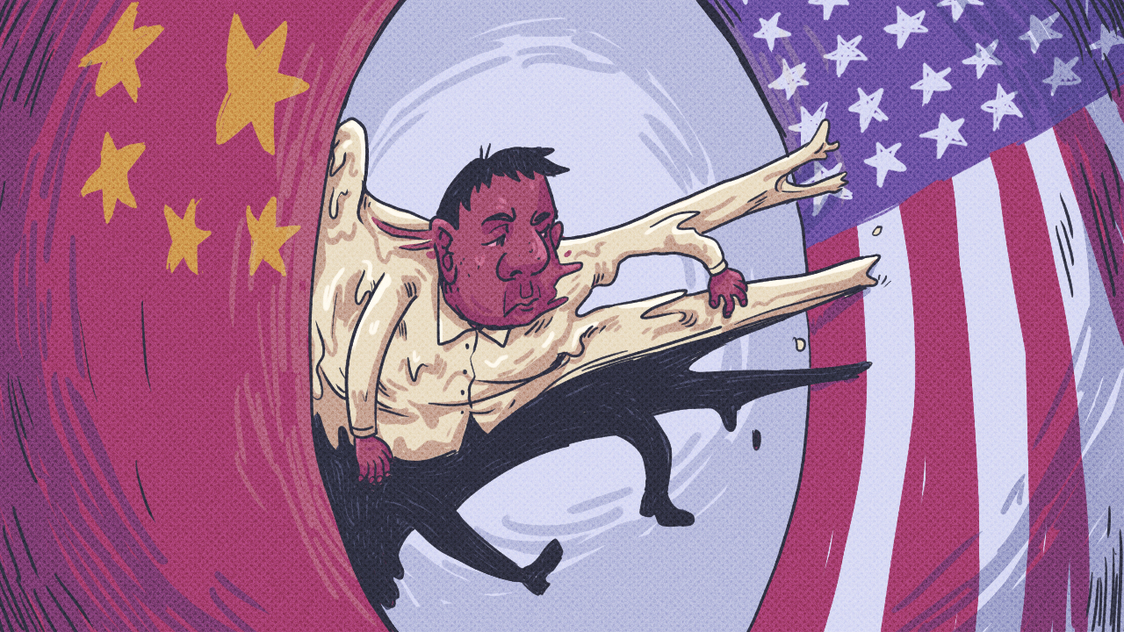
Furthermore, the Association of Southeast Asian Nations, which historically has a deep relationship with China, holds the key. Trump overlooked this region — in four years, he never attended the East Asia Summit, which ASEAN leads. In the meantime, China expanded its influence, for instance, through economic support. Restoring trust is urgent.
Defense Secretary Lloyd Austin has begun a three-country tour of Southeast Asia, including Vietnam — the first major cabinet official in the Biden administration to do so. In mid-July, the first U.S.-ASEAN foreign ministers’ summit was held online. We hope this will be a chance to launch a comeback in Southeast Asian diplomacy, where the U.S. has fallen behind China.
It is praiseworthy that he made competition with China the highest diplomatic and security priority, identified a series of problems from human rights violations and unfair commercial practices to security in the Taiwan Strait, and took harsh measures, such as imposing sanctions.
When Deputy Secretary of State Wendy Sherman visited Tianjin, China, for talks with mid- and high-level Chinese officials, the Chinese complained that “America is restraining China on all fronts” and demanded change in America’s anti-Chinese policy. In reaction to America’s offensive, China has grown closer to fellow authoritarian countries like Russia. Coordinating with allies and friendly countries has become even more important for maintaining a strong net around China.
Last week, America, along with Japan and the European Union, released a statement criticizing cyberattacks in which the Chinese government is implicated.
The U.S. and EU have aligned sanctions to punish China’s violations of the rights of the Uighur people, and the American-led web of containment around China has shown progress in a wide range of fields.
People were anxious that Biden, who was involved in the Obama administration’s China policy, would be lenient toward China, but for now they have been proven wrong. We approve of his evident continuation of the Trump administration’s clear posture of confrontation with China, for instance, by supporting the 2016 decision of the Permanent Court of Arbitration in the Hague's rejection of Chinese sovereignty over the South China Sea.
But to make the web of containment around China effective, more countries must endorse and participate in it.
Aside from his direct encounter with Prime Minister Suga Yoshihide, Biden has maintained a shared anti-Chinese attitude with the Group of Seven and the Quad Alliance (Japan, America, Australia and India). India could also become a strong partner.
Furthermore, the Association of Southeast Asian Nations, which historically has a deep relationship with China, holds the key. Trump overlooked this region — in four years, he never attended the East Asia Summit, which ASEAN leads. In the meantime, China expanded its influence, for instance, through economic support. Restoring trust is urgent.
Defense Secretary Lloyd Austin has begun a three-country tour of Southeast Asia, including Vietnam — the first major cabinet official in the Biden administration to do so. In mid-July, the first U.S.-ASEAN foreign ministers’ summit was held online. We hope this will be a chance to launch a comeback in Southeast Asian diplomacy, where the U.S. has fallen behind China.
Previous article
Next article