US and China Should Work Together To Address the Crisis of Order
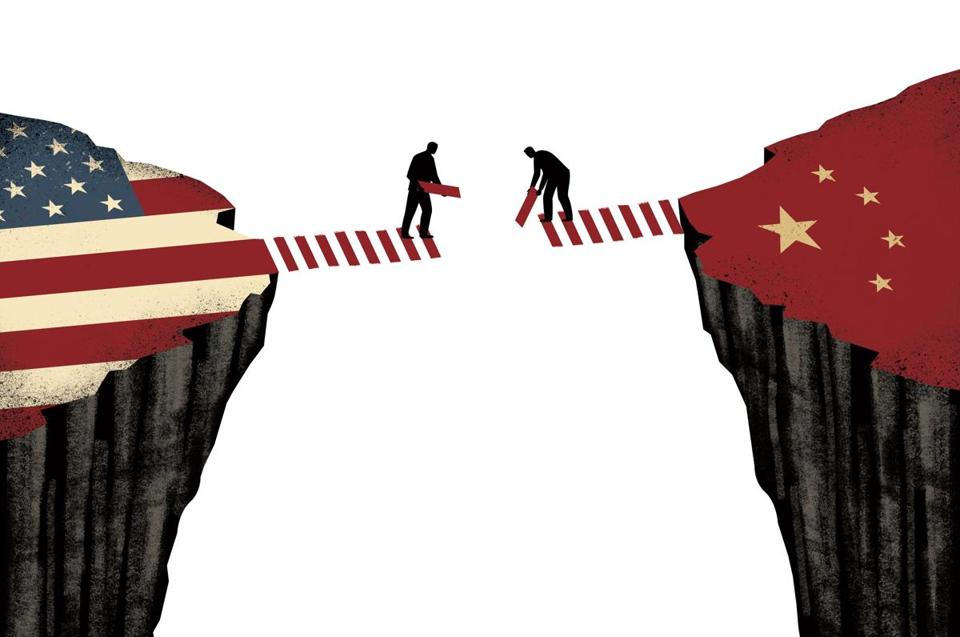
The world should not be a place where power struggles between superpowers are more important than human life. It is time for the U.S. and China to abandon division and work together to restore peace and security.
A virtual meeting was held recently between President Joe Biden and President Xi Jinping. It was the first time the two leaders have spoken since Russia's invasion of Ukraine.
In recent years, confrontation between the U.S. and China has intensified to the extent people refer to it as “the New Cold War.” Although the U.S. and China devoted attention to Russia's violence, its threat to global order and how the invasion will affect U.S.-China relations, the two powers were unable to reach much agreement during their call.
China has stopped short of explicitly opposing the invasion, and instead has taken an ambiguous position and spoken in general terms about the need to respect the U.N. Charter and national sovereignty. It has yet to remark on the legitimacy of Russia's actions.
China seems unable to abandon the mindset that its security and economic interests are better served by cooperating with Russia, and that this will help advance its competition with the United States. However, Chinese leadership should reconsider this approach given the current situation.
The war that President Vladimir Putin started is a challenge for the international community. Powerful nations violating the sovereignty of neighboring countries based on a self-righteous interpretation of history will only lead to a repeat of the mistakes made in the world wars. The move to impose sanctions on Russia, even to a country's own detriment, is motivated by fear of returning to such a world.
Foreign Minister Wang Yi's explanation that “China is not a party to the crisis, still less wants to be affected by the sanctions” is nothing but self-centered. China should make clear its position on this war in line with the established order and norms that should continue to be upheld.
During the talk with Biden, President Xi said that “indiscriminate sanctions would only make the people suffer,” though, if so, China should recognize the reality that ordinary people are losing their lives and livelihoods every day on the battlefield. The nonmilitary way to stop President Putin is economic sanctions, and the effectiveness of those sanctions depends on what China does.
China is scheduled to hold the National Congress of the Communist Party of China in the fall. The priority for the Xi administration is social stability, though it should not forget that economic development is the foundation of social stability, and that, in turn, is built on interdependence with the international community.
Biden warned Xi during the call that any aid to Russia would have consequences. The fact that the two leaders have established a forum for mutual understanding amid the deepening humanitarian crisis and attacks on civilians is in itself commendable.
However, the U.S. must not be pulled back into old ideas of supremacy. The war in Europe has demonstrated that the simple perspective about international security being nothing more than competition between the U.S. and China is incorrect.
The question now is how to enforce the rule of law, which is central to the United Nations and recognized even by China. The U.S., Europe, Japan and other nations should cast aside inward-looking ideology and devote themselves to diplomatic efforts based on dialogue and persuasion.
A virtual meeting was held recently between President Joe Biden and President Xi Jinping. It was the first time the two leaders have spoken since Russia's invasion of Ukraine.
In recent years, confrontation between the U.S. and China has intensified to the extent people refer to it as “the New Cold War.” Although the U.S. and China devoted attention to Russia's violence, its threat to global order and how the invasion will affect U.S.-China relations, the two powers were unable to reach much agreement during their call.
China has stopped short of explicitly opposing the invasion, and instead has taken an ambiguous position and spoken in general terms about the need to respect the U.N. Charter and national sovereignty. It has yet to remark on the legitimacy of Russia's actions.
China seems unable to abandon the mindset that its security and economic interests are better served by cooperating with Russia, and that this will help advance its competition with the United States. However, Chinese leadership should reconsider this approach given the current situation.
The war that President Vladimir Putin started is a challenge for the international community. Powerful nations violating the sovereignty of neighboring countries based on a self-righteous interpretation of history will only lead to a repeat of the mistakes made in the world wars. The move to impose sanctions on Russia, even to a country's own detriment, is motivated by fear of returning to such a world.
Foreign Minister Wang Yi's explanation that “China is not a party to the crisis, still less wants to be affected by the sanctions” is nothing but self-centered. China should make clear its position on this war in line with the established order and norms that should continue to be upheld.
During the talk with Biden, President Xi said that “indiscriminate sanctions would only make the people suffer,” though, if so, China should recognize the reality that ordinary people are losing their lives and livelihoods every day on the battlefield. The nonmilitary way to stop President Putin is economic sanctions, and the effectiveness of those sanctions depends on what China does.
China is scheduled to hold the National Congress of the Communist Party of China in the fall. The priority for the Xi administration is social stability, though it should not forget that economic development is the foundation of social stability, and that, in turn, is built on interdependence with the international community.
Biden warned Xi during the call that any aid to Russia would have consequences. The fact that the two leaders have established a forum for mutual understanding amid the deepening humanitarian crisis and attacks on civilians is in itself commendable.
However, the U.S. must not be pulled back into old ideas of supremacy. The war in Europe has demonstrated that the simple perspective about international security being nothing more than competition between the U.S. and China is incorrect.
The question now is how to enforce the rule of law, which is central to the United Nations and recognized even by China. The U.S., Europe, Japan and other nations should cast aside inward-looking ideology and devote themselves to diplomatic efforts based on dialogue and persuasion.
Previous article
/cloudfront-us-east-2.images.arcpublishing.com/reuters/6HIFY5SUQBJGZASWDS7CPT6JEU.jpg "The Double Standard of Sanction Politics in America")
Next article