

China Criticizes Blinken’s China-Related Remarks, Urges US To Stop Making Irresponsible Comments
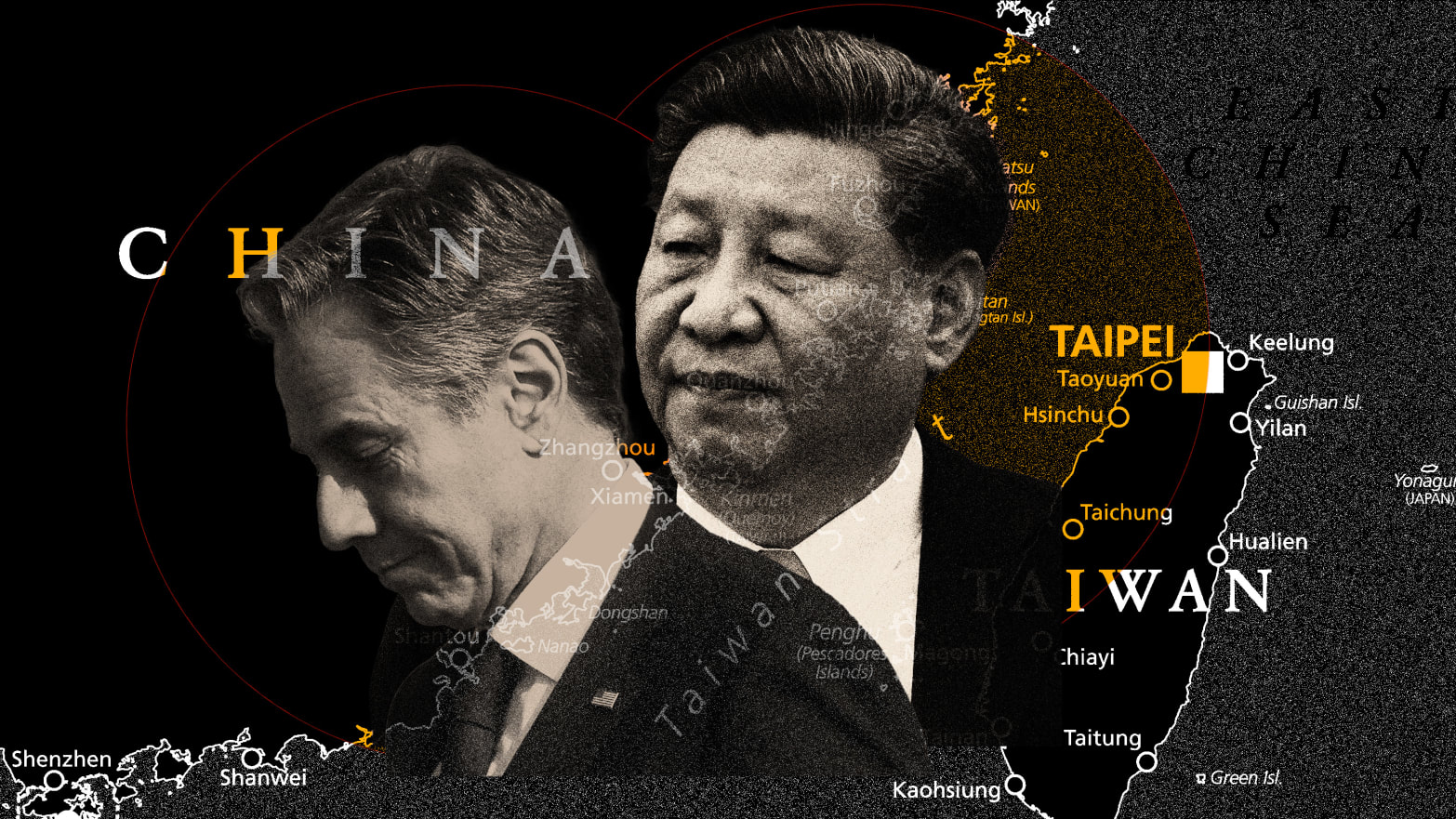
In an interview with the media a few days ago, U.S. Secretary of State Antony Blinken asserted that "It is no secret that there are differences between the U.S. and China. The U.S. will continue to stand for its interests, stand up for its values and continue to do things and say things that China doesn't like."* At a regular press conference on June 29, Foreign Ministry spokeswoman Mao Ning indicated that China is "dissatisfied with the comments made by Secretary Blinken," urging the U.S. to "stop making irresponsible comments and honor its commitments with concrete actions."
According to Mao, out of a misguided perception of China, the U.S. is pursuing a misconceived China policy: containing and suppressing it, attacking and smearing it for no reason, and recklessly interfering in its internal affairs. "What the U.S. has said and done violates the basic norms governing international relations," she said, adding that China was naturally resolute in its opposition. "Mutual respect is the basic principle for countries dealing with each other and an essential ingredient for China and the U.S. to find the right way to get along."
Senior U.S. government officials' recent statements on China continue to highlight the two-faced nature of its China policy. Following his comment of "[continuing] to do things that China doesn't like," Blinken told the audience at a June 28 event in New York hosted by the Council on Foreign Relations, an American think tank, that the U.S. must find a way "to coexist and coexist peacefully" with China amid fierce competition. He also saw an increase in visits between senior U.S. and Chinese officials. "I think you're going to start to see more engagement in both directions, with senior Chinese officials coming here, senior Americans going there," he stated, adding that it was wrong to suggest that the U.S. was engaging in decoupling, backing up his claim with the fact that "[U.S.] trade with China last year reached the highest level ever."
At the same time, in his speech Blinken described the competition with China as "intense" and "long term" with no "clear finish line." He claimed that it was not in the U.S.' interests to allow China access to certain key technologies, and that "we want to see a China that's actually succeeding economically." A number of media outlets noted, however, that Blinken's comments came as Washington was considering a new round of restrictions on China's access to American semiconductor technology.
A similar signal was sent by U.S. Treasury Secretary Janet Yellen, who told MSNBC on June 28 that she wanted to go to China to "reestablish contact" with Beijing despite the disagreements between the two countries. On June 29, Agence France-Presse reported that Yellen stated during the interview that the U.S. would continue to defend its national security interests.
Diao Daming, a researcher at Renmin University's National Academy of Development and Strategy and deputy director of its Center for American Studies, told the Global Times on June 29 that Blinken's statement reflected the U.S.' contradictory attitude in its policy toward China. On the one hand, for the sake of domestic economic stability and maintaining a good external environment during the election cycle, the U.S. needs cooperation with China to resolve some issues; that is why it wants to "coexist peacefully." China, however, talks about "peaceful coexistence" based on mutual respect, whereas the American version is neither founded on mutual respect nor does it have win-win cooperation as its objective, thus depriving "peaceful coexistence" of its inherent meaning.
*Editor's Note: This quote, while accurately translated, could not be independently verified.
According to Mao, out of a misguided perception of China, the U.S. is pursuing a misconceived China policy: containing and suppressing it, attacking and smearing it for no reason, and recklessly interfering in its internal affairs. "What the U.S. has said and done violates the basic norms governing international relations," she said, adding that China was naturally resolute in its opposition. "Mutual respect is the basic principle for countries dealing with each other and an essential ingredient for China and the U.S. to find the right way to get along."
Senior U.S. government officials' recent statements on China continue to highlight the two-faced nature of its China policy. Following his comment of "[continuing] to do things that China doesn't like," Blinken told the audience at a June 28 event in New York hosted by the Council on Foreign Relations, an American think tank, that the U.S. must find a way "to coexist and coexist peacefully" with China amid fierce competition. He also saw an increase in visits between senior U.S. and Chinese officials. "I think you're going to start to see more engagement in both directions, with senior Chinese officials coming here, senior Americans going there," he stated, adding that it was wrong to suggest that the U.S. was engaging in decoupling, backing up his claim with the fact that "[U.S.] trade with China last year reached the highest level ever."
At the same time, in his speech Blinken described the competition with China as "intense" and "long term" with no "clear finish line." He claimed that it was not in the U.S.' interests to allow China access to certain key technologies, and that "we want to see a China that's actually succeeding economically." A number of media outlets noted, however, that Blinken's comments came as Washington was considering a new round of restrictions on China's access to American semiconductor technology.
A similar signal was sent by U.S. Treasury Secretary Janet Yellen, who told MSNBC on June 28 that she wanted to go to China to "reestablish contact" with Beijing despite the disagreements between the two countries. On June 29, Agence France-Presse reported that Yellen stated during the interview that the U.S. would continue to defend its national security interests.
Diao Daming, a researcher at Renmin University's National Academy of Development and Strategy and deputy director of its Center for American Studies, told the Global Times on June 29 that Blinken's statement reflected the U.S.' contradictory attitude in its policy toward China. On the one hand, for the sake of domestic economic stability and maintaining a good external environment during the election cycle, the U.S. needs cooperation with China to resolve some issues; that is why it wants to "coexist peacefully." China, however, talks about "peaceful coexistence" based on mutual respect, whereas the American version is neither founded on mutual respect nor does it have win-win cooperation as its objective, thus depriving "peaceful coexistence" of its inherent meaning.
*Editor's Note: This quote, while accurately translated, could not be independently verified.
Previous article
Next article