
Welcome Mister Obama
Published in ABC
(Spain) on 08 November 2008
by Manuel Trillo and Guillermo Llona (link to
original)
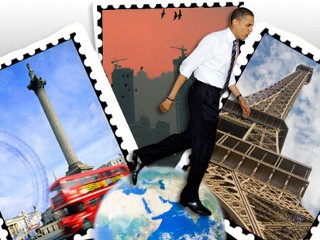
Never until now, has a president of the United States awakened so much hope for transformation. Thanks to globalization and the Internet, the cambio que necesitamosthe change we needand the sí, se puedeyes, we canhave become contagious throughout the planet in a way that borders on idolatry. Faith in his power is starting to make people attribute miraculous abilities to it--it brings to mind, on a global scale, Berlangas famous film, "Welcome Mister Marshall."
Largely because of opposition to George Bush, Barack Obama has gained some unusual support for a president of the United States, support from people like Mahmud Ahmadinejad, who has assured us that the opportunities that God grants us last only a short while, and Hugo Chávez, suddenly convinced that now the time has come to establish new relations between the two countries."
For the Bolivian head of state, its all about the victory of the black man, which, he points out, is why the indigenous race of the south receives him with open arms. From this moment Im sending signals to the black man, from those of us who are of various racesIndian, Black, Caribbean, South American; I hope that he rises to the level of what is happening in the world and to the hope that the world has."
The enthusiastic reactions throughout the American continent have reached such an extreme that for the Sandinista Daniel Ortega, President of Nicaragua, its a miracle that the United States has, for the first time in its history, a black President.
Óscar Arias, from Costa Rica, has compared him with Kennedy for his idealism and Rafael Correa, from Ecuador, adds that after years of indifference toward Latin America, President Obama will develop closer ties with all the countries on the continent."
Castrists Are Happy
The Castro regime has received, happily, the decision that the North Americans have made, since it believes that relations with the United States will improve substantially and that perhaps the embargo will be lifted.
To the north, Stephen Harper, the premier of Canada, has already declared himself to be the best friend of the future president of the United States.
Among the verbal excesses that are being thrown around these days, one that stands out is by the Libyan Muammar el Khadafy. He declares that the victory by Obama in the elections of this past Tuesday was prophesied 30 years ago in the Green Book, a three-volume political text that he, himself, had written.
Obamas election has had a special impact on the Dark Continent, the place from where Obamas father came to the United States. For the African Union, the new president of the United States represents a great hope for the Dark Continent and for the rest of the world.
Hope for the Guinean Opposition
The opposition in Equatorial Guinea believes that its country will achieve democracy thanks to Mr. Obama. All civilizations have come together in a unanimous declaration of congratulations to the Democrat. In Kenya, homeland of the next North American leaders family, the government of the nation has decreed as a national holiday the election of its son as President of the United States.
The Food and Agriculture Organization of the United Nations is requesting a summit that would end hunger once and for all. There are already those who are saying what a disappointment it will be if the new golden calf doesnt resolve all the plagues of the worldwide economic crisis and the wars in Iraq and Afghanistan.
In India, the Dalit, or untouchables, have also been celebrating the victory of Barack Obama. We are celebrating his victory. After all, Obama is an American Dalit that belongs to a minority community. He has realized the dreams of marginalized people in the entire world, not only of those in the United States, Irshadul Haque, the leader of the Dalit Muslim movement, said.
Even Hamas, the Islamic Resistance Movement, is hopeful for the great change that can be possible under Obama. Its leader, Jaled Meshal, has already shown his willingness to meet with the future president.
The Spanish president, José Luis Rodríguez Zapatero, has added to this current of absolutes. With the election of Obama, the Socialist leader sees clear skies ahead that will clear up the bad relations that he has maintained with President Bush. Zapatero characterizes himself as a friend and loyal ally, even though he wasnt among the first heads of state that Obama called in gratitude for their congratulations.
Largely because of opposition to George Bush, Barack Obama has gained some unusual support for a president of the United States, support from people like Mahmud Ahmadinejad, who has assured us that the opportunities that God grants us last only a short while, and Hugo Chávez, suddenly convinced that now the time has come to establish new relations between the two countries."
For the Bolivian head of state, its all about the victory of the black man, which, he points out, is why the indigenous race of the south receives him with open arms. From this moment Im sending signals to the black man, from those of us who are of various racesIndian, Black, Caribbean, South American; I hope that he rises to the level of what is happening in the world and to the hope that the world has."
The enthusiastic reactions throughout the American continent have reached such an extreme that for the Sandinista Daniel Ortega, President of Nicaragua, its a miracle that the United States has, for the first time in its history, a black President.
Óscar Arias, from Costa Rica, has compared him with Kennedy for his idealism and Rafael Correa, from Ecuador, adds that after years of indifference toward Latin America, President Obama will develop closer ties with all the countries on the continent."
Castrists Are Happy
The Castro regime has received, happily, the decision that the North Americans have made, since it believes that relations with the United States will improve substantially and that perhaps the embargo will be lifted.
To the north, Stephen Harper, the premier of Canada, has already declared himself to be the best friend of the future president of the United States.
Among the verbal excesses that are being thrown around these days, one that stands out is by the Libyan Muammar el Khadafy. He declares that the victory by Obama in the elections of this past Tuesday was prophesied 30 years ago in the Green Book, a three-volume political text that he, himself, had written.
Obamas election has had a special impact on the Dark Continent, the place from where Obamas father came to the United States. For the African Union, the new president of the United States represents a great hope for the Dark Continent and for the rest of the world.
Hope for the Guinean Opposition
The opposition in Equatorial Guinea believes that its country will achieve democracy thanks to Mr. Obama. All civilizations have come together in a unanimous declaration of congratulations to the Democrat. In Kenya, homeland of the next North American leaders family, the government of the nation has decreed as a national holiday the election of its son as President of the United States.
The Food and Agriculture Organization of the United Nations is requesting a summit that would end hunger once and for all. There are already those who are saying what a disappointment it will be if the new golden calf doesnt resolve all the plagues of the worldwide economic crisis and the wars in Iraq and Afghanistan.
In India, the Dalit, or untouchables, have also been celebrating the victory of Barack Obama. We are celebrating his victory. After all, Obama is an American Dalit that belongs to a minority community. He has realized the dreams of marginalized people in the entire world, not only of those in the United States, Irshadul Haque, the leader of the Dalit Muslim movement, said.
Even Hamas, the Islamic Resistance Movement, is hopeful for the great change that can be possible under Obama. Its leader, Jaled Meshal, has already shown his willingness to meet with the future president.
The Spanish president, José Luis Rodríguez Zapatero, has added to this current of absolutes. With the election of Obama, the Socialist leader sees clear skies ahead that will clear up the bad relations that he has maintained with President Bush. Zapatero characterizes himself as a friend and loyal ally, even though he wasnt among the first heads of state that Obama called in gratitude for their congratulations.