
The United States and Boko Haram
As he continues his efforts to gather the largest amount of aid possible to combat Boko Haram’s success and to do so with increased flexibility, the President of Nigeria, Muhammadu Buhari, has just received financial support from the World Bank to reconstruct some areas in the country’s northwest that were destroyed by the terrorist group.
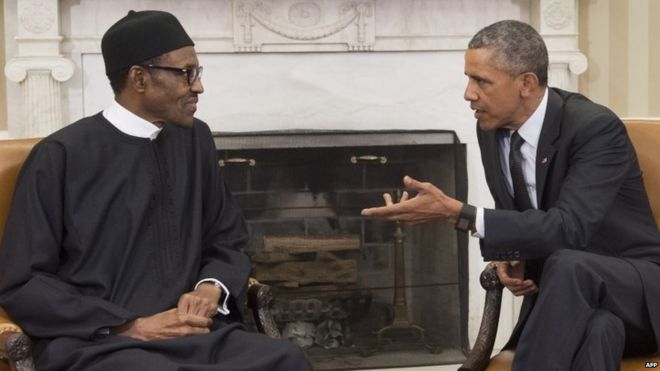
The aid was confirmed with the Nigerian president during a meeting he held in New York with members of the bank, and it represents a first step in an increasingly global process of agreement that also envisages financial assistance for other projects with the objective of repairing damages caused directly or indirectly by terrorism in the country. Before the meeting with members of the World Bank, President Buhari was welcomed at the White House by Barack Obama, who assured him that the United States will bolster its commitment to efforts that are being made in Nigeria to re-establish stability in regions that have been the most affected by terrorism.
The result of these two meetings appears to be fundamental for the new Nigerian president’s plan to make good on his election promise – which he reaffirmed in his speech when taking office – to neutralize Boko Haram’s terrorist activities. The World Bank has agreed to finance the reconstruction of structures destroyed in the country's northeast, and the United States has promised to increase its support for the Nigerian army in order to improve the effectiveness of its field operations. In both cases, we are witnessing effective cooperation that shows international interest and solidarity with regard to the large amount of work that needs be done to cut out the evils of terrorism by their roots. In helping to rebuild some of the structures destroyed by the terrorists, the World Bank is decisively helping the Nigerian government to restore some hope to part of its population, and at the same time, show that Boko Haram’s actions are not definitive, but rather temporary and reversible, thanks to the strength of human solidarity. Terrorists here and elsewhere can certainly destroy some human hope, but sooner or later, the government’s solidarity and commitment will take charge of rebuilding.
The United States’ help is already revealing itself to be more active than reactive, as it will prove to be decisive in anticipating actions that may help to save thousands of lives and facilitate a more effective and direct fight against the terrorists.
The United States already cooperated actively with the previous Nigerian government led by Goodluck Jonathan in strengthening and managing information obtained by its intelligence services. However, for unknown reasons, that information was either mismanaged or of little use in aiding combat operations against the terrorist group.
It is now hoped that America’s reassurance of its commitment to aiding the fight against terrorism in Nigeria is a turning of the page, which, if it occurs, will allow for more rigorous and efficient management of information received so that the end result can be much more positive as well. However, it is clear that in order for the established agreements to be applied successfully, a greater commitment from all parties involved is necessary, especially the organization receiving this support. The terrorists have already shown that they are well organized, not afraid of promises, and are confident about the inability of those saying they want to fight Boko Haram. An example of this has just taken place. As President Buhari was in talks with Barack Obama about new American aid objectives, a Boko Haram commando made a direct attack on the home of the new head of the Nigerian Armed Forces, less than a week after he took command. The audacity of this attack, about which many of the details are still unknown, proves that the terrorists are not afraid of new threats or promises. It is undeniable and unquestionable that they can only be defeated with firmness and determination.
The use of young girls as “human bombs” and the heartless way of treating the populations targeted in their criminal activities is a good indicator of the type of people whom the defenders of order have to deal with to reestablish a state of normality.
Up to now, the results of Boko Haram’s actions, nearing thousands of deaths, have also included the dislocation of more than a million people from their places of origin, people who are anxious for the establishment of conditions that will make their relocation possible.
It is to reverse this situation that Nigerian officials must duly manage all the aid that President Buhari is gathering in order to be able to keep his promise of putting an end to terrorist activities in the country.
The aid was confirmed with the Nigerian president during a meeting he held in New York with members of the bank, and it represents a first step in an increasingly global process of agreement that also envisages financial assistance for other projects with the objective of repairing damages caused directly or indirectly by terrorism in the country. Before the meeting with members of the World Bank, President Buhari was welcomed at the White House by Barack Obama, who assured him that the United States will bolster its commitment to efforts that are being made in Nigeria to re-establish stability in regions that have been the most affected by terrorism.
The result of these two meetings appears to be fundamental for the new Nigerian president’s plan to make good on his election promise – which he reaffirmed in his speech when taking office – to neutralize Boko Haram’s terrorist activities. The World Bank has agreed to finance the reconstruction of structures destroyed in the country's northeast, and the United States has promised to increase its support for the Nigerian army in order to improve the effectiveness of its field operations. In both cases, we are witnessing effective cooperation that shows international interest and solidarity with regard to the large amount of work that needs be done to cut out the evils of terrorism by their roots. In helping to rebuild some of the structures destroyed by the terrorists, the World Bank is decisively helping the Nigerian government to restore some hope to part of its population, and at the same time, show that Boko Haram’s actions are not definitive, but rather temporary and reversible, thanks to the strength of human solidarity. Terrorists here and elsewhere can certainly destroy some human hope, but sooner or later, the government’s solidarity and commitment will take charge of rebuilding.
The United States’ help is already revealing itself to be more active than reactive, as it will prove to be decisive in anticipating actions that may help to save thousands of lives and facilitate a more effective and direct fight against the terrorists.
The United States already cooperated actively with the previous Nigerian government led by Goodluck Jonathan in strengthening and managing information obtained by its intelligence services. However, for unknown reasons, that information was either mismanaged or of little use in aiding combat operations against the terrorist group.
It is now hoped that America’s reassurance of its commitment to aiding the fight against terrorism in Nigeria is a turning of the page, which, if it occurs, will allow for more rigorous and efficient management of information received so that the end result can be much more positive as well. However, it is clear that in order for the established agreements to be applied successfully, a greater commitment from all parties involved is necessary, especially the organization receiving this support. The terrorists have already shown that they are well organized, not afraid of promises, and are confident about the inability of those saying they want to fight Boko Haram. An example of this has just taken place. As President Buhari was in talks with Barack Obama about new American aid objectives, a Boko Haram commando made a direct attack on the home of the new head of the Nigerian Armed Forces, less than a week after he took command. The audacity of this attack, about which many of the details are still unknown, proves that the terrorists are not afraid of new threats or promises. It is undeniable and unquestionable that they can only be defeated with firmness and determination.
The use of young girls as “human bombs” and the heartless way of treating the populations targeted in their criminal activities is a good indicator of the type of people whom the defenders of order have to deal with to reestablish a state of normality.
Up to now, the results of Boko Haram’s actions, nearing thousands of deaths, have also included the dislocation of more than a million people from their places of origin, people who are anxious for the establishment of conditions that will make their relocation possible.
It is to reverse this situation that Nigerian officials must duly manage all the aid that President Buhari is gathering in order to be able to keep his promise of putting an end to terrorist activities in the country.
Next article