
The Other Woman
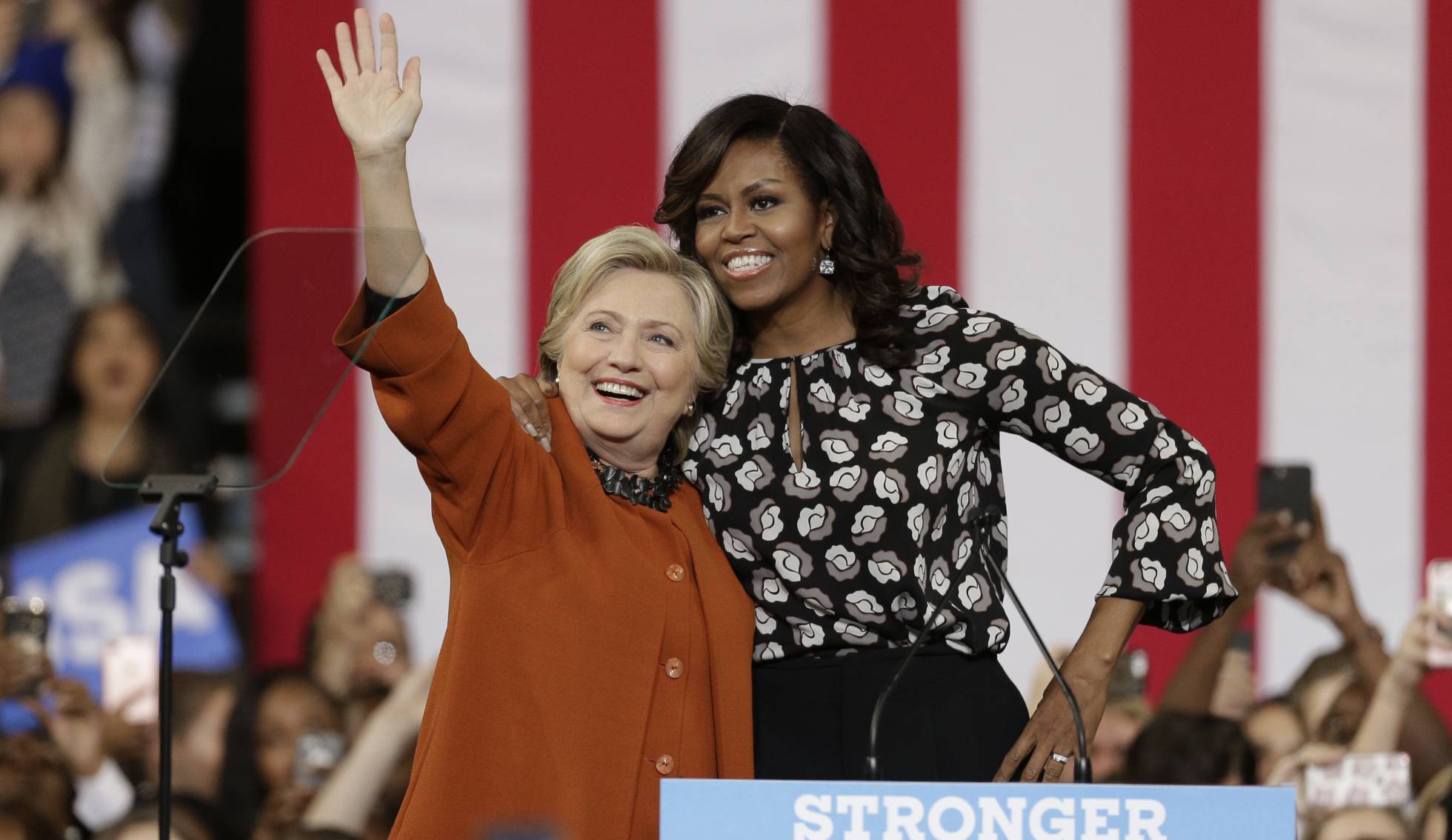
When American children see Hillary Clinton, they assume that a woman can occupy the Oval Office, Michelle Obama said in one of her iconic speeches. The presence of a woman in the highest U.S. political office should be considered as positive, but that assertion is not the only contribution the first lady’s remarks have made throughout the presidential campaign which is challenging the feminization of politics.
Obama’s speeches cover the experiences that women have, and it is that "targeted communication" that appeals to us. Michelle spoke about how peculiar it is that certain women support Donald Trump’s lewd comments about their bodies, or his lack of respect for their intelligence and their aspirations. By recounting the specific experiences of women, she opened the way to publicly recognize such experience.
The first lady has been able to use light and emotional language, but she has added to those words the kind of expressive and figurative aspects of communication that are possible only by speaking with her entire body. Her gestures and dramatic emphasis produce a closeness to her audience, an audience that is particularly aware of the distinct nature of Michelle Obama’s message. "I wake up every morning in a house built by slaves," she says, and just by saying it, she points out that utopia is possible.
The description of Michelle’s experiences publicly articulates things in a way that many of us demand, bringing into the open experiences that fall outside the "normal" political discourse or which cannot be articulated in a traditionally dispassionate or formal way. In an election that will decide between civilization and barbarism, this passion is especially useful as an ethical basis with which to mobilize the masses. Without avoiding current issues such as climate change, social divides or misogyny, Obama distances herself from the cold establishment because she interprets and communicates politics as someone speaking from outside the apparatus, someone whose mission it is to generate empathy rather than merely formulate speeches. Connecting communication with desire is persuasive and seductive. Just what Clinton lacks.
Obama’s speeches cover the experiences that women have, and it is that "targeted communication" that appeals to us. Michelle spoke about how peculiar it is that certain women support Donald Trump’s lewd comments about their bodies, or his lack of respect for their intelligence and their aspirations. By recounting the specific experiences of women, she opened the way to publicly recognize such experience.
The first lady has been able to use light and emotional language, but she has added to those words the kind of expressive and figurative aspects of communication that are possible only by speaking with her entire body. Her gestures and dramatic emphasis produce a closeness to her audience, an audience that is particularly aware of the distinct nature of Michelle Obama’s message. "I wake up every morning in a house built by slaves," she says, and just by saying it, she points out that utopia is possible.
The description of Michelle’s experiences publicly articulates things in a way that many of us demand, bringing into the open experiences that fall outside the "normal" political discourse or which cannot be articulated in a traditionally dispassionate or formal way. In an election that will decide between civilization and barbarism, this passion is especially useful as an ethical basis with which to mobilize the masses. Without avoiding current issues such as climate change, social divides or misogyny, Obama distances herself from the cold establishment because she interprets and communicates politics as someone speaking from outside the apparatus, someone whose mission it is to generate empathy rather than merely formulate speeches. Connecting communication with desire is persuasive and seductive. Just what Clinton lacks.
Previous article
