
US Oil Agreement with Venezuela: A Throwback to Colonial Methods
Trump’s $100 billion investment in Venezuela’s oil industry is sparking no joy there. The idea of a free Venezuela is moving even further out of reach.
Venezuelans’ daily lives are now marked by constant power outages. Elevators are out of service, water isn’t being pumped into high-rise apartments and computers are breaking down. Twenty‑six years of Chavismo have resulted in a dilapidated infrastructure. Donald Trump’s announcement that he plans to invest more than $100 billion in Venezuela’s ailing oil industry could provide cause for hope.
But the “biggest oil deal in world history” is provoking little enthusiasm among Venezuelans. It’s not that they miss Nicolás Maduro — who was abducted from Venezuela by the U.S. and is currently in a New York prison awaiting trial — but that the deal was negotiated with Maduro’s longtime vice president, Delcy Rodríguez.
Although Maduro is no longer in power, his ruling clique continues to run the country — albeit now as a U.S. protectorate. Rodríguez has completely squandered whatever political capital she had with the belated and inadequate state aid provided after the earthquake on June 24, 2026. Having her lead the reconstruction of Venezuela is an insult to Venezuelans hoping for free elections and the return of democracy — hopes that this “historic” deal will probably push further into the background.
Trump is frank about his objective: to bring Venezuela’s major oil reserves under U.S. control and advance American dominance in South America. The announcement isn’t intended for Venezuelans but for his U.S. voters who are feeling the pinch of high gasoline prices, a consequence of Trump’s Iran fiasco. Trump wants to convince them that Venezuelan oil will soon allow them to fill their tanks cheaply again.
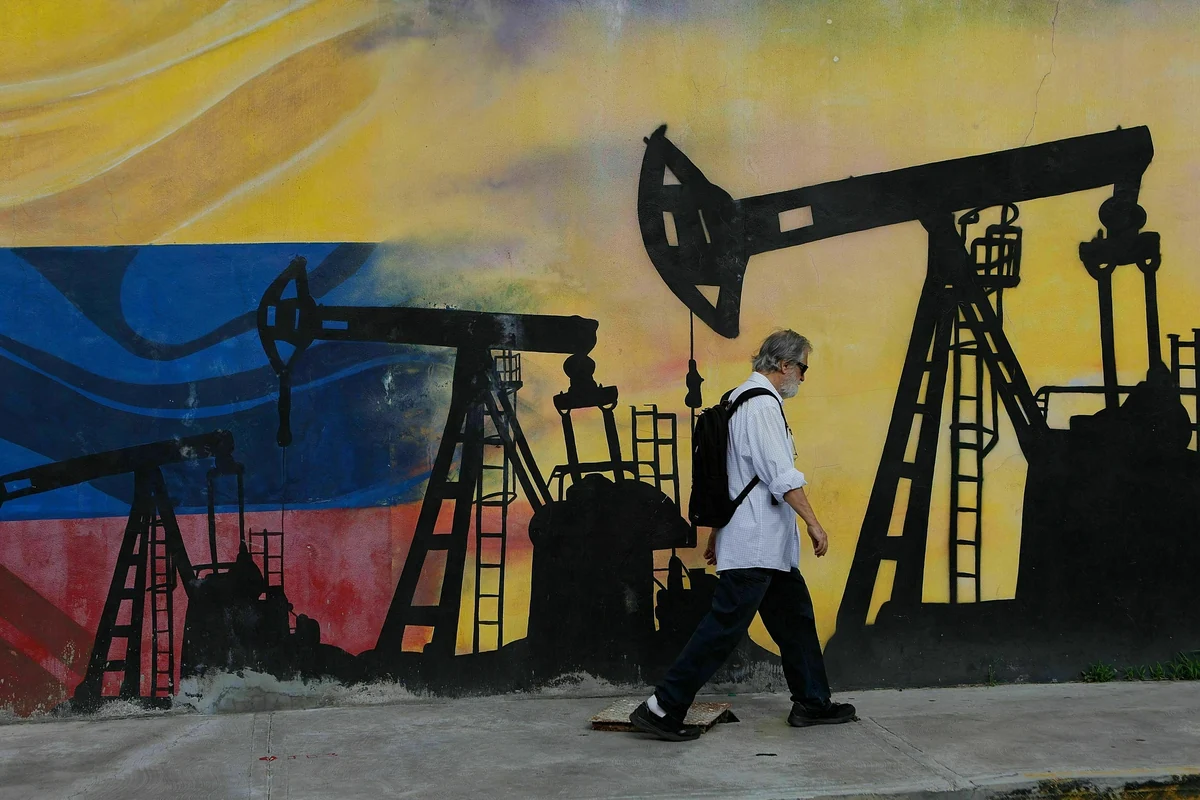
For 50 years — long before Hugo Chávez — Venezuela’s oil has been under state control. The slogan “El petróleo es nuestro — the oil is ours” fosters an identity that goes beyond party lines. Trump’s brazen disregard for this, expressed in a throwback colonial style, isn’t endearing him to Venezuelans.
Venezuelans’ daily lives are now marked by constant power outages. Elevators are out of service, water isn’t being pumped into high-rise apartments and computers are breaking down. Twenty‑six years of Chavismo have resulted in a dilapidated infrastructure. Donald Trump’s announcement that he plans to invest more than $100 billion in Venezuela’s ailing oil industry could provide cause for hope.
But the “biggest oil deal in world history” is provoking little enthusiasm among Venezuelans. It’s not that they miss Nicolás Maduro — who was abducted from Venezuela by the U.S. and is currently in a New York prison awaiting trial — but that the deal was negotiated with Maduro’s longtime vice president, Delcy Rodríguez.
Although Maduro is no longer in power, his ruling clique continues to run the country — albeit now as a U.S. protectorate. Rodríguez has completely squandered whatever political capital she had with the belated and inadequate state aid provided after the earthquake on June 24, 2026. Having her lead the reconstruction of Venezuela is an insult to Venezuelans hoping for free elections and the return of democracy — hopes that this “historic” deal will probably push further into the background.
Trump is frank about his objective: to bring Venezuela’s major oil reserves under U.S. control and advance American dominance in South America. The announcement isn’t intended for Venezuelans but for his U.S. voters who are feeling the pinch of high gasoline prices, a consequence of Trump’s Iran fiasco. Trump wants to convince them that Venezuelan oil will soon allow them to fill their tanks cheaply again.
For 50 years — long before Hugo Chávez — Venezuela’s oil has been under state control. The slogan “El petróleo es nuestro — the oil is ours” fosters an identity that goes beyond party lines. Trump’s brazen disregard for this, expressed in a throwback colonial style, isn’t endearing him to Venezuelans.
Previous article

Next article
