
Acts of Violence by the US Military: These Human Rights Violations Are Unforgivable Crimes
On March 13, a man was arrested on suspicion of assaulting and raping a woman in a hotel in Naha. She was a tourist visiting from outside the prefecture. He was a 24-year-old U.S. Navy sailor from Camp Schwab.
According to the police investigation, the sailor under suspicion had checked into the same hotel as the victim, and attacked the woman after drinking at a bar.
“Tighten discipline among officials.” “Prevent this from happening again.” The voices that cry out each time these incidents happen once again come to a fruitless end.
In Naha, alcohol-related incidents involving U.S. military personnel visiting from the base in northern Okinawa are a frequent occurrence. Last year, in a span of eight days between May and June, seven U.S. soldiers were arrested and charged on counts of robbery, assault, driving under the influence and other crimes that threw the city into a state of abnormality.
To curb drunken driving, soldiers were encouraged to stay at hotels or use a car service to return after drinking. It seemed as if the problem was solved; no one thought that this would actually lead to another kind of crime.
U.S. soldiers visiting Naha from northern Okinawa avoid towns and villages near bases, as military police and their superior officers patrol the area. As a result, they end up thinking that surveillance is lax — a clear indicator that their discipline training isn’t thorough enough.
In December 2014, the U.S. military drastically loosened guidelines imposed on military personnel outside of working hours (liberty policies). Its reasoning was that the soldiers had improved their behavior. However, prefecture police revealed that the number of drunken driving incidents has actually increased by four times since restrictions were loosened. With incidents and accidents occurring one after another, it’s completely unreasonable to think that our anger as citizens is getting through.
This time the incident happened in a hotel, a place that should be safe and relaxing. It happened to a tourist who came to visit Okinawa, but who ended up a victim of sexual assault. This is a barbaric act that tramples upon the dignity of a woman, and we will remember this indignation.
At the same time there is a growing concern that Okinawa’s reputation as a tourist destination will suffer because of this incident.
“Okinawa is dangerous with all of the U.S. military bases there.” We’ve already experienced how rumors like these can spread and damage tourism, which is a key industry of ours. In 2001, when the U.S. suffered through repeated terrorist attacks, field trips to Okinawa were cancelled one after another, sending tremors through our prefecture. Okinawa, with its bases, was at risk of attack.
Just the fact that these bases exist is clearly the main obstacle when it comes to the growth of Okinawa’s tourism industry. At the same time, we must recognize those within the Okinawan tourism industry who have suffered financially from these rumors, and all the effort they put into making a comeback and creating the current, favorable conditions that we have now.
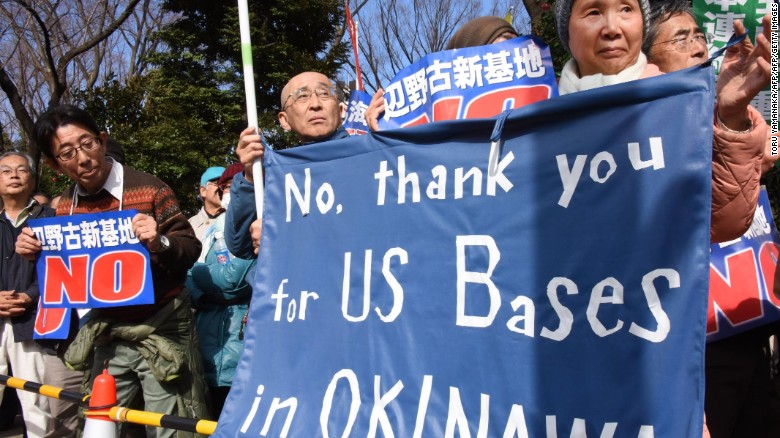
Governor of Okinawa Takeshi Onaga harshly criticized the incident by stating, “It is a crime which seriously violates the human rights of women and should never be tolerated.” He protested against the U.S. military’s bid for land reclamation in 26 municipalities to create more military bases, and against cooperating with the military on these bases. The Naha City Assembly is expected to object as well, and there’s also been movement in prefectural assemblies, the Nago City Assembly, and more. Two groups, “the association of women who will act and refuse to forgive the bases and the troops,” and “the overall structural problem of stationed troops,” have joined — thus showing the connection between the occupation of troops and sexual violence, and exemplifying our rage.
Okinawa’s response is sensitive, and is based on recognizing that the issue of military bases is a human rights issue. I urge the country to make this same realization, and urge the U.S. military to take practical measures to prevent these incidents from ever happening again.
According to the police investigation, the sailor under suspicion had checked into the same hotel as the victim, and attacked the woman after drinking at a bar.
“Tighten discipline among officials.” “Prevent this from happening again.” The voices that cry out each time these incidents happen once again come to a fruitless end.
In Naha, alcohol-related incidents involving U.S. military personnel visiting from the base in northern Okinawa are a frequent occurrence. Last year, in a span of eight days between May and June, seven U.S. soldiers were arrested and charged on counts of robbery, assault, driving under the influence and other crimes that threw the city into a state of abnormality.
To curb drunken driving, soldiers were encouraged to stay at hotels or use a car service to return after drinking. It seemed as if the problem was solved; no one thought that this would actually lead to another kind of crime.
U.S. soldiers visiting Naha from northern Okinawa avoid towns and villages near bases, as military police and their superior officers patrol the area. As a result, they end up thinking that surveillance is lax — a clear indicator that their discipline training isn’t thorough enough.
In December 2014, the U.S. military drastically loosened guidelines imposed on military personnel outside of working hours (liberty policies). Its reasoning was that the soldiers had improved their behavior. However, prefecture police revealed that the number of drunken driving incidents has actually increased by four times since restrictions were loosened. With incidents and accidents occurring one after another, it’s completely unreasonable to think that our anger as citizens is getting through.
This time the incident happened in a hotel, a place that should be safe and relaxing. It happened to a tourist who came to visit Okinawa, but who ended up a victim of sexual assault. This is a barbaric act that tramples upon the dignity of a woman, and we will remember this indignation.
At the same time there is a growing concern that Okinawa’s reputation as a tourist destination will suffer because of this incident.
“Okinawa is dangerous with all of the U.S. military bases there.” We’ve already experienced how rumors like these can spread and damage tourism, which is a key industry of ours. In 2001, when the U.S. suffered through repeated terrorist attacks, field trips to Okinawa were cancelled one after another, sending tremors through our prefecture. Okinawa, with its bases, was at risk of attack.
Just the fact that these bases exist is clearly the main obstacle when it comes to the growth of Okinawa’s tourism industry. At the same time, we must recognize those within the Okinawan tourism industry who have suffered financially from these rumors, and all the effort they put into making a comeback and creating the current, favorable conditions that we have now.
Governor of Okinawa Takeshi Onaga harshly criticized the incident by stating, “It is a crime which seriously violates the human rights of women and should never be tolerated.” He protested against the U.S. military’s bid for land reclamation in 26 municipalities to create more military bases, and against cooperating with the military on these bases. The Naha City Assembly is expected to object as well, and there’s also been movement in prefectural assemblies, the Nago City Assembly, and more. Two groups, “the association of women who will act and refuse to forgive the bases and the troops,” and “the overall structural problem of stationed troops,” have joined — thus showing the connection between the occupation of troops and sexual violence, and exemplifying our rage.
Okinawa’s response is sensitive, and is based on recognizing that the issue of military bases is a human rights issue. I urge the country to make this same realization, and urge the U.S. military to take practical measures to prevent these incidents from ever happening again.
Previous article

Next article