
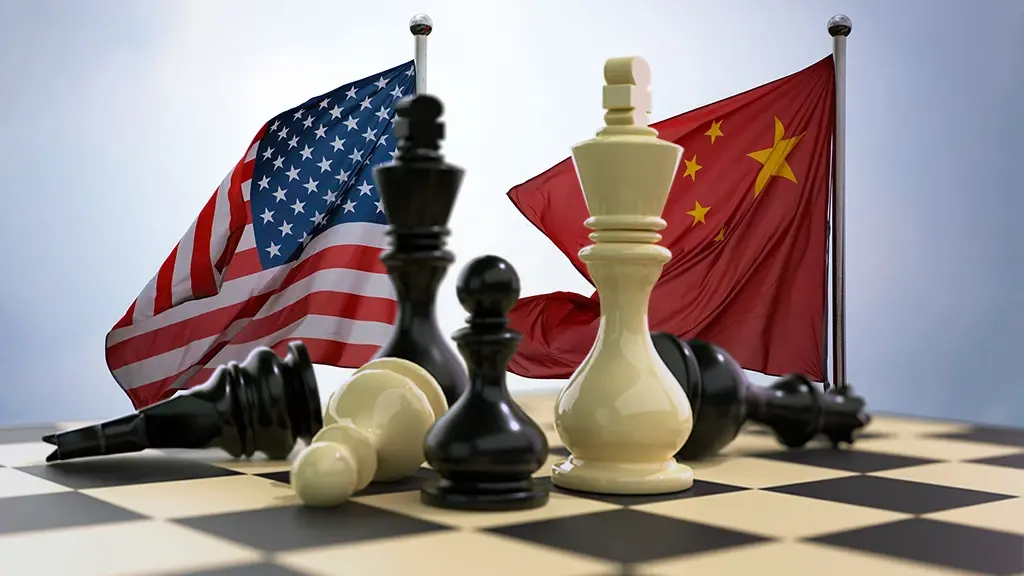
Precarious US-China Rivalry: Risky Game of Chess
A warning for Trump: Do not intervene in Taiwan.
A warning for Trump: Do not intervene in Taiwan. A demand to acknowledge Chinese hegemony in the Western Pacific. A question thrown at South Korea.
We must preserve our alliances while we also strengthen our own nation.
The ancient Greek historian Thucydides concluded that the Peloponnesian War was caused by the fear Sparta felt over the rise of Athens. This analysis later became the basis for the “Thucydides Trap”: When an existing hegemonic power is threatened by an emerging power, mutual fear ultimately leads to conflict. During the U.S.-China summit last week, President Xi Jinping mentioned the Thucydides Trap directly, posing the inflammatory question, “If China attacks Taiwan, are you going to defend Taiwan?” He even added, “If the situation is mishandled, are we going to clash, or worse, go to war?”
On the surface, his message was “Don’t support Taiwan’s independence.” But the underlying meaning was that the United States must acknowledge China’s rise and begin the “G2” era* together. President Xi has long said that the Pacific Ocean is so wide that it can accommodate both the United States and China. Even when the United States invaded Venezuela to capture its president and assassinated Iran’s leaders, China did not interfere. The implication is clear: China expects its own sphere of influence to be acknowledged. As the United States’ hegemony continues to weaken, China’s voice will only get louder.
During this summit, even U.S. arms sales to Taiwan were laid out on the table. It appears Donald Trump is now willing to disregard the longstanding principle that the United States doesn't consult China in advance regarding weapons sales to Taiwan. And now, the parties have thrown Taiwan into the fire. Trump will even use security threats against allies or partners as bargaining chips.
It is unlikely that the United States will bow under pressure from China. Historically, no hegemonic power has meekly yielded to a rising opponent. The United States is no exception, and historical events are proof of this. The moment the Soviet Union, Germany and Japan challenged U.S. power, they turned into enemies. When the threat is eliminated, it is possible for enemies to reengage as friends. However, for the time being, it is unlikely that the United States will view China as anything but a significant threat.
From our perspective, both an agreement and a conflict between the United States and China carry certain risks. There are no previous instances in which a challenging nation has peacefully traded places with an existing hegemon. As China’s strength continues to grow, it will be easy to fall into a Thucydides Trap. “Taiwanese independence and peace in the Taiwan Strait, like water and fire, are incompatible” President Xi said. There is another point of contention. As the number of Taiwan-born generations increases, Taiwanese identity has also grown stronger. The confidence of the Taiwanese people could add to the tinderbox. It is entirely possible that, even after Trump, the “America First” foundation will remain. At any moment, security issues in Northeast Asia and the Korean Peninsula could serve as sacrificial pawns in the U.S.-China chess game.
Caught between the two powers, our position has continuously shifted during each administration. The Roh Moo-hyun administration’s “balancer” policy drew only skepticism from the United States and China. In order for our country to become a true balancing agent, depending on which side we support, the balance must truly shift. President Park Geun-hye’s “hedging” strategy between the United States and China resulted in her appearance alongside President Xi and Russian President Vladimir Putin on top of the Tiananmen Gate, much to the dismay of many. However, it led to disaster. The United States felt betrayed by the display, and China retaliated after South Korea agreed to deploy the Terminal High Altitude Area Defense missiles. President Moon Jae-in’s one-sided, pro-China actions resulted in little more than a viral photo of him eating alone in China.
The Lee Jae Myung administration initially was determined to strengthen the alliance with the United States while also navigating an unavoidable relationship with China. President Lee’s remark that “We can no longer pursue security with the United States and economic ties with China” is representative of this, aligning national interests with practicality. However, as time passes, we can see an increasing number of cracks in the alliance. Within the Trump administration, there is a growing perception that the South Korean government is left-leaning and pro-China. This is just a misunderstanding based on an exaggeration of President Lee’s remarks while facing the opposing party. Nevertheless, it is our responsibility to correct this miscommunication. Earlier this year, our Ministry of National Defense confronted United States Forces Korea over the situation between U.S. and Chinese fighter jets in the West Sea. The intention of this confrontation could have been to refrain from entanglement in a U.S.-China dispute; however, it shouldn’t have gone as far as it did. In the “History of the Peloponnesian War,” there is an epigram: “You know as well as we do that right, as the world goes, is only in question between equals in power, while the strong do what they can and the weak suffer what they must.” This is a reminder of how important it is to manage alliances while strengthening one’s own nation.
*Editor's note: The "G2" era refers to the relationship between China and the U.S., including the balance of power, trade relations and global influence.
A warning for Trump: Do not intervene in Taiwan. A demand to acknowledge Chinese hegemony in the Western Pacific. A question thrown at South Korea.
We must preserve our alliances while we also strengthen our own nation.
The ancient Greek historian Thucydides concluded that the Peloponnesian War was caused by the fear Sparta felt over the rise of Athens. This analysis later became the basis for the “Thucydides Trap”: When an existing hegemonic power is threatened by an emerging power, mutual fear ultimately leads to conflict. During the U.S.-China summit last week, President Xi Jinping mentioned the Thucydides Trap directly, posing the inflammatory question, “If China attacks Taiwan, are you going to defend Taiwan?” He even added, “If the situation is mishandled, are we going to clash, or worse, go to war?”
On the surface, his message was “Don’t support Taiwan’s independence.” But the underlying meaning was that the United States must acknowledge China’s rise and begin the “G2” era* together. President Xi has long said that the Pacific Ocean is so wide that it can accommodate both the United States and China. Even when the United States invaded Venezuela to capture its president and assassinated Iran’s leaders, China did not interfere. The implication is clear: China expects its own sphere of influence to be acknowledged. As the United States’ hegemony continues to weaken, China’s voice will only get louder.
During this summit, even U.S. arms sales to Taiwan were laid out on the table. It appears Donald Trump is now willing to disregard the longstanding principle that the United States doesn't consult China in advance regarding weapons sales to Taiwan. And now, the parties have thrown Taiwan into the fire. Trump will even use security threats against allies or partners as bargaining chips.
It is unlikely that the United States will bow under pressure from China. Historically, no hegemonic power has meekly yielded to a rising opponent. The United States is no exception, and historical events are proof of this. The moment the Soviet Union, Germany and Japan challenged U.S. power, they turned into enemies. When the threat is eliminated, it is possible for enemies to reengage as friends. However, for the time being, it is unlikely that the United States will view China as anything but a significant threat.
From our perspective, both an agreement and a conflict between the United States and China carry certain risks. There are no previous instances in which a challenging nation has peacefully traded places with an existing hegemon. As China’s strength continues to grow, it will be easy to fall into a Thucydides Trap. “Taiwanese independence and peace in the Taiwan Strait, like water and fire, are incompatible” President Xi said. There is another point of contention. As the number of Taiwan-born generations increases, Taiwanese identity has also grown stronger. The confidence of the Taiwanese people could add to the tinderbox. It is entirely possible that, even after Trump, the “America First” foundation will remain. At any moment, security issues in Northeast Asia and the Korean Peninsula could serve as sacrificial pawns in the U.S.-China chess game.
Caught between the two powers, our position has continuously shifted during each administration. The Roh Moo-hyun administration’s “balancer” policy drew only skepticism from the United States and China. In order for our country to become a true balancing agent, depending on which side we support, the balance must truly shift. President Park Geun-hye’s “hedging” strategy between the United States and China resulted in her appearance alongside President Xi and Russian President Vladimir Putin on top of the Tiananmen Gate, much to the dismay of many. However, it led to disaster. The United States felt betrayed by the display, and China retaliated after South Korea agreed to deploy the Terminal High Altitude Area Defense missiles. President Moon Jae-in’s one-sided, pro-China actions resulted in little more than a viral photo of him eating alone in China.
The Lee Jae Myung administration initially was determined to strengthen the alliance with the United States while also navigating an unavoidable relationship with China. President Lee’s remark that “We can no longer pursue security with the United States and economic ties with China” is representative of this, aligning national interests with practicality. However, as time passes, we can see an increasing number of cracks in the alliance. Within the Trump administration, there is a growing perception that the South Korean government is left-leaning and pro-China. This is just a misunderstanding based on an exaggeration of President Lee’s remarks while facing the opposing party. Nevertheless, it is our responsibility to correct this miscommunication. Earlier this year, our Ministry of National Defense confronted United States Forces Korea over the situation between U.S. and Chinese fighter jets in the West Sea. The intention of this confrontation could have been to refrain from entanglement in a U.S.-China dispute; however, it shouldn’t have gone as far as it did. In the “History of the Peloponnesian War,” there is an epigram: “You know as well as we do that right, as the world goes, is only in question between equals in power, while the strong do what they can and the weak suffer what they must.” This is a reminder of how important it is to manage alliances while strengthening one’s own nation.
*Editor's note: The "G2" era refers to the relationship between China and the U.S., including the balance of power, trade relations and global influence.
Previous article

Next article
