
‘Trump Is in a Hurry To End the War, Otherwise He Will Have To Ask China To Intervene’
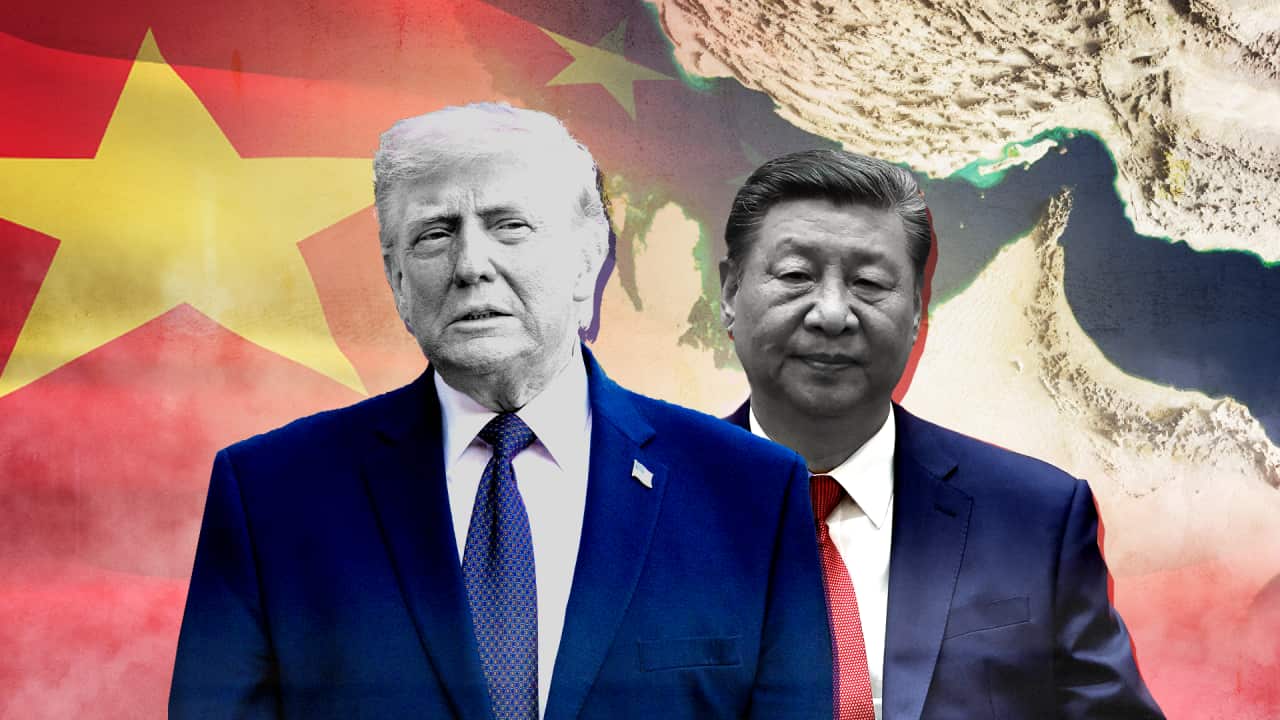
With Donald Trump’s planned visit to China approaching, discussion about the connection between the situation in the Middle East and the U.S.-China rivalry continues to intensify. Quoting a former senior U.S. official on Middle East affairs, The Wall Street Journal reported on May 6 that, with the mid-May visit to China in mind, the Trump administration was pushing to finalize an agreement ending the Iran war as quickly as possible, the logic being that, if the fighting drags on, Trump will be forced to visit China as a supplicant, asking for Beijing’s assistance in getting Iran to accept the United States’ conditions.
But Niu Song, a researcher at the Middle East Studies Institute of Shanghai International Studies University, told Guancha News that the U.S.-China relationship itself remained at the heart of Trump’s visit to China. While the Iranian issue would affect the pace of his diplomacy and the atmosphere surrounding the visit, it was not a central axis of U.S.-China relations, Niu said. China would not be conducting diplomacy in the Middle East according to the “script” envisioned by Trump, nor would it get swept up in Washington’s habitual logic of coercive diplomacy.
According to reports, Daniel Shapiro, former Deputy Assistant Secretary of Defense for Middle East Policy and former U.S. ambassador to Israel, stated that continued fighting in the Middle East would strengthen China’s bargaining power in negotiations with the United States.
“Trump has a big incentive to get the war wrapped up before he visits Beijing next week,” Shapiro said. “If the war is ongoing, he arrives in the position of a supplicant, seeking Xi’s help to get Iran to accept his terms.
“If the war is over, Trump can focus on the economic deals he is most interested in. Of course, Iran understands these dynamics, [giving it] the leverage to achieve a very modest deal.”
He added that continued fighting in the Gulf region would also weaken U.S. deterrence against China in the Indo-Pacific, instead “[reinforcing] Xi’s effort to portray the United States as a destabilizing force and China the responsible adult.”
Writing on X (formerly Twitter), Shapiro also said that Trump had recently taken a range of measures to ease tensions with China, including temporarily suspending arms sales to Taiwan, refraining from publicly supporting Japan in Sino-Japanese disputes, and abstaining from criticism of China’s actions in the South China Sea.
It is worth noting that, more than two months into the conflict’s eruption, Trump and Secretary of State Marco Rubio have each recently signaled that the military operation has concluded.
On May 6, Trump stated that if Iran agreed to the United States’ terms, “Operation Epic Fury” would come to an end. Rubio likewise stated that “Operation Epic Fury,” the U.S. military operation launched against Iran at the end of February, was “over,” saying, “We’re done with that stage of it.”
In Niu’s view, there are multiple reasons why Trump is eager to end the military operation against Iran.
First, Trump’s tactical attempt to force Iran into a swift and complete surrender has been a failure. The blockade and counter-blockade of the Strait of Hormuz by Iran and the United States have put the latter in the awkward position of both failing to reach an agreement and having to do all it can to avoid breaking the temporary ceasefire.
Beyond that, Trump is also facing domestic political pressure: With both parties gearing up for the midterm elections, Trump’s military campaign against Iran has become an issue neither side of the aisle can avoid.
Views like Shapiro’s, which tie the Iran issue to U.S.-China relations, are not uncommon.
British news periodical The Week, for example, wrote in a May 6 article that the situation in Iran would overshadow all other issues on Trump’s agenda for his China visit, as both countries hoped to prevent the global economy “from careening off the looming cliff.”
Brahma Chellaney, a commentator for The Hill, put it bluntly, stating that Trump was heading to Beijing with “fewer cards to play” and that his decision to use force against Iran had “boomeranged into a global energy shock,” making this trip “less a show of strength” and more one of “damage control.”
The war had depleted the United States’ munitions, Chellaney wrote, strained its economy, and accelerated the shift in U.S.-China relations from “a rivalry of near-peers,” to “something closer to a creditor-debtor dynamic.” The question Trump faces in Beijing will no longer be “whether he can strike a deal,” but rather, “what will he give up to get one.”
However, Niu believes that U.S.-China relations remain the core issue underpinning Trump’s visit to China and that there will be no question of him “supplicating” China on the situation in Iran. Such statements, Niu said, overstate the weight of the Iran issue in the U.S-China relationship.
According to Niu, regardless of whether Trump ultimately visited China, it would not affect the latter’s ability to play a role in the current Middle East situation, particularly in the Gulf. A great many U.S. operations in the Middle East were driven by unilateralism and hegemonic thinking, whereas China’s engagements with Middle Eastern countries were grounded in the basic principles of international relations. China did not seek “proxies,” did not form “cliques,” and was not attempting to “fill a vacuum.”
He went on to say that an easing of tensions surrounding Iran would certainly help provide Trump with a relatively favorable environment for his trip. At present, Niu said, the situation in Iran was taking up a significant amount of Trump’s time and energy, but this did not mean that it was inherently intertwined with U.S.-China relations.
“Clearly, the core issue between China and the United States is not Iran,” Niu said. The situation in the Middle East, he argued, would not become a major variable affecting U.S.-China relations, and China would continue in its independent efforts to promote peace talks in the region.
Just one week before Trump’s planned visit to China, Iranian Foreign Minister Abbas Araghchi had already visited China.
Speaking in Beijing on May 6, Araghchi said the facts had proven that political crises could not be resolved through military means. Iran, he said, would be resolute in safeguarding its national sovereignty and dignity, and it would continue to build consensus through peaceful negotiations in pursuit of a comprehensive and lasting solution.
During his talks with Araghchi, Chinese Foreign Minister Wang Yi stressed that China had been actively working to promote peace talks and negotiations ever since the outbreak of the conflict. Specifically, he referred to China’s belief that Gulf and Middle Eastern countries should take their destinies into their own hands, encouraged Iran and more Gulf nations to engage in dialogue and foster neighborly relations, and expressed his support for the establishment of a regional peace and security framework for member states to jointly participate in, to safeguard their shared interests and pursue common development.
As Niu explained, China’s calls reflected its longstanding position that “the Middle East belongs to the people of the Middle East.” China was opposed to “wanton interference” by outside forces in Middle Eastern affairs, saw the region’s countries as bound by geography for better or for worse, and was of the view that only dialogue — not confrontation — could fundamentally resolve problems that arise. Intervention by outside forces could easily lead to bloc-based confrontations, he said.
Beyond the diplomatic maneuvering, the United States and Iran have both put forward ceasefire proposals, but their respective demands and positions are vastly different, making the outlook for negotiations uncertain.
It is reported that the United States previously put forward a nine-point proposal, and in response, Iran advanced a 14-point plan (in its latest iteration). The U.S. proposal called for a two-month ceasefire, but Iran insisted that all issues be resolved within 30 days and that the focus should be on “ending the war,” not on extending the ceasefire.
The main points in Iran’s proposal included assurances of no further military aggression, the withdrawal of U.S. forces from the areas surrounding Iran, lifting the maritime blockade, unfreezing Iranian assets, the payment of compensation, the lifting of sanctions, achieving peace on all fronts (including Lebanon), and the creation of a new governance mechanism for the Strait of Hormuz.
According to Niu’s analysis, there is a chasm between the United States’ “nine-point plan” and Iran’s “14-point plan.” Trump has both publicly rejected Iran’s proposal and at the same time voiced his expectation that Iran continue to refine it. There are reports that the United States may come to what has been referred to as a “memorandum of understanding” with Iran, but there has been no clear progress on that front.
In Niu’s view, the real sticking points in the current U.S.-Iran negotiations lie on two levels: deep-seated structural contradictions and the more immediate, real-world conflict. On the former, the main U.S.-Iranian differences pertain to Iran’s uranium enrichment activities and its long-range missiles. The United States hopes to eliminate to the greatest extent possible what it perceives as Iran’s capability to develop nuclear weapons, while Iran vehemently defends its right to the peaceful use of nuclear energy.
“From Washington’s perspective, Iran’s long-range missile development is not just relevant to its own security and that of its regional allies; the potential combination of long-range missiles and nuclear capabilities is also a deep concern,” Niu said. “And regarding the latter, the current gamesmanship between the United States and Iran over navigation in the Strait of Hormuz has left Washington in a bind. Both parties are instrumentalizing the Strait of Hormuz to force the other into making concessions that benefit themselves.”
But Niu Song, a researcher at the Middle East Studies Institute of Shanghai International Studies University, told Guancha News that the U.S.-China relationship itself remained at the heart of Trump’s visit to China. While the Iranian issue would affect the pace of his diplomacy and the atmosphere surrounding the visit, it was not a central axis of U.S.-China relations, Niu said. China would not be conducting diplomacy in the Middle East according to the “script” envisioned by Trump, nor would it get swept up in Washington’s habitual logic of coercive diplomacy.
According to reports, Daniel Shapiro, former Deputy Assistant Secretary of Defense for Middle East Policy and former U.S. ambassador to Israel, stated that continued fighting in the Middle East would strengthen China’s bargaining power in negotiations with the United States.
“Trump has a big incentive to get the war wrapped up before he visits Beijing next week,” Shapiro said. “If the war is ongoing, he arrives in the position of a supplicant, seeking Xi’s help to get Iran to accept his terms.
“If the war is over, Trump can focus on the economic deals he is most interested in. Of course, Iran understands these dynamics, [giving it] the leverage to achieve a very modest deal.”
He added that continued fighting in the Gulf region would also weaken U.S. deterrence against China in the Indo-Pacific, instead “[reinforcing] Xi’s effort to portray the United States as a destabilizing force and China the responsible adult.”
Writing on X (formerly Twitter), Shapiro also said that Trump had recently taken a range of measures to ease tensions with China, including temporarily suspending arms sales to Taiwan, refraining from publicly supporting Japan in Sino-Japanese disputes, and abstaining from criticism of China’s actions in the South China Sea.
It is worth noting that, more than two months into the conflict’s eruption, Trump and Secretary of State Marco Rubio have each recently signaled that the military operation has concluded.
On May 6, Trump stated that if Iran agreed to the United States’ terms, “Operation Epic Fury” would come to an end. Rubio likewise stated that “Operation Epic Fury,” the U.S. military operation launched against Iran at the end of February, was “over,” saying, “We’re done with that stage of it.”
In Niu’s view, there are multiple reasons why Trump is eager to end the military operation against Iran.
First, Trump’s tactical attempt to force Iran into a swift and complete surrender has been a failure. The blockade and counter-blockade of the Strait of Hormuz by Iran and the United States have put the latter in the awkward position of both failing to reach an agreement and having to do all it can to avoid breaking the temporary ceasefire.
Beyond that, Trump is also facing domestic political pressure: With both parties gearing up for the midterm elections, Trump’s military campaign against Iran has become an issue neither side of the aisle can avoid.
Views like Shapiro’s, which tie the Iran issue to U.S.-China relations, are not uncommon.
British news periodical The Week, for example, wrote in a May 6 article that the situation in Iran would overshadow all other issues on Trump’s agenda for his China visit, as both countries hoped to prevent the global economy “from careening off the looming cliff.”
Brahma Chellaney, a commentator for The Hill, put it bluntly, stating that Trump was heading to Beijing with “fewer cards to play” and that his decision to use force against Iran had “boomeranged into a global energy shock,” making this trip “less a show of strength” and more one of “damage control.”
The war had depleted the United States’ munitions, Chellaney wrote, strained its economy, and accelerated the shift in U.S.-China relations from “a rivalry of near-peers,” to “something closer to a creditor-debtor dynamic.” The question Trump faces in Beijing will no longer be “whether he can strike a deal,” but rather, “what will he give up to get one.”
However, Niu believes that U.S.-China relations remain the core issue underpinning Trump’s visit to China and that there will be no question of him “supplicating” China on the situation in Iran. Such statements, Niu said, overstate the weight of the Iran issue in the U.S-China relationship.
According to Niu, regardless of whether Trump ultimately visited China, it would not affect the latter’s ability to play a role in the current Middle East situation, particularly in the Gulf. A great many U.S. operations in the Middle East were driven by unilateralism and hegemonic thinking, whereas China’s engagements with Middle Eastern countries were grounded in the basic principles of international relations. China did not seek “proxies,” did not form “cliques,” and was not attempting to “fill a vacuum.”
He went on to say that an easing of tensions surrounding Iran would certainly help provide Trump with a relatively favorable environment for his trip. At present, Niu said, the situation in Iran was taking up a significant amount of Trump’s time and energy, but this did not mean that it was inherently intertwined with U.S.-China relations.
“Clearly, the core issue between China and the United States is not Iran,” Niu said. The situation in the Middle East, he argued, would not become a major variable affecting U.S.-China relations, and China would continue in its independent efforts to promote peace talks in the region.
Just one week before Trump’s planned visit to China, Iranian Foreign Minister Abbas Araghchi had already visited China.
Speaking in Beijing on May 6, Araghchi said the facts had proven that political crises could not be resolved through military means. Iran, he said, would be resolute in safeguarding its national sovereignty and dignity, and it would continue to build consensus through peaceful negotiations in pursuit of a comprehensive and lasting solution.
During his talks with Araghchi, Chinese Foreign Minister Wang Yi stressed that China had been actively working to promote peace talks and negotiations ever since the outbreak of the conflict. Specifically, he referred to China’s belief that Gulf and Middle Eastern countries should take their destinies into their own hands, encouraged Iran and more Gulf nations to engage in dialogue and foster neighborly relations, and expressed his support for the establishment of a regional peace and security framework for member states to jointly participate in, to safeguard their shared interests and pursue common development.
As Niu explained, China’s calls reflected its longstanding position that “the Middle East belongs to the people of the Middle East.” China was opposed to “wanton interference” by outside forces in Middle Eastern affairs, saw the region’s countries as bound by geography for better or for worse, and was of the view that only dialogue — not confrontation — could fundamentally resolve problems that arise. Intervention by outside forces could easily lead to bloc-based confrontations, he said.
Beyond the diplomatic maneuvering, the United States and Iran have both put forward ceasefire proposals, but their respective demands and positions are vastly different, making the outlook for negotiations uncertain.
It is reported that the United States previously put forward a nine-point proposal, and in response, Iran advanced a 14-point plan (in its latest iteration). The U.S. proposal called for a two-month ceasefire, but Iran insisted that all issues be resolved within 30 days and that the focus should be on “ending the war,” not on extending the ceasefire.
The main points in Iran’s proposal included assurances of no further military aggression, the withdrawal of U.S. forces from the areas surrounding Iran, lifting the maritime blockade, unfreezing Iranian assets, the payment of compensation, the lifting of sanctions, achieving peace on all fronts (including Lebanon), and the creation of a new governance mechanism for the Strait of Hormuz.
According to Niu’s analysis, there is a chasm between the United States’ “nine-point plan” and Iran’s “14-point plan.” Trump has both publicly rejected Iran’s proposal and at the same time voiced his expectation that Iran continue to refine it. There are reports that the United States may come to what has been referred to as a “memorandum of understanding” with Iran, but there has been no clear progress on that front.
In Niu’s view, the real sticking points in the current U.S.-Iran negotiations lie on two levels: deep-seated structural contradictions and the more immediate, real-world conflict. On the former, the main U.S.-Iranian differences pertain to Iran’s uranium enrichment activities and its long-range missiles. The United States hopes to eliminate to the greatest extent possible what it perceives as Iran’s capability to develop nuclear weapons, while Iran vehemently defends its right to the peaceful use of nuclear energy.
“From Washington’s perspective, Iran’s long-range missile development is not just relevant to its own security and that of its regional allies; the potential combination of long-range missiles and nuclear capabilities is also a deep concern,” Niu said. “And regarding the latter, the current gamesmanship between the United States and Iran over navigation in the Strait of Hormuz has left Washington in a bind. Both parties are instrumentalizing the Strait of Hormuz to force the other into making concessions that benefit themselves.”
Previous article

Next article
