
Europe Hears ‘Enough’ from the US: Clever Poles Refuse To Believe It
Today we are witnessing the end of the world we have dreamed of. But we're too smart to believe it's really over. We believe that we still can create an enclave of the old transatlantic order.
The history of the U.S. and the history of Poland are intertwined in some unusual way, like the braided strands of challah. The stories of Kazimierz Pułaski, Tadeusz Kościuszko, Ignacy Jan Paderewski, Helena Modrzejewska, and Lech Wałęsa are still alive across the Atlantic. Today, Donald Trump's favorite is Polish President Karol Nawrocki, adding another chapter to this complex historical tale.
When, 250 years ago, the U.S. was being founded, the First Republic of Poland was dying.
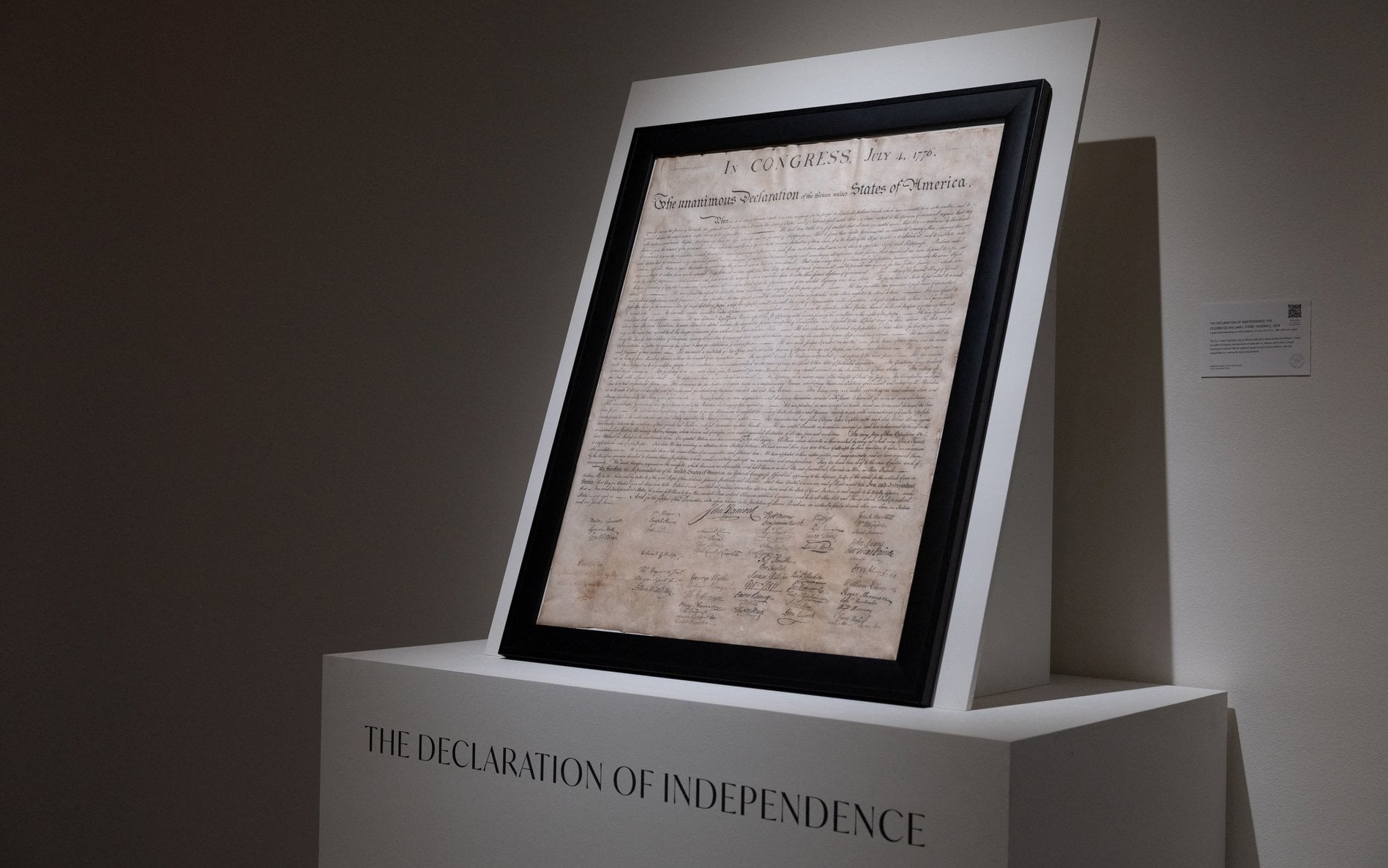
But this is not a parallel of glory; let us not delude ourselves. It was when the U.S. was born, when the Declaration of Independence was signed 250 years ago, that Poland began the process of disappearing from current maps to move to the pages of history textbooks. When the U.S. was being born, the Republic of Poland was dying.
The Declaration of Independence was signed four years after the first partition. Our great pride, that is, the Constitution of May 3, adopted just four years after the American Constitution, preceded by two years the second and by four years the third partitions of Poland. The American Constitution built this powerful state; Poland's Constitution was as useful to us as incense to the dead. For a quarter of a millennium, since the founding of the U.S., Poland enjoyed sovereignty for 21 years in the interwar period and for the last 37 years.
We believe we can have a special relationship with Trump even if he decides to pull the U.S. out of Europe strategically. Interestingly, the Americans, when founding their country, looked at Rome and Greece. The nobility in the First Republic also believed that they realized republican ideals directly from Rome or Greece. As Prof. Marek Cichocki once so aptly put it, instead of facing the choice of East or West, Poles chose... the South.
The American Constitution, which built this country, also took from antiquity the concept that it is the few that rule. For many years, only a quarter of the U.S. population had full political rights. Until 1920, women were not allowed to vote, and the full electoral and political rights for non-white U.S. citizens came only with legislation passed in the 1960s. Thus, the homeland of freedom and democracy became fully free and democratic only after almost two centuries of its existence. Until recently, it was believed that only thanks to woke ideology do true freedom and democracy prevail.
But we in Poland are too smart to believe that this is really the end. We believe that we can create an enclave of the old transatlantic order.
In the case of Poland, the situation was much more complicated. The First Polish Republic collapsed because it became a corrupt oligarchy. The magnates were more powerful than their own state and often preferred to pursue the interests of foreign courts rather than those of their own country. They prevented the state from becoming strong because a stronger state would have limited their unchecked power. The Second Polish Republic was slightly more inclusive than the first, but it still remained a country full of systemic inequalities. It was not without reason that its enemies referred to it as "lordly Poland."
And if after 1989 we have become a country of great opportunities — as Andrzej Leder and Marcin Piątkowski wrote — it was because of the decisions of foreign powers. During the Second World War, Hitler and then Stalin radically changed Polish society, liquidated social classes, murdered Jews, and exterminated the aristocracy, the elite, and the bourgeoisie. It was this massacre, which for conservatives was evidence of the continuity of Polish tradition and culture being broken, that laid the foundation for what economists call the Polish economic miracle, or — as Piatkowski called it — the "Golden Age." But it was precisely the combination of communism's achievements, such as a fairly well-educated population, the initial low spread of income inequality, and the lack of strong oligarchic structures capable of harnessing the state to pursue the interests of the few at the expense of the weaker majority, that laid the foundation for the American Dream in Poland.
Interestingly, today we are witnessing the end of this world, of which we used to dream. It was the U.S. that created the liberal-democratic order that began to spread in parts of the West after World War II, but it truly took hold after the Iron Curtain fell and the Soviet Union collapsed. Now after three and a half decades, Americans tell us, "Thank you, that's enough." Of course, one can argue whether Trump is dismantling this order with his decisions or if he is simply announcing the fact that the world in which we believed no longer exists.
But we in Poland are too smart to believe that this is really the end. We believe that we can create an enclave of the old transatlantic order. That we can have a special relationship with Trump even after he decides on a strategic exit from Europe. Meanwhile, we are largely overlooking the implementation of the NATO 3.0 vision, under which Germany and Poland are to take responsibility for ground forces in Europe while we establish a permanent base. And we hope that this is not only in our interest but also in the interest of the Americans. After all, once they have invested in data centers, engineering hubs, nuclear power plants, and Abrams maintenance facilities, it will be in their own interest to defend those investments along the Vistula river. So maybe this will really happen?
So, let's celebrate the 250th birthday of the U.S. together. let's just not accidentally fall into another geopolitical nap, from which we will wake up in another, even less friendly world.
The history of the U.S. and the history of Poland are intertwined in some unusual way, like the braided strands of challah. The stories of Kazimierz Pułaski, Tadeusz Kościuszko, Ignacy Jan Paderewski, Helena Modrzejewska, and Lech Wałęsa are still alive across the Atlantic. Today, Donald Trump's favorite is Polish President Karol Nawrocki, adding another chapter to this complex historical tale.
When, 250 years ago, the U.S. was being founded, the First Republic of Poland was dying.
But this is not a parallel of glory; let us not delude ourselves. It was when the U.S. was born, when the Declaration of Independence was signed 250 years ago, that Poland began the process of disappearing from current maps to move to the pages of history textbooks. When the U.S. was being born, the Republic of Poland was dying.
The Declaration of Independence was signed four years after the first partition. Our great pride, that is, the Constitution of May 3, adopted just four years after the American Constitution, preceded by two years the second and by four years the third partitions of Poland. The American Constitution built this powerful state; Poland's Constitution was as useful to us as incense to the dead. For a quarter of a millennium, since the founding of the U.S., Poland enjoyed sovereignty for 21 years in the interwar period and for the last 37 years.
We believe we can have a special relationship with Trump even if he decides to pull the U.S. out of Europe strategically. Interestingly, the Americans, when founding their country, looked at Rome and Greece. The nobility in the First Republic also believed that they realized republican ideals directly from Rome or Greece. As Prof. Marek Cichocki once so aptly put it, instead of facing the choice of East or West, Poles chose... the South.
The American Constitution, which built this country, also took from antiquity the concept that it is the few that rule. For many years, only a quarter of the U.S. population had full political rights. Until 1920, women were not allowed to vote, and the full electoral and political rights for non-white U.S. citizens came only with legislation passed in the 1960s. Thus, the homeland of freedom and democracy became fully free and democratic only after almost two centuries of its existence. Until recently, it was believed that only thanks to woke ideology do true freedom and democracy prevail.
But we in Poland are too smart to believe that this is really the end. We believe that we can create an enclave of the old transatlantic order.
In the case of Poland, the situation was much more complicated. The First Polish Republic collapsed because it became a corrupt oligarchy. The magnates were more powerful than their own state and often preferred to pursue the interests of foreign courts rather than those of their own country. They prevented the state from becoming strong because a stronger state would have limited their unchecked power. The Second Polish Republic was slightly more inclusive than the first, but it still remained a country full of systemic inequalities. It was not without reason that its enemies referred to it as "lordly Poland."
And if after 1989 we have become a country of great opportunities — as Andrzej Leder and Marcin Piątkowski wrote — it was because of the decisions of foreign powers. During the Second World War, Hitler and then Stalin radically changed Polish society, liquidated social classes, murdered Jews, and exterminated the aristocracy, the elite, and the bourgeoisie. It was this massacre, which for conservatives was evidence of the continuity of Polish tradition and culture being broken, that laid the foundation for what economists call the Polish economic miracle, or — as Piatkowski called it — the "Golden Age." But it was precisely the combination of communism's achievements, such as a fairly well-educated population, the initial low spread of income inequality, and the lack of strong oligarchic structures capable of harnessing the state to pursue the interests of the few at the expense of the weaker majority, that laid the foundation for the American Dream in Poland.
Interestingly, today we are witnessing the end of this world, of which we used to dream. It was the U.S. that created the liberal-democratic order that began to spread in parts of the West after World War II, but it truly took hold after the Iron Curtain fell and the Soviet Union collapsed. Now after three and a half decades, Americans tell us, "Thank you, that's enough." Of course, one can argue whether Trump is dismantling this order with his decisions or if he is simply announcing the fact that the world in which we believed no longer exists.
But we in Poland are too smart to believe that this is really the end. We believe that we can create an enclave of the old transatlantic order. That we can have a special relationship with Trump even after he decides on a strategic exit from Europe. Meanwhile, we are largely overlooking the implementation of the NATO 3.0 vision, under which Germany and Poland are to take responsibility for ground forces in Europe while we establish a permanent base. And we hope that this is not only in our interest but also in the interest of the Americans. After all, once they have invested in data centers, engineering hubs, nuclear power plants, and Abrams maintenance facilities, it will be in their own interest to defend those investments along the Vistula river. So maybe this will really happen?
So, let's celebrate the 250th birthday of the U.S. together. let's just not accidentally fall into another geopolitical nap, from which we will wake up in another, even less friendly world.
Previous article
Next article
