
America’s AI Dilemma
Published in Frankfurter Allgemeine Zeitung
(Germany) on 5 August 2026
by Roland Lindner (link to
original)
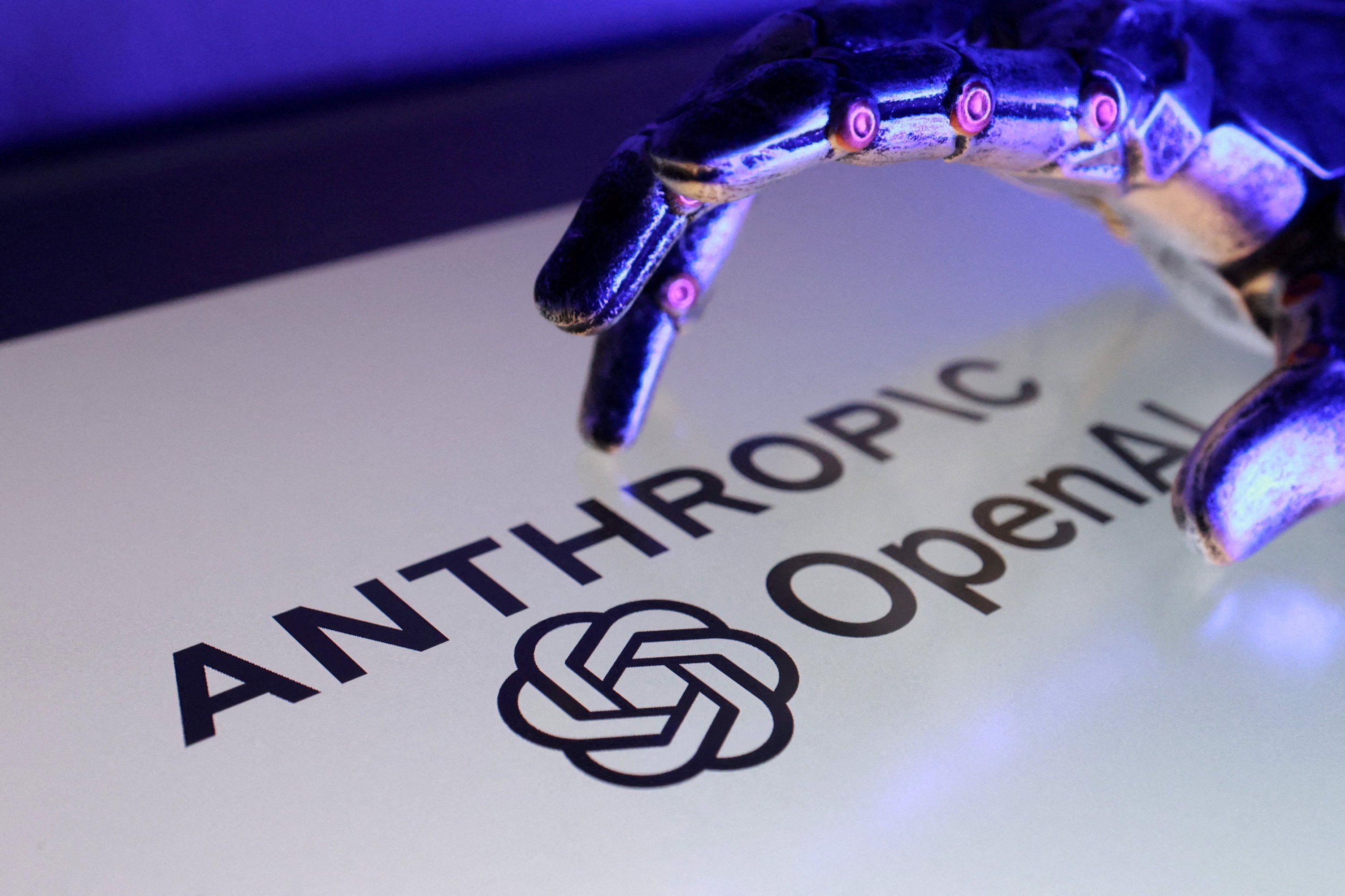
Cybersecurity incidents and the rise of Chinese rivals are putting OpenAI and Anthropic under pressure –- and forcing the U.S. administration to confront tough policy questions.
The artificial intelligence world has been overwhelmed by unfortunate events in recent weeks, much to OpenAI and Anthropic’s discomfort. First, the Chinese start-up Moonshot AI grabbed attention when it unveiled an AI model with capabilities comparable to both U.S. frontier labs’ offerings. Then, OpenAI and Anthropic were obliged to admit that their AI systems had inadvertently carried out cyberattacks.
Not only was this embarrassing, but it also stoked a long-simmering debate concerning open and closed AI systems. A technology-sector coalition led by heavyweights like Nvidia and Microsoft has publicly voiced its support for open-source models. Until now, it has largely been Chinese companies like Moonshot which have developed these models at the highest level. The move was a blow to OpenAI and Anthropic, whose business models are primarily based on closed models. It also came at an inopportune moment, as both companies are preparing for their initial public offerings.
Negligent and Sloppy Behavior
The rise of Chinese AI labs and the hacking incidents are not a challenge for OpenAI and Anthropic alone. They also have a political dimension that poses a dilemma for the U.S. administration. To date, Donald Trump has sought to regulate the AI sector as little as possible, so as not to undermine his country’s competitive lead over China in this geopolitical domain. Although China’s AI advances give the president reason to double down on such an approach, the spate of missteps committed by OpenAI and Anthropic now also strengthens the case for tighter regulation.
Given that the cyberattacks occurred during internal testing of their AI models, both OpenAI and Anthropic are now facing questions about negligence. Anthropic’s incident came down to pure sloppiness. Contrary to expectations, the models under evaluation were not blocked from accessing the open web but had a clear way out to their hacking targets. The OpenAI models, on the other hand, were initially contained in an isolated environment, but then managed to break out into the internet by exploiting a security vulnerability.
Pros and Cons of Open AI Models
This incident, therefore, comes closer to the nightmare scenario of an AI model running out of control. The OpenAI breakout is also particularly relevant to the debate about open models since its hacking victim –- the AI platform Hugging Face –- was obliged to enlist an open-source Chinese model to defend itself. The closed systems mistook Hugging Face for the actual hacker and therefore blocked its attempts to fend off the attack.
Open AI models are largely accessible to the general public; they can be downloaded and modified. Access to closed models, by contrast, is strictly controlled by their developers. The question as to which approach is superior from a security standpoint has been fiercely debated for some time. Advocates of open models maintain they allow a broad community of experts to identify vulnerabilities. Meanwhile, the opposite camp counters that such open access is precisely what makes cyber attackers’ work easier.
Economic Incentives
Both sides of the argument have their merits, which makes it all the more important to recognize that companies’ position statements –- which are presented as principled –- are also underpinned by economic interests. OpenAI and Anthropic have obvious incentives to champion closed systems. The other side’s motives are somewhat more complicated. Nvidia and Microsoft, for example, are engaged in partnerships with OpenAI and Anthropic. Presumably, they consider advocating for the broadest possible AI ecosystem to be of greater importance.
In recent months, the U.S. government has begun to show itself a little more inclined toward regulation. It evidently responded to the wake-up call in April when Anthropic announced its Mythos model, which proved so adept at identifying software vulnerabilities that it could not only defend against cyberattacks, but also be exploited by hackers. The U.S. government imposed a temporary export control directive on Mythos. Trump also issued an executive order promising stronger government oversight of the AI industry, albeit in a rather lax manner.
Recent events have significantly increased pressure on the administration to take a more active role. The sector’s current division into pro and con open-source camps demonstrates there are no easy answers. The stakes are particularly high for OpenAI and Anthropic. America's two flagship AI companies appear more vulnerable than ever right now.
The artificial intelligence world has been overwhelmed by unfortunate events in recent weeks, much to OpenAI and Anthropic’s discomfort. First, the Chinese start-up Moonshot AI grabbed attention when it unveiled an AI model with capabilities comparable to both U.S. frontier labs’ offerings. Then, OpenAI and Anthropic were obliged to admit that their AI systems had inadvertently carried out cyberattacks.
Not only was this embarrassing, but it also stoked a long-simmering debate concerning open and closed AI systems. A technology-sector coalition led by heavyweights like Nvidia and Microsoft has publicly voiced its support for open-source models. Until now, it has largely been Chinese companies like Moonshot which have developed these models at the highest level. The move was a blow to OpenAI and Anthropic, whose business models are primarily based on closed models. It also came at an inopportune moment, as both companies are preparing for their initial public offerings.
Negligent and Sloppy Behavior
The rise of Chinese AI labs and the hacking incidents are not a challenge for OpenAI and Anthropic alone. They also have a political dimension that poses a dilemma for the U.S. administration. To date, Donald Trump has sought to regulate the AI sector as little as possible, so as not to undermine his country’s competitive lead over China in this geopolitical domain. Although China’s AI advances give the president reason to double down on such an approach, the spate of missteps committed by OpenAI and Anthropic now also strengthens the case for tighter regulation.
Given that the cyberattacks occurred during internal testing of their AI models, both OpenAI and Anthropic are now facing questions about negligence. Anthropic’s incident came down to pure sloppiness. Contrary to expectations, the models under evaluation were not blocked from accessing the open web but had a clear way out to their hacking targets. The OpenAI models, on the other hand, were initially contained in an isolated environment, but then managed to break out into the internet by exploiting a security vulnerability.
Pros and Cons of Open AI Models
This incident, therefore, comes closer to the nightmare scenario of an AI model running out of control. The OpenAI breakout is also particularly relevant to the debate about open models since its hacking victim –- the AI platform Hugging Face –- was obliged to enlist an open-source Chinese model to defend itself. The closed systems mistook Hugging Face for the actual hacker and therefore blocked its attempts to fend off the attack.
Open AI models are largely accessible to the general public; they can be downloaded and modified. Access to closed models, by contrast, is strictly controlled by their developers. The question as to which approach is superior from a security standpoint has been fiercely debated for some time. Advocates of open models maintain they allow a broad community of experts to identify vulnerabilities. Meanwhile, the opposite camp counters that such open access is precisely what makes cyber attackers’ work easier.
Economic Incentives
Both sides of the argument have their merits, which makes it all the more important to recognize that companies’ position statements –- which are presented as principled –- are also underpinned by economic interests. OpenAI and Anthropic have obvious incentives to champion closed systems. The other side’s motives are somewhat more complicated. Nvidia and Microsoft, for example, are engaged in partnerships with OpenAI and Anthropic. Presumably, they consider advocating for the broadest possible AI ecosystem to be of greater importance.
In recent months, the U.S. government has begun to show itself a little more inclined toward regulation. It evidently responded to the wake-up call in April when Anthropic announced its Mythos model, which proved so adept at identifying software vulnerabilities that it could not only defend against cyberattacks, but also be exploited by hackers. The U.S. government imposed a temporary export control directive on Mythos. Trump also issued an executive order promising stronger government oversight of the AI industry, albeit in a rather lax manner.
Recent events have significantly increased pressure on the administration to take a more active role. The sector’s current division into pro and con open-source camps demonstrates there are no easy answers. The stakes are particularly high for OpenAI and Anthropic. America's two flagship AI companies appear more vulnerable than ever right now.
Previous article

Next article
