Trump’s Miscalculations
There is concern that, sensing the whiff of defeat, the president will attempt to break down the remaining defenses protecting American democracy
From tariffs to the war with Iran, it is impossible to keep track of all the gambles Donald Trump has taken which have turned out to be miscalculated, disastrous mistakes for which we have all paid dearly, let alone the American people and the president's party. Some were less damaging than predicted: tariffs have weighed on prices, but did not spark inflation as had been feared, and, while slowing trade, they did not choke it off completely. This was the result of an erratic leader threatening fire and brimstone, only to impose levies that were more contained — when he didn't turn around and take them back completely, as he did in the face of the stern Chinese response.
The assortment of promises that have disappeared into a black hole (ending the war in Ukraine the day he took office) or of extraordinary assertions ("I ended eight wars in just eight months") is vast, but this background noise threatens to drown out other actions of his that could potentially be disastrous for the United States and for his own party.
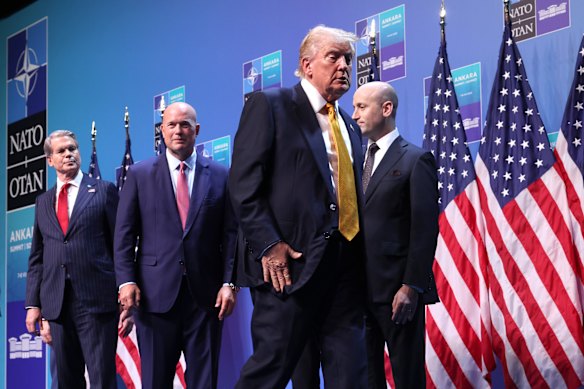
Trump is now basking in the confusion he has created among European allies in humiliating them; showing more respect and friendliness to Vladimir Putin and Xi Jinping; providing an interpretation of U.S. duties to NATO that is capricious, to say the least; and threatening to take Greenland. It is the methodical dismantling of the very system of allies that the United States itself created in the aftermath of World War II, which will end up drastically weakening the U.S.
In a similar way, the enormous wealth that Trump and his family have amassed since their arrival at the White House, taking advantage of his presidential powers, could cost the Republican Party and its leader dearly. This is one of the reasons his party is concerned about trouble in the November elections, facing an electorate which is increasingly impoverished due to the negative impact Trump's decisions are having on the economy, while he is earning billions. Meanwhile the Democrats, if they are able to retake it, are planning on turning Congress into a type of court that will issue subpoenas for Trump's friends and relations, given that he himself is untouchable thanks to the total immunity granted to him by the Supreme Court.
Trump's weaknesses, from his inability to comprehend the dynamics of international relations to his disinterest due to their complexity (he never reads a document, and those who report verbally to him have to contend not just with his allergy to bad news but also with his limited attention span) spring from a basis that by now has been thoroughly explored. It is an approach to power based entirely on relations by force, which arises from his claim to be applying a version of fairly extreme commercial transaction to politics, which he has developed over his career as an entrepreneur. It's the logic of zero-sum business — in order to win, in order to bring home positive results, the other side must lose. It must have seemed to him that this logic was transferable, given that he had successfully popularized it, having turned it into consumer entertainment during the years of his TV show, "The Apprentice."
However, he was following this logic even during his first term, up to 2020. Why weren't the consequences as serious during those years? Apart from the different historical circumstances (Russia had stopped after swallowing up Crimea, while tensions in the Middle East seemed manageable), Trump, having returned to the White House convinced of his limitless powers and the consensus from the part of America "that counted," has turned what he saw as his strong points into factors that have made him vulnerable: the ability to enforce even far-fetched arguments — easily refutable by verifying the facts — and the elimination of every possible source of dissent, surrounding himself only with "yes men" installed in every position of power.
Even before the attack on Iran, Trump's presidency was in crisis over the Jeffrey Epstein case and the high prices that have eroded real income for a major part of the American public, his electorate included. These were crises that could have been contained: his close friendship with the pedophile who had died by suicide was a stain, but Trump had broken ties with him 20 years before and there is no proof of his own involvement with underage girls; meanwhile, inflation has only risen a little in comparison with previous years. Instead, it was Trump himself who made these issues blow up with his reckless promises, made with the conviction that he was allowed to do anything — admit to things and then negate the evidence. This worked for a long time, but he can now no longer assert that, "I could stand in the middle of Fifth Avenue and shoot somebody and I wouldn’t lose voters" as he once, perhaps correctly, claimed. His impoverished electorate, who, during his first term, were happy to have in him a leader sensitive to their issues, are now furious that his promise of "a golden age" after Joe Biden's economic failures is nothing more than a mirage, while many of those surrounding Trump have amassed great wealth.
As for Epstein, Trump's order not to release the files infuriated the most extreme MAGA followers, to whom he had promised astounding revelations about the presumed perversions of the Democrats and many world leaders.
Now, lacking the counterpoint of wise advisers ready to risk his ire in order to set him straight, Trump cannot succeed in extricating himself from the trap of Hormuz. As Italian Minister of Defense Guido Crosetto has noted in this newspaper, Trump fell into this trap by annihilating Iran's religious leader without realizing that this would unleash the most violent and extremist wing, the Pasdaran, or Islamic Revolutionary Guard Corps.
The risk is that, sensing the whiff of defeat, the president will attempt to break down the remaining barriers protecting American democracy. The elimination of the bipartisan U.S. Elections Assistance Commission and the replacement of Trump's personal legal team — incredibly loyal but obviously not ruthless enough — by a team of legal kamikazis already "militarized" by him and ready to sue even an attorney general so that he can control both the prosecution and the defense in civil cases, give rise to new fears.
From tariffs to the war with Iran, it is impossible to keep track of all the gambles Donald Trump has taken which have turned out to be miscalculated, disastrous mistakes for which we have all paid dearly, let alone the American people and the president's party. Some were less damaging than predicted: tariffs have weighed on prices, but did not spark inflation as had been feared, and, while slowing trade, they did not choke it off completely. This was the result of an erratic leader threatening fire and brimstone, only to impose levies that were more contained — when he didn't turn around and take them back completely, as he did in the face of the stern Chinese response.
The assortment of promises that have disappeared into a black hole (ending the war in Ukraine the day he took office) or of extraordinary assertions ("I ended eight wars in just eight months") is vast, but this background noise threatens to drown out other actions of his that could potentially be disastrous for the United States and for his own party.
Trump is now basking in the confusion he has created among European allies in humiliating them; showing more respect and friendliness to Vladimir Putin and Xi Jinping; providing an interpretation of U.S. duties to NATO that is capricious, to say the least; and threatening to take Greenland. It is the methodical dismantling of the very system of allies that the United States itself created in the aftermath of World War II, which will end up drastically weakening the U.S.
In a similar way, the enormous wealth that Trump and his family have amassed since their arrival at the White House, taking advantage of his presidential powers, could cost the Republican Party and its leader dearly. This is one of the reasons his party is concerned about trouble in the November elections, facing an electorate which is increasingly impoverished due to the negative impact Trump's decisions are having on the economy, while he is earning billions. Meanwhile the Democrats, if they are able to retake it, are planning on turning Congress into a type of court that will issue subpoenas for Trump's friends and relations, given that he himself is untouchable thanks to the total immunity granted to him by the Supreme Court.
Trump's weaknesses, from his inability to comprehend the dynamics of international relations to his disinterest due to their complexity (he never reads a document, and those who report verbally to him have to contend not just with his allergy to bad news but also with his limited attention span) spring from a basis that by now has been thoroughly explored. It is an approach to power based entirely on relations by force, which arises from his claim to be applying a version of fairly extreme commercial transaction to politics, which he has developed over his career as an entrepreneur. It's the logic of zero-sum business — in order to win, in order to bring home positive results, the other side must lose. It must have seemed to him that this logic was transferable, given that he had successfully popularized it, having turned it into consumer entertainment during the years of his TV show, "The Apprentice."
However, he was following this logic even during his first term, up to 2020. Why weren't the consequences as serious during those years? Apart from the different historical circumstances (Russia had stopped after swallowing up Crimea, while tensions in the Middle East seemed manageable), Trump, having returned to the White House convinced of his limitless powers and the consensus from the part of America "that counted," has turned what he saw as his strong points into factors that have made him vulnerable: the ability to enforce even far-fetched arguments — easily refutable by verifying the facts — and the elimination of every possible source of dissent, surrounding himself only with "yes men" installed in every position of power.
Even before the attack on Iran, Trump's presidency was in crisis over the Jeffrey Epstein case and the high prices that have eroded real income for a major part of the American public, his electorate included. These were crises that could have been contained: his close friendship with the pedophile who had died by suicide was a stain, but Trump had broken ties with him 20 years before and there is no proof of his own involvement with underage girls; meanwhile, inflation has only risen a little in comparison with previous years. Instead, it was Trump himself who made these issues blow up with his reckless promises, made with the conviction that he was allowed to do anything — admit to things and then negate the evidence. This worked for a long time, but he can now no longer assert that, "I could stand in the middle of Fifth Avenue and shoot somebody and I wouldn’t lose voters" as he once, perhaps correctly, claimed. His impoverished electorate, who, during his first term, were happy to have in him a leader sensitive to their issues, are now furious that his promise of "a golden age" after Joe Biden's economic failures is nothing more than a mirage, while many of those surrounding Trump have amassed great wealth.
As for Epstein, Trump's order not to release the files infuriated the most extreme MAGA followers, to whom he had promised astounding revelations about the presumed perversions of the Democrats and many world leaders.
Now, lacking the counterpoint of wise advisers ready to risk his ire in order to set him straight, Trump cannot succeed in extricating himself from the trap of Hormuz. As Italian Minister of Defense Guido Crosetto has noted in this newspaper, Trump fell into this trap by annihilating Iran's religious leader without realizing that this would unleash the most violent and extremist wing, the Pasdaran, or Islamic Revolutionary Guard Corps.
The risk is that, sensing the whiff of defeat, the president will attempt to break down the remaining barriers protecting American democracy. The elimination of the bipartisan U.S. Elections Assistance Commission and the replacement of Trump's personal legal team — incredibly loyal but obviously not ruthless enough — by a team of legal kamikazis already "militarized" by him and ready to sue even an attorney general so that he can control both the prosecution and the defense in civil cases, give rise to new fears.
Previous article

Next article