
Europe in the Face of Trump’s Moods
The insults and contradictions of the U.S. president at the NATO summit are forcing Europeans to accelerate toward sovereignty in respect to Washington
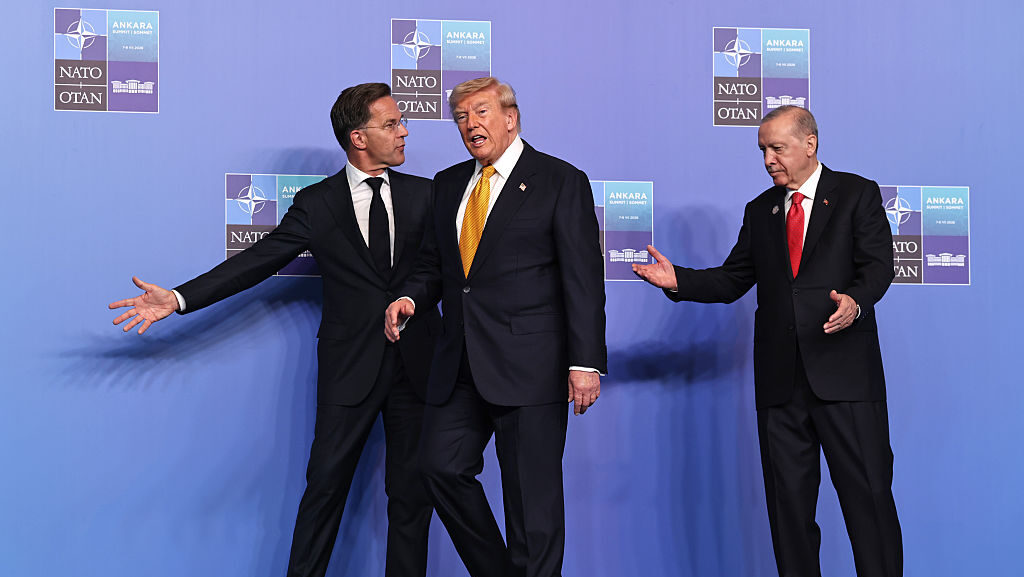
With his customary mixed messages and gratuitous insults aimed at leaders, Donald Trump sowed confusion again at the NATO summit that ended yesterday in Ankara, Turkey. It is not the first time, and it will not be the last. But Europe cannot just deal with his behavior with either flattery or paralysis. The solution is that Europeans must shield themselves against the Trumpist chaos and his repeatedly demonstrated desire to destroy the principles of the alliance. To this end, efforts must be speeded up toward developing real autonomy with respect to Washington.
In Ankara, Trump married spur-of-the-moment gestures with friendliness. He combined destructive words directed toward NATO with compromises that, on paper at least, reaffirmed the principles of the organization. He returned to the charge with the threat to annex the territory of an allied country, for example, Greenland. He launched attacks on Germany, France, the U.K. and Italy for criticizing his failed war against Iran. He talked about “bad people” when referring to Spain, before using a similar expression, “sick people,” to describe Iranians. However, in the same meeting in which it seemed he was going to destroy everything, he promised help to Ukraine, giving it permission to manufacture Patriot missiles. He also signed a document that underlined the obligation of collective defense. He finished by directing friendly words toward the same people he had insulted only hours earlier.
Whichever way you look at it, there is a lesson to be learned from this and other summits. It is necessary to increase the weight, responsibility and leadership of Europe in NATO. There is also an urgent need to develop armed forces and intelligence capacity, technologies and autonomous deterrents so as not to be dependent on Trump’s whims nor on his destructive strategy for transatlantic trust. It is a deep-seated change that in reality has already started. European investment in defense since 2018 has doubled from about 243 billion euros (about $277 billion) to 490 billion euros (about $558 billion) in 2025. And the leap has been even greater in Spain, a country criticized by Trump. In Spain, in the same period, investment in defense rose from about 11.6 billion euros (about $13 billion) to more than 30.6 billion (about $35 billion).
But the EU must act faster if it wants to avoid this more European NATO becoming an appendix to the strategic and industrial interests of the U.S. This is what is happening currently with the increase in military spending. Sales of U.S. arms to Europe increased from about 8.7 billion euros (about $9.9 billion) in 2020 to more than 47 billion euros (about $53.6 billion) in 2025. For Trump, keeping his vague promise of protection in exchange for a multi-billion-dollar bill at others’ expense would signify success. For Europeans, this would represent a waste that would only prolong the current uncertainty and submission to the moods of the present incumbent of the White House – and, in the future, to the geopolitical interests of Washington rather than of Europe.
With his customary mixed messages and gratuitous insults aimed at leaders, Donald Trump sowed confusion again at the NATO summit that ended yesterday in Ankara, Turkey. It is not the first time, and it will not be the last. But Europe cannot just deal with his behavior with either flattery or paralysis. The solution is that Europeans must shield themselves against the Trumpist chaos and his repeatedly demonstrated desire to destroy the principles of the alliance. To this end, efforts must be speeded up toward developing real autonomy with respect to Washington.
In Ankara, Trump married spur-of-the-moment gestures with friendliness. He combined destructive words directed toward NATO with compromises that, on paper at least, reaffirmed the principles of the organization. He returned to the charge with the threat to annex the territory of an allied country, for example, Greenland. He launched attacks on Germany, France, the U.K. and Italy for criticizing his failed war against Iran. He talked about “bad people” when referring to Spain, before using a similar expression, “sick people,” to describe Iranians. However, in the same meeting in which it seemed he was going to destroy everything, he promised help to Ukraine, giving it permission to manufacture Patriot missiles. He also signed a document that underlined the obligation of collective defense. He finished by directing friendly words toward the same people he had insulted only hours earlier.
Whichever way you look at it, there is a lesson to be learned from this and other summits. It is necessary to increase the weight, responsibility and leadership of Europe in NATO. There is also an urgent need to develop armed forces and intelligence capacity, technologies and autonomous deterrents so as not to be dependent on Trump’s whims nor on his destructive strategy for transatlantic trust. It is a deep-seated change that in reality has already started. European investment in defense since 2018 has doubled from about 243 billion euros (about $277 billion) to 490 billion euros (about $558 billion) in 2025. And the leap has been even greater in Spain, a country criticized by Trump. In Spain, in the same period, investment in defense rose from about 11.6 billion euros (about $13 billion) to more than 30.6 billion (about $35 billion).
But the EU must act faster if it wants to avoid this more European NATO becoming an appendix to the strategic and industrial interests of the U.S. This is what is happening currently with the increase in military spending. Sales of U.S. arms to Europe increased from about 8.7 billion euros (about $9.9 billion) in 2020 to more than 47 billion euros (about $53.6 billion) in 2025. For Trump, keeping his vague promise of protection in exchange for a multi-billion-dollar bill at others’ expense would signify success. For Europeans, this would represent a waste that would only prolong the current uncertainty and submission to the moods of the present incumbent of the White House – and, in the future, to the geopolitical interests of Washington rather than of Europe.
Previous article
Next article