
Unsavable
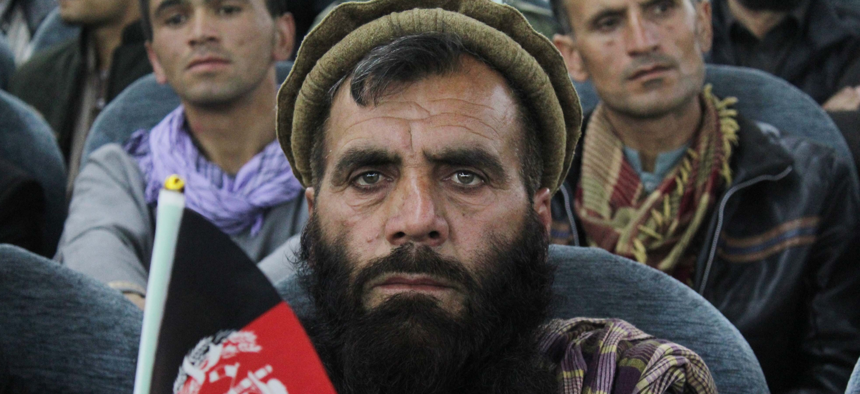
Afghanistan is still an “Islamic Republic” in terms of its official name and essence. This is not unprecedented, as there are three other republics (Iran, Pakistan and Mauritania) as well as 10 monarchies that feel it is necessary to highlight the state religion in their names. From this perspective, it does not even make much difference whether Ashraf Ghani remains president or there is a return of the Taliban, an organization that is at least 200 years old despite their Kalashnikovs.* Taliban rule would still not be complete, as some provinces would remain in the hands of the Tajik, Uzbek, and Hazara militias. Ethnicity or tribal affiliation is more important to these groups than common religion, although they are not more enlightened than the Taliban.
Since it has existed, Afghanistan has been a variably weak and strong alliance of rival clans stuck between the Persians (in Iran) and the Hindus (in India and Pakistan). And in a broader sense, it has been stuck between the Russians and the British Empire. We deceive ourselves by believing that our country, Hungary, lies on the highway of history, but this is nothing compared to what the Afghans got. In terms of territory, seven Hungarys and three times its population could fit inside of Afghanistan. There are three things that exist for sure: drought, civil war and external enemies that Afghanistan has provoked. If we only look at the last 40 years, we already have a second or third generation growing up who were born with a gun in their hands. Afghanistan’s citizens have no idea what peace or tranquility is. For them, even the Stone Age dictatorship expected from the Taliban would be salvation.
Of course, some think otherwise. In the last few days, more than 1,000 Afghan soldiers have fled to Tajikistan. They are tired of a guaranteed and endless war. In the big cities, especially in Kabul, there is a slowly Westernized group that is seeing the benefits of civilization, and maybe even democracy. They also see that there is no chance for either. The Americans promised they would not abandon their translators, but now, thousands of people and their families need to be urgently evacuated. The country is unsavable.
*Translator’s note: Kalashnikov is the official name of the AK-47 assault rifle.
Previous article

Next article