
Clear Winners and Losers
For President Trump, first the maximum threat and then the ceasefire created a face-saving exit from the war, because he didn’t have an exit strategy.
The world rightly breathes a sigh of relief that the war parties at the Gulf have announced a two-week ceasefire, including opening the Strait of Hormuz, as well as the beginning of peace talks, even if much is unclear regarding the implementation.
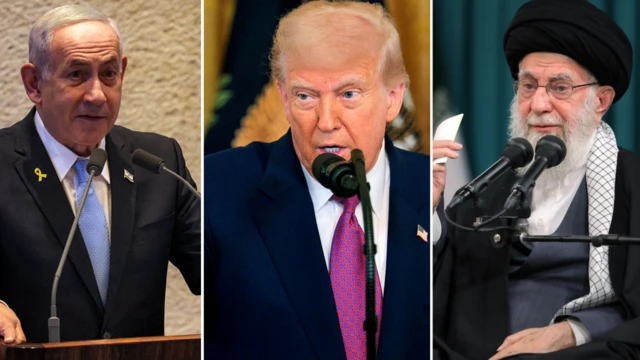
Of course, the ceasefire is only a first step, and aside from the yet unanswered questions, one possible wrinkle is that Israel’s Prime Minister Benjamin Netanyahu immediately excluded fighting Hezbollah in Lebanon. This contradicts the comments of the mediating Pakistani Prime Minister Shehbaz Sharif.
The fact that both the governments of the United States and Iran are now portraying themselves as victors lies in the nature of the conflict where victory and loss are clearly distributed. Because the United States’ “total and complete victory” that Trump declared does not exist. It is even rather unlikely that his loudmouthed maximum threats against Iran have compelled the regime in Tehran to back down.
Trump has not achieved any of his never clearly defined war goals. Only the agreed-upon reopening of the Strait of Hormuz has been successful, but it would never have been closed if the United States and Israel had not attacked Iran.
The Mullah Regime Is Strengthened
For Trump, the ceasefire is now a face-saving exit from a conflict for which he had no exit strategy aside from the quick victory he expected, but that did not occur. His desperation about the course of this war, which was completely unexpected for him, is being expressed through his increasingly shrill threats, alongside rhetoric showing contempt for people and international law.
Trump suddenly declared Iran’s 10-point plan, of all things, to be a good foundation for negotiation. The United States has lost the conflict strategically and politically as things stand, even from a global perspective. While Washington got carried away with its gigantic military machine, China acted prudently in the background, pulled diplomatic strings and presented itself as a responsible power with the support of Pakistani negotiation efforts.
The Iranian regime is coming out of the previous conflict militarily weakened, but not defeated and, most of all, politically strengthened. This is also clear in Iran’s 10-point plan, which expresses unbroken pride as a hodgepodge of maximum demands. This strength is a disaster for all opponents of the dictatorship, who had hoped in vain that the war, despite all the suffering, would at least end the regime and allow for a new beginning. The opposite is now likely.
Israel’s extreme right-wing government cannot be satisfied with the result so far because the threats from Iran have not been eliminated. For Netanyahu, the ceasefire is of tactical value at best; there is no resolution to the underlying conflict, which makes future escalations likely.
The ceasefire means the world economy can take a breather. The pending negotiations are full of pitfalls and have an uncertain result. But the war has also not brought any resolution to the conflict; it has only created many new problems.
The world rightly breathes a sigh of relief that the war parties at the Gulf have announced a two-week ceasefire, including opening the Strait of Hormuz, as well as the beginning of peace talks, even if much is unclear regarding the implementation.
Of course, the ceasefire is only a first step, and aside from the yet unanswered questions, one possible wrinkle is that Israel’s Prime Minister Benjamin Netanyahu immediately excluded fighting Hezbollah in Lebanon. This contradicts the comments of the mediating Pakistani Prime Minister Shehbaz Sharif.
The fact that both the governments of the United States and Iran are now portraying themselves as victors lies in the nature of the conflict where victory and loss are clearly distributed. Because the United States’ “total and complete victory” that Trump declared does not exist. It is even rather unlikely that his loudmouthed maximum threats against Iran have compelled the regime in Tehran to back down.
Trump has not achieved any of his never clearly defined war goals. Only the agreed-upon reopening of the Strait of Hormuz has been successful, but it would never have been closed if the United States and Israel had not attacked Iran.
The Mullah Regime Is Strengthened
For Trump, the ceasefire is now a face-saving exit from a conflict for which he had no exit strategy aside from the quick victory he expected, but that did not occur. His desperation about the course of this war, which was completely unexpected for him, is being expressed through his increasingly shrill threats, alongside rhetoric showing contempt for people and international law.
Trump suddenly declared Iran’s 10-point plan, of all things, to be a good foundation for negotiation. The United States has lost the conflict strategically and politically as things stand, even from a global perspective. While Washington got carried away with its gigantic military machine, China acted prudently in the background, pulled diplomatic strings and presented itself as a responsible power with the support of Pakistani negotiation efforts.
The Iranian regime is coming out of the previous conflict militarily weakened, but not defeated and, most of all, politically strengthened. This is also clear in Iran’s 10-point plan, which expresses unbroken pride as a hodgepodge of maximum demands. This strength is a disaster for all opponents of the dictatorship, who had hoped in vain that the war, despite all the suffering, would at least end the regime and allow for a new beginning. The opposite is now likely.
Israel’s extreme right-wing government cannot be satisfied with the result so far because the threats from Iran have not been eliminated. For Netanyahu, the ceasefire is of tactical value at best; there is no resolution to the underlying conflict, which makes future escalations likely.
The ceasefire means the world economy can take a breather. The pending negotiations are full of pitfalls and have an uncertain result. But the war has also not brought any resolution to the conflict; it has only created many new problems.
Previous article
Next article