
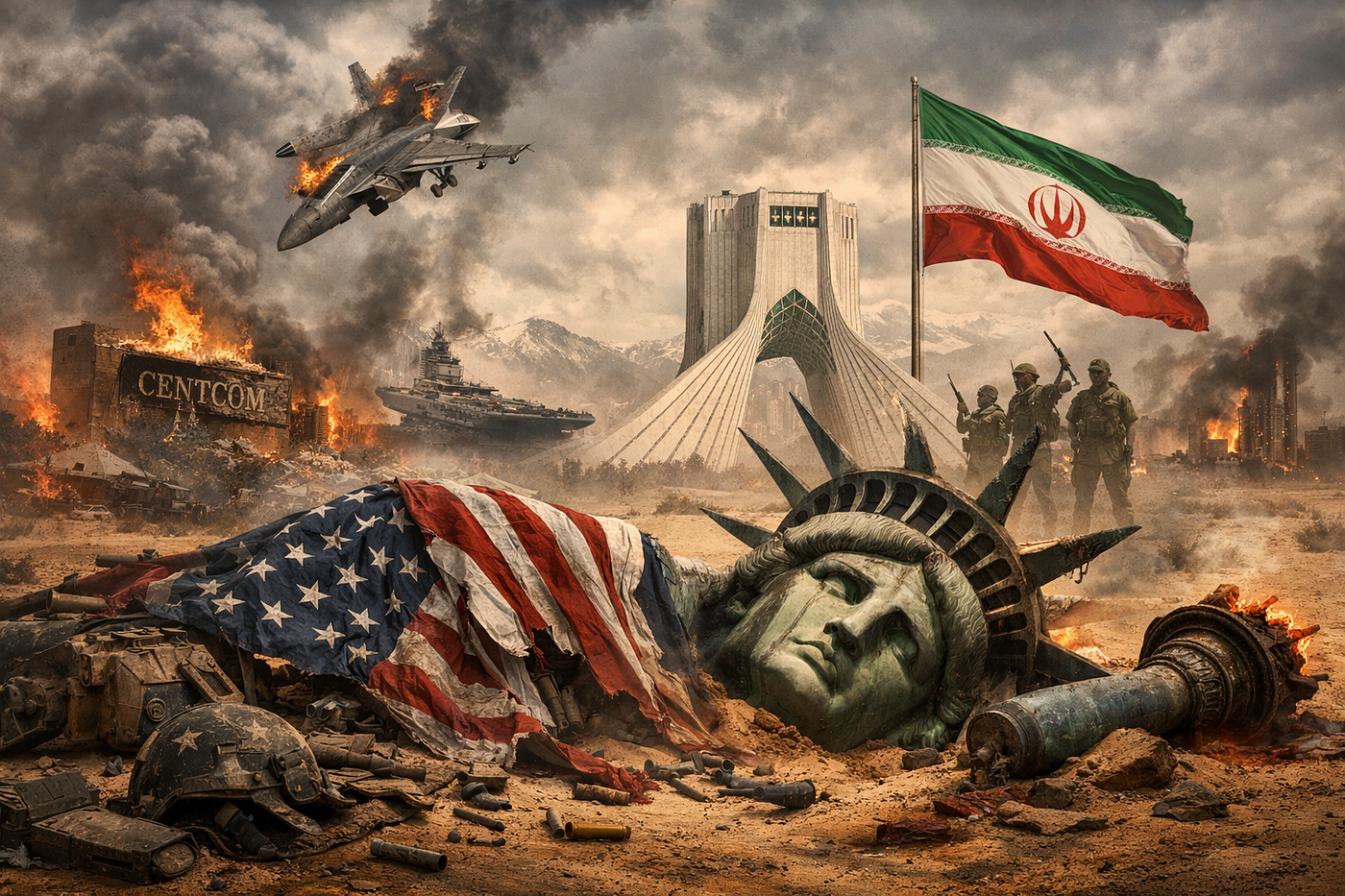
The US-Iran Conflict and Decline of US Hegemony
After a prolonged conflict exceeding 100 days, the U.S. and Iran have signed a peace memorandum, the terms of which all favor Iran. The U.S. has not only lost in this respect, but it has also lost face. Not only did the joint military operation launched by the U.S. and Israel fail to achieve the predetermined strategic objectives, but it reduced Washington to passively suing for peace.
From the sudden beginning of the war to the abrupt conclusion, from military incapacitation to alienation from allies, and from strategic miscalculation to being controlled by Iran during negotiations, this war has comprehensively exposed Donald Trump’s many flaws in decision-making, military affairs, diplomacy and gaming.
The biggest failure at the root of this operation was the severe failure in the decision-making system. Trump placed personal intuition and political impulsivity above intelligence assessments and military professionals, throwing aside scientific conclusions and doing it his own way. This completely exposed serious deficiencies in the wartime decision-making mechanism. America’s national interests were harnessed by Israel and reduced to a tool used to achieve another country’s strategic objectives — a rare instance of “strategic capture” in the history of America’s Middle East policy.
Over decades of arrangement, the U.S. has created a network of military bases across many countries that should have helped it control the regional situation and deter adversaries. However, during the war, these U.S. bases were successively attacked by Iranian guided missiles and drones. The installations were severely damaged, casualties were frequent and multiple bases were brought to a standstill.
Not only were these bases unable to protect the countries in which they are located, but they became targets of Iranian attacks. This thoroughly shattered the U.S. military’s position as a hardcore regional protector.
Intense combat has almost drained the military of many key weapon reserves. The rate at which Terminal High Altitude Area Defense interceptor missiles and Patriot missiles are being used has exceeded their production and replenishment, directly halving reserves. The U.S. military has been forced to hurriedly allocate ammo from other combat zones across the world and even request drone support from Ukraine. This completely exposes a root shortcoming in a military production capacity that cannot support modern high-intensity local wars.
Throughout the conflict, the U.S. military has relied on long-range attacks and air bombing, not daring to enter into ground combat. Even as its key objectives of weakening Iran’s military power, constraining nuclear development and changing the regime all failed, the U.S. has not dared to send in ground troops. In the end, the U.S. could only hastily declare “victory” without having achieved any of its strategic objectives. This directly exposes the deep insecurity the U.S. feels toward, and its avoidance of, protracted conflicts.
In past wars in the Middle East and Afghanistan, many NATO allies responded enthusiastically to America’s request for assistance, offering money and troops and opening their military bases. This time, however, as the U.S. went to war with Iran, it has been unprecedentedly isolated. Other than Israel, which instigated the conflict, no country in the rest of the world has been willing to get involved in the war. The mass alienation by allies symbolizes the sharp drop in America’s ability to rally support.
Middle Eastern countries that once relied on U.S. military defense have thoroughly realized that U.S. bases cannot protect their security and instead draw enemy fire.
Countries such as Saudi Arabia, the United Arab Emirates and Kuwait have lost faith in the defense capability of the U.S. military. The political power the U.S. built up over years in the Middle East has been shaken to its foundations. A single war has destroyed America’s most critical regional strategic asset.
At the beginning of the war, Trump tried to force Iran to compromise through military strikes. After failing to achieve this, he quickly turned to negotiations in the hopes of achieving results through diplomacy. Iran accurately seized on his eagerness to reach a ceasefire and protect his image of greatness, toying with him numerous times during the period of negotiations and causing the U.S. to make repeated miscalculations.
Those making decisions on the American side repeatedly underestimated Iran’s strategic bargaining chip. Once a stalemate was reached, Iran countered by resolutely blocking the Strait of Hormuz, directly shutting off a global energy lifeline and completely reversing the state of play. This countermeasure exceeded any predicted by the U.S. military, highlighting the crude and casual wartime decision-making of the U.S., which only thinks of how to attack yet does not seriously consider how its opponent will fight back.
A local conflict has exposed America’s core weaknesses, such as its arbitrary decision-making, the empty strength of its military, its alienation from allies and its strategic miscalculations. This is not an incidental wartime mistake; it is an exposure of systematic problems that completely demonstrate the over-extension of U.S. hegemony and decline of its power. This war will become an important turning point in the decline of American hegemony.
From the sudden beginning of the war to the abrupt conclusion, from military incapacitation to alienation from allies, and from strategic miscalculation to being controlled by Iran during negotiations, this war has comprehensively exposed Donald Trump’s many flaws in decision-making, military affairs, diplomacy and gaming.
The biggest failure at the root of this operation was the severe failure in the decision-making system. Trump placed personal intuition and political impulsivity above intelligence assessments and military professionals, throwing aside scientific conclusions and doing it his own way. This completely exposed serious deficiencies in the wartime decision-making mechanism. America’s national interests were harnessed by Israel and reduced to a tool used to achieve another country’s strategic objectives — a rare instance of “strategic capture” in the history of America’s Middle East policy.
Over decades of arrangement, the U.S. has created a network of military bases across many countries that should have helped it control the regional situation and deter adversaries. However, during the war, these U.S. bases were successively attacked by Iranian guided missiles and drones. The installations were severely damaged, casualties were frequent and multiple bases were brought to a standstill.
Not only were these bases unable to protect the countries in which they are located, but they became targets of Iranian attacks. This thoroughly shattered the U.S. military’s position as a hardcore regional protector.
Intense combat has almost drained the military of many key weapon reserves. The rate at which Terminal High Altitude Area Defense interceptor missiles and Patriot missiles are being used has exceeded their production and replenishment, directly halving reserves. The U.S. military has been forced to hurriedly allocate ammo from other combat zones across the world and even request drone support from Ukraine. This completely exposes a root shortcoming in a military production capacity that cannot support modern high-intensity local wars.
Throughout the conflict, the U.S. military has relied on long-range attacks and air bombing, not daring to enter into ground combat. Even as its key objectives of weakening Iran’s military power, constraining nuclear development and changing the regime all failed, the U.S. has not dared to send in ground troops. In the end, the U.S. could only hastily declare “victory” without having achieved any of its strategic objectives. This directly exposes the deep insecurity the U.S. feels toward, and its avoidance of, protracted conflicts.
In past wars in the Middle East and Afghanistan, many NATO allies responded enthusiastically to America’s request for assistance, offering money and troops and opening their military bases. This time, however, as the U.S. went to war with Iran, it has been unprecedentedly isolated. Other than Israel, which instigated the conflict, no country in the rest of the world has been willing to get involved in the war. The mass alienation by allies symbolizes the sharp drop in America’s ability to rally support.
Middle Eastern countries that once relied on U.S. military defense have thoroughly realized that U.S. bases cannot protect their security and instead draw enemy fire.
Countries such as Saudi Arabia, the United Arab Emirates and Kuwait have lost faith in the defense capability of the U.S. military. The political power the U.S. built up over years in the Middle East has been shaken to its foundations. A single war has destroyed America’s most critical regional strategic asset.
At the beginning of the war, Trump tried to force Iran to compromise through military strikes. After failing to achieve this, he quickly turned to negotiations in the hopes of achieving results through diplomacy. Iran accurately seized on his eagerness to reach a ceasefire and protect his image of greatness, toying with him numerous times during the period of negotiations and causing the U.S. to make repeated miscalculations.
Those making decisions on the American side repeatedly underestimated Iran’s strategic bargaining chip. Once a stalemate was reached, Iran countered by resolutely blocking the Strait of Hormuz, directly shutting off a global energy lifeline and completely reversing the state of play. This countermeasure exceeded any predicted by the U.S. military, highlighting the crude and casual wartime decision-making of the U.S., which only thinks of how to attack yet does not seriously consider how its opponent will fight back.
A local conflict has exposed America’s core weaknesses, such as its arbitrary decision-making, the empty strength of its military, its alienation from allies and its strategic miscalculations. This is not an incidental wartime mistake; it is an exposure of systematic problems that completely demonstrate the over-extension of U.S. hegemony and decline of its power. This war will become an important turning point in the decline of American hegemony.
Previous article
Next article
