
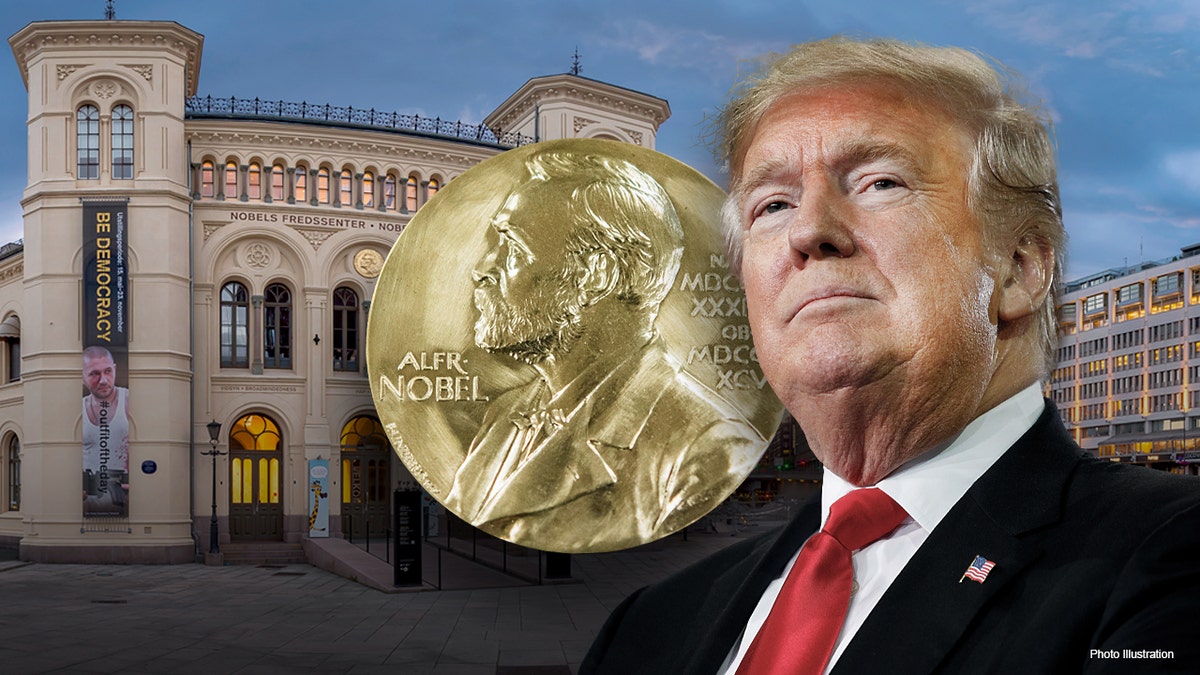
The Nobel Peace Prize: Is Trump Eligible?
U.S. President Donald Trump recently complained — again — that, despite having facilitated the de-escalation of numerous conflicts and ended at least eight wars, he has yet to be considered for the Nobel Peace Prize. In reality, since returning to office, Trump has refused to pay U.S. dues to the United Nations; withdrawn from 66 international organizations including the World Health Organization, the U.N. Framework Convention on Climate Change, and the Peacebuilding Commission; and has reignited hostilities in the Strait of Hormuz. His sole concern is to Make America Great Again, with no regard for the interests of the international community. If there were an award specifically for people who create trouble internationally, Trump would probably be more qualified than anyone else.
But what does it take to receive the Nobel Peace Prize? Not creating conflicts and not starting wars are baseline conditions; more importantly, the collective interests of the international community must be uppermost in recipients’ considerations. Trump, by contrast, champions his “America First” and “Make America Great Again” policies. He has even refused to pay his dues to the United Nations, which represents the international community as a whole, and has refused to shoulder responsibility for, or contribute to, relevant international organizations. His thinking, public positions, and actions are driven solely by American interests — or even personal interests. Even if he attempted to “buy off” the Nobel Peace Prize committee, he wouldn’t get away with it.
Trump claims to have ended at least eight wars, but is that the case? Take his command of the U.S. military as an example. In the Strait of Hormuz, which is vital to the international community’s energy transportation, the U.S. military has been fighting on and off, unable to extricate itself from Israel or to resolve the conflict with Iran. Instead, the U.S. has become entangled in a web of energy interests involving itself, Israel and Iran. On this basis, Trump therefore possesses neither the qualifications nor the standing to receive the Nobel Peace Prize. Worse yet, he invariably sees himself as the best negotiator, believing he can resolve any foreign affairs matter, including conflicts and wars, using his supposedly expert business negotiation model.
But the international community’s many crises currently stem precisely from Trump starting fires and creating conflict or wars for his own personal gain, only to step in with a fire extinguisher to put them out and then claim credit for doing so. This doesn’t and shouldn’t make him eligible for the Nobel Peace Prize, but it does make him a natural candidate for a “Nobel Prize in Troublemaking.”
If Trump were genuinely set on winning the Nobel Peace Prize, then first and foremost, as a prerequisite, he would need to abandon his own self-serving motives and personal interests — and, going back to the current conflict and war in the Strait of Hormuz as an example, the prize might not be entirely beyond his reach. All he would need to do is be willing to relinquish American energy interests in the Strait of Hormuz, completely withdraw U.S. forces, and extract the United States from its longstanding entanglement with Israel and Iran. Without the United States as its backer, Israel would find it difficult to continue stirring up trouble there on its own, and Trump would then be able to reverse his role as an international troublemaker.
Taking a step back, the Nobel Peace Prize has itself had its share of controversy, and whether or not someone wins it has never been the sole criterion for assessing someone’s place in history. But suppose Trump were to become fixated on the Nobel Peace Prize, or even to fall into a vicious cycle of creating problems only to resolve them afterward? That would amount to him pursuing the prize for the sake of it and reducing peace to a matter of American interests or even his own personal interests, while completely ignoring the nature of peace as a public good. It would be fundamentally at odds with the idea that peace belongs to the international community, to the world, to everyone.
In short, just as the film industry has its Golden Raspberry Awards as a counterpart to the Oscars, Trump needn’t remain fixated on the Nobel Peace Prize: Since he has championed “America First” and “Make America Great Again,” disregarded and withdrawn from 66 international organizations, and meddled in the internal affairs of other countries at every turn, he might as well create and run his own “Nobel Prize for Troublemakers.” He would certainly be nominated — and win — becoming the prize’s very first nominee and laureate upon its inception. The historical significance and status of this would, of course, be “extraordinary” and “the best,” and could belong to none other than U.S. President Trump.
The commentator is deputy director of the New Party Public Opinion Center and the author of “後2024?” (“Post-2024?”)
But what does it take to receive the Nobel Peace Prize? Not creating conflicts and not starting wars are baseline conditions; more importantly, the collective interests of the international community must be uppermost in recipients’ considerations. Trump, by contrast, champions his “America First” and “Make America Great Again” policies. He has even refused to pay his dues to the United Nations, which represents the international community as a whole, and has refused to shoulder responsibility for, or contribute to, relevant international organizations. His thinking, public positions, and actions are driven solely by American interests — or even personal interests. Even if he attempted to “buy off” the Nobel Peace Prize committee, he wouldn’t get away with it.
Trump claims to have ended at least eight wars, but is that the case? Take his command of the U.S. military as an example. In the Strait of Hormuz, which is vital to the international community’s energy transportation, the U.S. military has been fighting on and off, unable to extricate itself from Israel or to resolve the conflict with Iran. Instead, the U.S. has become entangled in a web of energy interests involving itself, Israel and Iran. On this basis, Trump therefore possesses neither the qualifications nor the standing to receive the Nobel Peace Prize. Worse yet, he invariably sees himself as the best negotiator, believing he can resolve any foreign affairs matter, including conflicts and wars, using his supposedly expert business negotiation model.
But the international community’s many crises currently stem precisely from Trump starting fires and creating conflict or wars for his own personal gain, only to step in with a fire extinguisher to put them out and then claim credit for doing so. This doesn’t and shouldn’t make him eligible for the Nobel Peace Prize, but it does make him a natural candidate for a “Nobel Prize in Troublemaking.”
If Trump were genuinely set on winning the Nobel Peace Prize, then first and foremost, as a prerequisite, he would need to abandon his own self-serving motives and personal interests — and, going back to the current conflict and war in the Strait of Hormuz as an example, the prize might not be entirely beyond his reach. All he would need to do is be willing to relinquish American energy interests in the Strait of Hormuz, completely withdraw U.S. forces, and extract the United States from its longstanding entanglement with Israel and Iran. Without the United States as its backer, Israel would find it difficult to continue stirring up trouble there on its own, and Trump would then be able to reverse his role as an international troublemaker.
Taking a step back, the Nobel Peace Prize has itself had its share of controversy, and whether or not someone wins it has never been the sole criterion for assessing someone’s place in history. But suppose Trump were to become fixated on the Nobel Peace Prize, or even to fall into a vicious cycle of creating problems only to resolve them afterward? That would amount to him pursuing the prize for the sake of it and reducing peace to a matter of American interests or even his own personal interests, while completely ignoring the nature of peace as a public good. It would be fundamentally at odds with the idea that peace belongs to the international community, to the world, to everyone.
In short, just as the film industry has its Golden Raspberry Awards as a counterpart to the Oscars, Trump needn’t remain fixated on the Nobel Peace Prize: Since he has championed “America First” and “Make America Great Again,” disregarded and withdrawn from 66 international organizations, and meddled in the internal affairs of other countries at every turn, he might as well create and run his own “Nobel Prize for Troublemakers.” He would certainly be nominated — and win — becoming the prize’s very first nominee and laureate upon its inception. The historical significance and status of this would, of course, be “extraordinary” and “the best,” and could belong to none other than U.S. President Trump.
The commentator is deputy director of the New Party Public Opinion Center and the author of “後2024?” (“Post-2024?”)
Previous article
Next article
