
US-Iran Memo: Change the Military-Dependent Attitude
The leaders of great powers believed that by flaunting verwhelming military force, their opponents would surrender. But their plans fell apart.
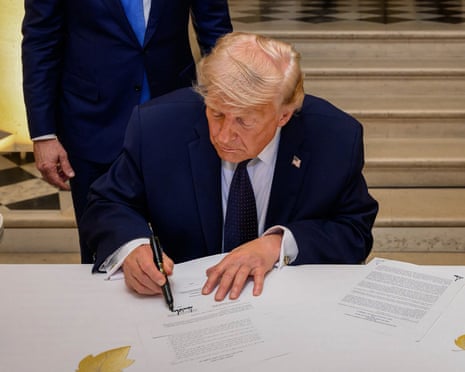
U.S. President Donald Trump and Iranian President Masoud Pezeshkian signed a 14-point memorandum, which took effect. The memo calls for a prompt and permanent end to combat on all fronts, including Lebanon.
The U.S., which has prioritized lifting the blockade on the Strait of Hormuz, has taken a drastically conciliatory manner. With an aim toward a final agreement within 60 days, negotiations regarding Iran's nuclear development have been postponed.
At the end of February, when he initially launched preemptive strikes against Iran, Trump arrogantly pressed Iran for “unconditional surrender.” No matter what excuses Trump makes, executing this memo is clearly a “defeat” for the U.S.
The U.S. also agreed to lift sanctions against Iran and unfreeze its assets, and terms will be formally decided during the negotiation period. The understanding also includes a plan for the U.S. to provide a $300 billion fund for Iran's reconstruction and economic revival.
The U.S. itself will not contribute to the fund. The preemptive attacks against Iran were clearly unjust military force in violation of the U.N. Charter. Compensation for the damage and responsibility for the reparations should fall on the U.S. and Israel, who started the attacks. Burdening other countries with the responsibility is like putting the saddle on the wrong horse.
Whether or not a final agreement will be reached is highly uncertain. Negotiations scheduled to begin on June 19 have been postponed, and dark clouds are already in view. Trump stated that if no agreement is reached, bombing will resume, but he needs to must change position and veer away from exerting further military force.
The biggest destabilizing factor is Israel. Israeli Prime Minister Benjamin Netanyahu said that only the U.S. is bound by the memo, showing that Israel is not inclined to comply with the agreement. He declared that Israeli troops will not withdraw from Lebanon. Even after the memo was announced, Israeli attacks continued, and there is increasing concern that the situation will deteriorate further.
In the Palestinian territory of Gaza as well, Israel has not ended strikes, and since the ceasefire of last autumn, the number of casualties has surpassed 1,000. Aid supplies are not being delivered, and harsh conditions remain for the people who are left behind. In the West Bank as well, violent attacks against the Palestinian people have intensified, not to mention that forces are gaining momentum to annex the area.
How can Israel's lawless behavior underlying the war in the Middle East, be stopped? The responsibility lies with other countries that have tolerated it, not just the U.S., which backs Israel. It is critical to take stricter action toward Israel.
The U.S. called Iran’s nuclear development program an “imminent threat” and launched preemptive strikes. On the other hand, it continually turns a blind eye to Israel's possession of nuclear weapons. Above all, if this inconsistency is not rectified, there will be no stability in the Middle East.
U.S. President Donald Trump and Iranian President Masoud Pezeshkian signed a 14-point memorandum, which took effect. The memo calls for a prompt and permanent end to combat on all fronts, including Lebanon.
The U.S., which has prioritized lifting the blockade on the Strait of Hormuz, has taken a drastically conciliatory manner. With an aim toward a final agreement within 60 days, negotiations regarding Iran's nuclear development have been postponed.
At the end of February, when he initially launched preemptive strikes against Iran, Trump arrogantly pressed Iran for “unconditional surrender.” No matter what excuses Trump makes, executing this memo is clearly a “defeat” for the U.S.
The U.S. also agreed to lift sanctions against Iran and unfreeze its assets, and terms will be formally decided during the negotiation period. The understanding also includes a plan for the U.S. to provide a $300 billion fund for Iran's reconstruction and economic revival.
The U.S. itself will not contribute to the fund. The preemptive attacks against Iran were clearly unjust military force in violation of the U.N. Charter. Compensation for the damage and responsibility for the reparations should fall on the U.S. and Israel, who started the attacks. Burdening other countries with the responsibility is like putting the saddle on the wrong horse.
Whether or not a final agreement will be reached is highly uncertain. Negotiations scheduled to begin on June 19 have been postponed, and dark clouds are already in view. Trump stated that if no agreement is reached, bombing will resume, but he needs to must change position and veer away from exerting further military force.
The biggest destabilizing factor is Israel. Israeli Prime Minister Benjamin Netanyahu said that only the U.S. is bound by the memo, showing that Israel is not inclined to comply with the agreement. He declared that Israeli troops will not withdraw from Lebanon. Even after the memo was announced, Israeli attacks continued, and there is increasing concern that the situation will deteriorate further.
In the Palestinian territory of Gaza as well, Israel has not ended strikes, and since the ceasefire of last autumn, the number of casualties has surpassed 1,000. Aid supplies are not being delivered, and harsh conditions remain for the people who are left behind. In the West Bank as well, violent attacks against the Palestinian people have intensified, not to mention that forces are gaining momentum to annex the area.
How can Israel's lawless behavior underlying the war in the Middle East, be stopped? The responsibility lies with other countries that have tolerated it, not just the U.S., which backs Israel. It is critical to take stricter action toward Israel.
The U.S. called Iran’s nuclear development program an “imminent threat” and launched preemptive strikes. On the other hand, it continually turns a blind eye to Israel's possession of nuclear weapons. Above all, if this inconsistency is not rectified, there will be no stability in the Middle East.
Previous article
Next article