
Trump in Favor of Irish Reunification: Tempers on the Island Can Stay ‘Cool’
Published in Der Standard
(Austria) on 14 September 2026
by Manuela Honsig-Erlenburg (link to
original)
The U.S. president's comments about reunification on the island of Ireland could also have domestic political motivations.
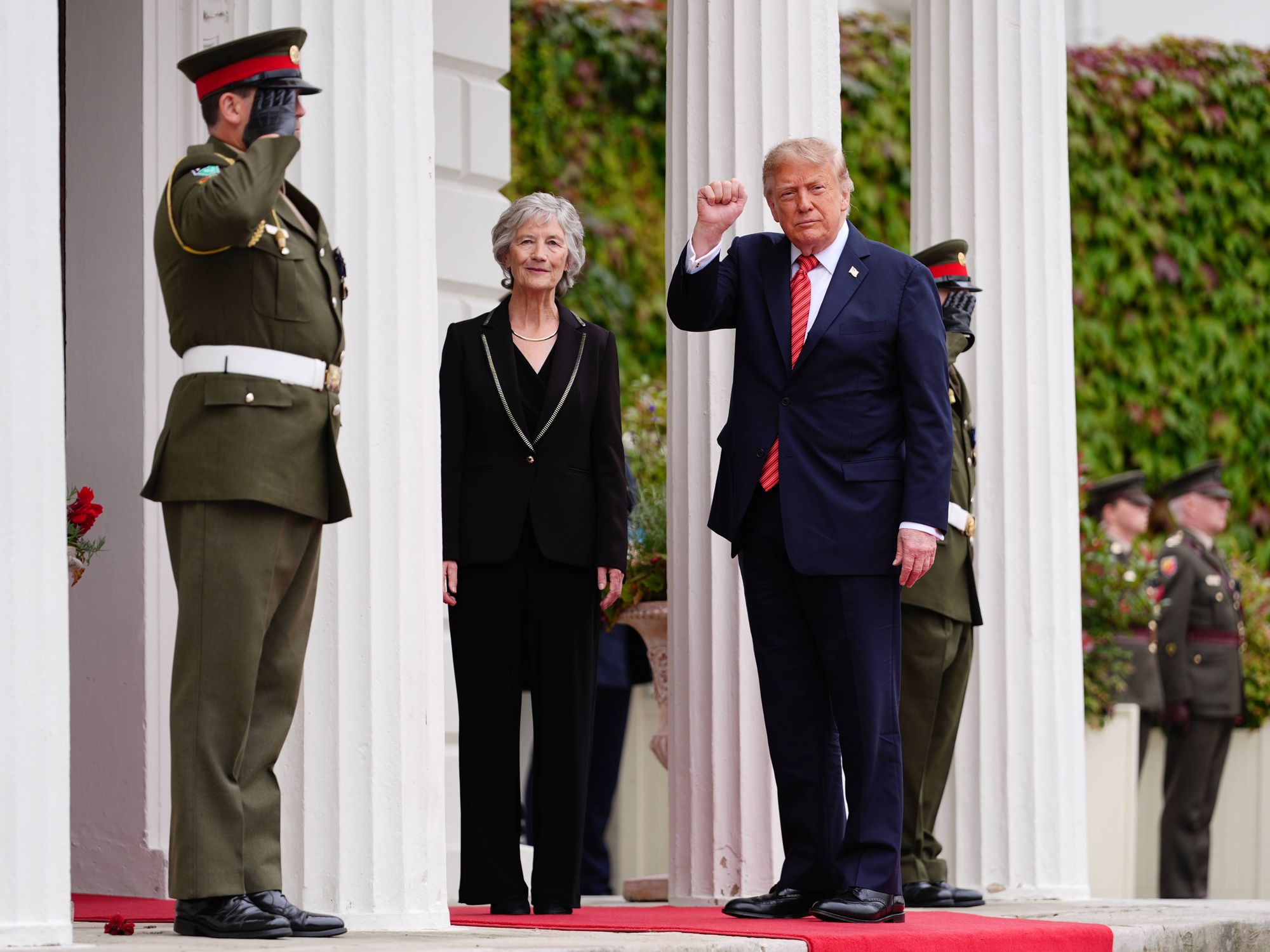
Once again, U.S. President Donald Trump has meddled in a highly sensitive conflict in Europe. While on a visit to Ireland over the weekend, he casually remarked that he thought a reunification of the island would be "cool" — a nightmare scenario for the British unionists in Northern Ireland, who are actually MAGA fans.
Trump's unexpected jab into the political hornet's nest of a blood-soaked and decades-old issue triggered headaches both locally and across Europe. It is easy to dismiss such provocations as "typical Trump," and nothing more than his penchant for a provocative little joke. However, these and similar "jokes" are carefully chosen.
Domestic Political Context
U.S. support of the Alternative for Germany party in Germany is strategically part of America's ultraconservative National Security Strategy, which aims to "correct Europe's current trajectory."* This time, however, the enthusiasm for Irish issues may primarily stem from domestic U.S. political motivations.
For decades, the more than 30 million Americans of Irish descent have voted for the Democrats. But that has changed in recent years.
Working-class U.S. voters of Irish descent, in particular, have moved to the right, and in doing so, have become welcome targets for Republican candidates in the midterm elections this November. Seen from this perspective, "tempers on the island" can indeed remain "cool."
*Editor’s note: This quote, accurately translated, could not be independently verified.
Once again, U.S. President Donald Trump has meddled in a highly sensitive conflict in Europe. While on a visit to Ireland over the weekend, he casually remarked that he thought a reunification of the island would be "cool" — a nightmare scenario for the British unionists in Northern Ireland, who are actually MAGA fans.
Trump's unexpected jab into the political hornet's nest of a blood-soaked and decades-old issue triggered headaches both locally and across Europe. It is easy to dismiss such provocations as "typical Trump," and nothing more than his penchant for a provocative little joke. However, these and similar "jokes" are carefully chosen.
Domestic Political Context
U.S. support of the Alternative for Germany party in Germany is strategically part of America's ultraconservative National Security Strategy, which aims to "correct Europe's current trajectory."* This time, however, the enthusiasm for Irish issues may primarily stem from domestic U.S. political motivations.
For decades, the more than 30 million Americans of Irish descent have voted for the Democrats. But that has changed in recent years.
Working-class U.S. voters of Irish descent, in particular, have moved to the right, and in doing so, have become welcome targets for Republican candidates in the midterm elections this November. Seen from this perspective, "tempers on the island" can indeed remain "cool."
*Editor’s note: This quote, accurately translated, could not be independently verified.
Previous article
Next article
