
Behind Section 301, Trump Creates New Rules
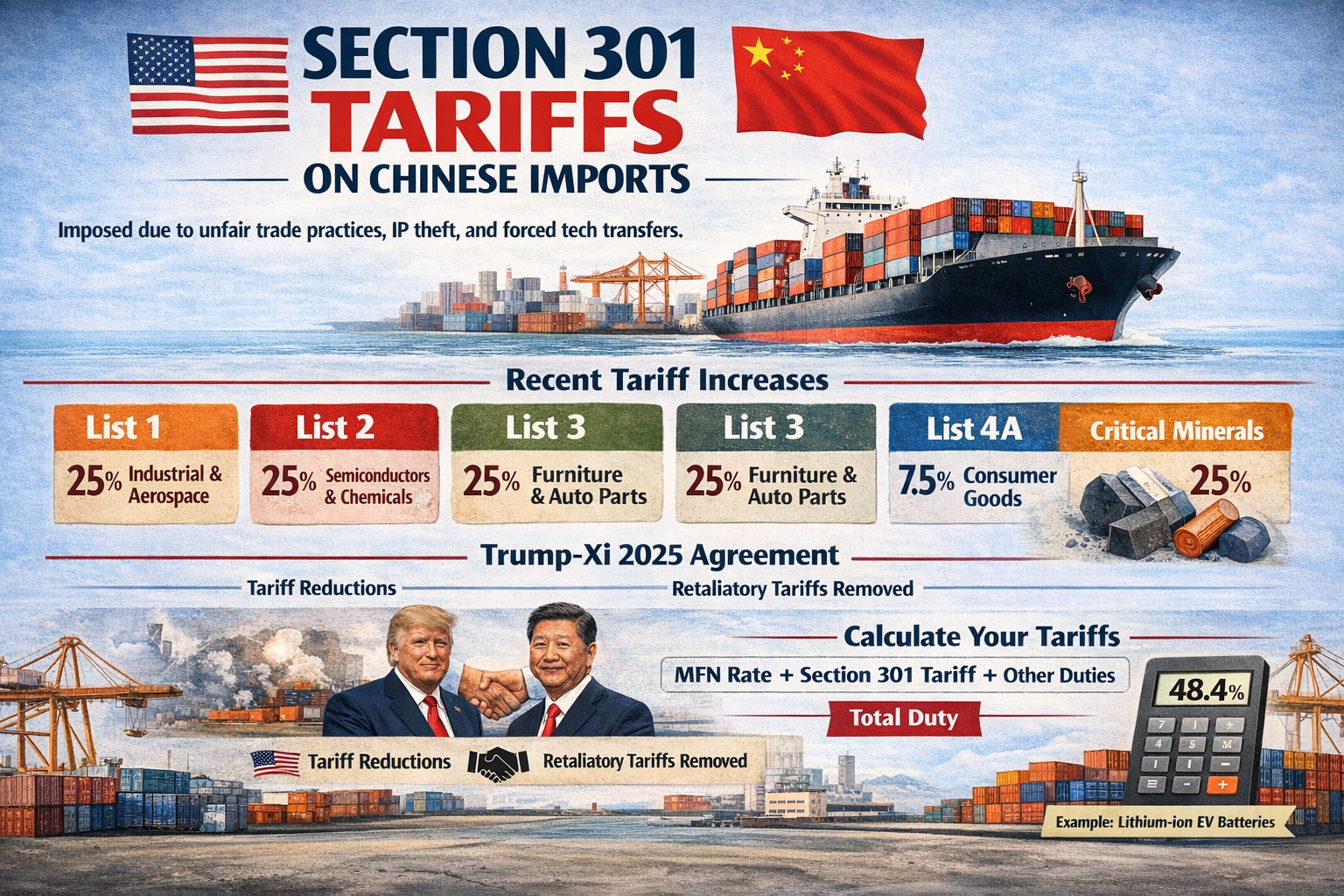
The U.S. government recently announced that, based on investigations under Section 301 of the Trade Act of 1974, it would impose a minimum tariff of 10% on imports from important trade partners, including Taiwan, because of unfair trade practices such as forced labor. While this is also a use of tariffs, it differs from the previous “reciprocal tariffs” that centered on the trade deficit. The new tariffs reflect America’s attempt to reshape the global trade order through Section 301.
In response, the Executive Yuan’s Taiwan-U.S. Economic and Trade Task Force stated that this announcement was part of the Section 301 investigation process and that the final tariff amount has yet to be finalized. It also publicly asserted that the Taiwan-U.S. relationship remains close. Furthermore, to safeguard the best treatment and comparative advantages secured through the Agreement on Reciprocal Trade, Taiwan will do its best to consolidate its national and industrial interests.
Putting aside Taiwan’s official response, it is worth noting that Section 301’s appearance might be related to the U.S. legal challenges or court restrictions Donald Trump received on the previous set of tariff measures. This forced the Trump administration to search anew for a more legally grounded trade tool. From this perspective, the Section 301 tariffs aren’t simply a replacement of previous tariffs but are rather a continuation of U.S. trade strategy. While the tariffs are surface level, the real point behind them is still supply chain security, industrial competitiveness and the reshaping of global trade rules.
America’s trade policy has shifted significantly in recent years. U.S. Trade Representative Jamieson Greer pointed out that some trade partners have not effectively addressed the problem of the flow of products made with “forced labor” into the market, which has forced U.S. workers to compete in an unfair environment. Greer’s tariffs are an extension of this mindset — that is, one that wants to use trade as a tool to reshape supply chains and the rules of international competition. For Taiwan, some export industries are bound to face the pressure of rising costs. However, it’s worth noting not the tariffs themselves but rather the change in the rules of global competition. Taiwan was included on the tariff list not because of bilateral trade imbalances, but because the U.S. is reexamining global supply chains.
Section 301 covers not just competitors but long-time friendly trade partners. This illustrates that the U.S. has shifted from prioritizing allies to prioritizing its own interests. Friendly political relationships don’t necessarily turn into special economic treatment. This is a wake-up call for Taiwan that, in the face of international competition, it eventually needs to return to its own industrial strength and market competitiveness. From a long-term perspective, Section 301 tariffs reflect a restructuring of the global trade order. As countries increasingly focus on national security and supply chain autonomy, the previous model of globalization prioritizing efficiency first is being adjusted. In the future, the reorganization of global supply chains and rearranging of markets will probably continue to deepen.
Taiwan must not only worry about the impact of 10% tariffs but also consider how to maintain competitiveness in a new global environment. Of course, Section 301 tariffs are not good news; however, if we focus only on the tariff rate, we will probably overlook the bigger change that should receive attention. Tariffs are only surface level. The core issue behind them is America’s trade policy adjustments and the restructuring of the global trade order. The challenge for Taiwan is not merely a rise in the cost of exports; rather, more importantly, it is how to maintain an industrial advantage in this new competition.
In response, the Executive Yuan’s Taiwan-U.S. Economic and Trade Task Force stated that this announcement was part of the Section 301 investigation process and that the final tariff amount has yet to be finalized. It also publicly asserted that the Taiwan-U.S. relationship remains close. Furthermore, to safeguard the best treatment and comparative advantages secured through the Agreement on Reciprocal Trade, Taiwan will do its best to consolidate its national and industrial interests.
Putting aside Taiwan’s official response, it is worth noting that Section 301’s appearance might be related to the U.S. legal challenges or court restrictions Donald Trump received on the previous set of tariff measures. This forced the Trump administration to search anew for a more legally grounded trade tool. From this perspective, the Section 301 tariffs aren’t simply a replacement of previous tariffs but are rather a continuation of U.S. trade strategy. While the tariffs are surface level, the real point behind them is still supply chain security, industrial competitiveness and the reshaping of global trade rules.
America’s trade policy has shifted significantly in recent years. U.S. Trade Representative Jamieson Greer pointed out that some trade partners have not effectively addressed the problem of the flow of products made with “forced labor” into the market, which has forced U.S. workers to compete in an unfair environment. Greer’s tariffs are an extension of this mindset — that is, one that wants to use trade as a tool to reshape supply chains and the rules of international competition. For Taiwan, some export industries are bound to face the pressure of rising costs. However, it’s worth noting not the tariffs themselves but rather the change in the rules of global competition. Taiwan was included on the tariff list not because of bilateral trade imbalances, but because the U.S. is reexamining global supply chains.
Section 301 covers not just competitors but long-time friendly trade partners. This illustrates that the U.S. has shifted from prioritizing allies to prioritizing its own interests. Friendly political relationships don’t necessarily turn into special economic treatment. This is a wake-up call for Taiwan that, in the face of international competition, it eventually needs to return to its own industrial strength and market competitiveness. From a long-term perspective, Section 301 tariffs reflect a restructuring of the global trade order. As countries increasingly focus on national security and supply chain autonomy, the previous model of globalization prioritizing efficiency first is being adjusted. In the future, the reorganization of global supply chains and rearranging of markets will probably continue to deepen.
Taiwan must not only worry about the impact of 10% tariffs but also consider how to maintain competitiveness in a new global environment. Of course, Section 301 tariffs are not good news; however, if we focus only on the tariff rate, we will probably overlook the bigger change that should receive attention. Tariffs are only surface level. The core issue behind them is America’s trade policy adjustments and the restructuring of the global trade order. The challenge for Taiwan is not merely a rise in the cost of exports; rather, more importantly, it is how to maintain an industrial advantage in this new competition.
Previous article
Next article