Is Lula the Last Line of Defense against Trump in the Region?
On Sunday (Oct. 4), Brazil held its presidential and legislative elections, amid a geopolitical context marked by heavy U.S. interference under the so-called Shield of the Americas — the epitome of which was the arrest of Nicolás Maduro in Caracas, Venezuela, through an unprecedented U.S. military operation. In Bolivia, there was another operation — not military, but an intelligence operation — involving the revocation of visas for Bolivian prosecutors, judges and lawyers, causing an unprecedented upheaval in the Bolivian justice system.
The use of this U.S. tool for encouraging its allies in the region has the firm backing of the current Latin American and European presidents, and is led by U.S. Secretary of State Marco Rubio.
This politico-military and hemispheric security alliance was formed, with great fanfare, on March 7, 2026, during a summit held at the Trump National Doral resort in Miami, Florida.
The signing of this alliance brings together more than a dozen governments, including Argentina (Javier Milei), Bolivia (Rodrigo Paz), Chile (José Antonio Kast), Ecuador (Daniel Noboa), El Salvador (Nayib Bukele), as well as Paraguay, Panama, Costa Rica, Colombia and the Dominican Republic, among others.
Except for Brazil.
Giving in is never a good strategy, especially when it involves surrendering sovereignty to a foreign power. The Masismo* regime did just that with Venezuela, Iran, Cuba, Russia and China. We currently find ourselves in a new, highly volatile geopolitical context, in which domestic and transnational organized crime — including dangerous drug cartels such as the Primeiro Comando da Capital and Comando Vermelho, and Mexican, Colombian and even Turkish and Albanian cartels operating in the region — has left multiple countries facing serious internal security problems.
The lack of cutting-edge technology, lack of training for all the region’s joint forces to act as a unified front, the use of state-of-the-art weaponry in contrast to the inadequate equipment of law enforcement agencies, and, furthermore, a marked lack of financial resources to fund operations and raids — all of these factors make the Shield of the Americas an attractive proposition.
And here lies the danger. The Trump administration is operating in a geopolitical context in which the issue of U.S. interference is no longer theoretical, but rather a well-documented reality. The Trump administration doesn’t even bother to maintain decorum or propriety. For Trumpism, the time has come to revive the Monroe Doctrine in its pure imperial form, as conceived at the start of the 20th century** — a doctrine that led initially to U.S. control over much of the Caribbean and Central America, and that later consolidated U.S. dominance over the entire continent after World War II, in the Cold War context, to the detriment of any democratic considerations.
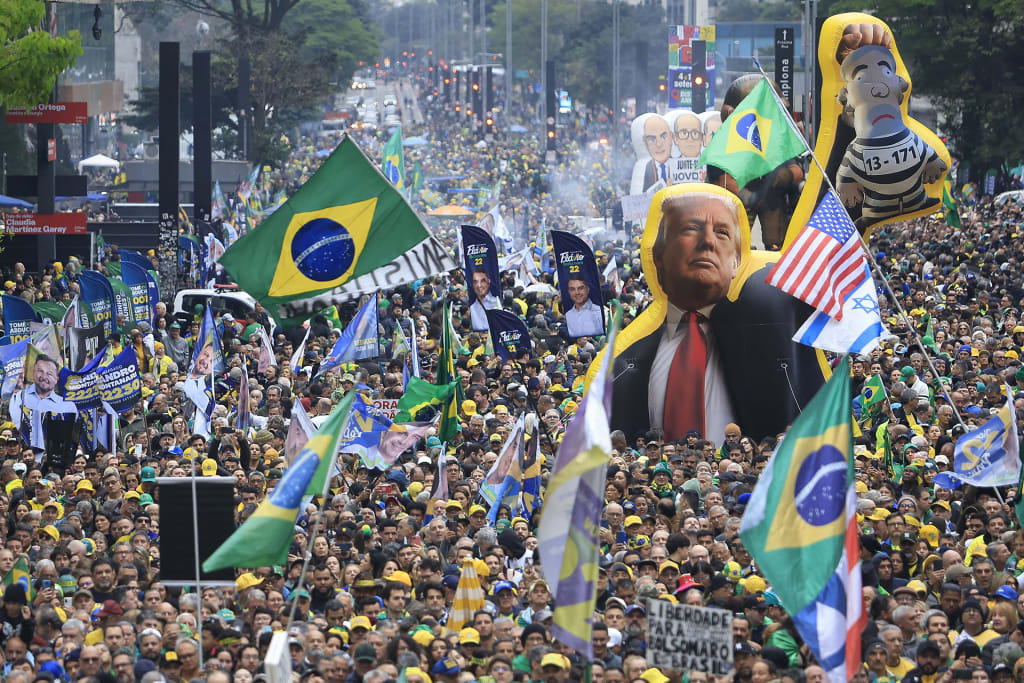
So why are Brazil’s presidential elections so important for the region? First, because Flávio Bolsonaro began his campaign with Argentine President Javier Milei in attendance, and shortly thereafter, Israeli Prime Minister Benjamin Netanyahu released a video message of political support.
Bolsonaro has Trump’s support, as does his son Eduardo, who since 2018 has enjoyed strong connections within the MAGA movement. He has obtained permanent residency in the United States, from where he directly influences various decisions made by the Trump administration against Brazil, such as the imposition of tariffs.
The actions of the Bolsonaro family — a sort of copy of Trump’s family, deeply embedded in the U.S. establishment and engaged in shady business dealings that flout the law — have prompted Brasília to treat Washington with extreme caution, as evidenced by the denial of visas to Riley Barnes and Samuel Samson, two U.S. diplomats who had planned to meet with several Brazilian officials in July 2026. According to Brazil, the purpose of this visit was to cast doubt on the electoral system.
In the weeks leading up to the election, suspicions of U.S. interference in the presidential campaign grew. On Sept. 24, President Luiz Inácio Lula da Silva’s Workers’ Party stated that Meta had blocked Lula’s Facebook account and prevented the party’s campaign accounts from sharing political content. According to Meta, this measure was taken because the accounts in question had violated the platforms’ policies. Now, both will head into a runoff election: Lula, who finished second in the first round, and an emboldened Bolsonaro, the first-round winner.
There are many other examples of this, for better or for worse. The most telling is that of María Corina Machado. She spared no praise for Trump, even going so far as, absurdly, to give him her Nobel Peace Prize medal. She thought the sacrifice of handing it over to him — with her name on it — would appease him and win his support.
It didn’t help her at all.
Giving in is, without a doubt, a bad decision. The playbook says that Trump recognizes and respects only winners and dictators who stand up to him and look him in the eye. Nobody else exists. And this puts us in a very weak position.
*Editor’s note: Masismo refers to the rule of the Movement toward Socialism (MAS) party in Bolivia.
**Editor’s note: The Monroe Doctrine was articulated by President James Monroe in 1823, warning European powers against interfering in the affairs of the Western Hemisphere.
The use of this U.S. tool for encouraging its allies in the region has the firm backing of the current Latin American and European presidents, and is led by U.S. Secretary of State Marco Rubio.
This politico-military and hemispheric security alliance was formed, with great fanfare, on March 7, 2026, during a summit held at the Trump National Doral resort in Miami, Florida.
The signing of this alliance brings together more than a dozen governments, including Argentina (Javier Milei), Bolivia (Rodrigo Paz), Chile (José Antonio Kast), Ecuador (Daniel Noboa), El Salvador (Nayib Bukele), as well as Paraguay, Panama, Costa Rica, Colombia and the Dominican Republic, among others.
Except for Brazil.
Giving in is never a good strategy, especially when it involves surrendering sovereignty to a foreign power. The Masismo* regime did just that with Venezuela, Iran, Cuba, Russia and China. We currently find ourselves in a new, highly volatile geopolitical context, in which domestic and transnational organized crime — including dangerous drug cartels such as the Primeiro Comando da Capital and Comando Vermelho, and Mexican, Colombian and even Turkish and Albanian cartels operating in the region — has left multiple countries facing serious internal security problems.
The lack of cutting-edge technology, lack of training for all the region’s joint forces to act as a unified front, the use of state-of-the-art weaponry in contrast to the inadequate equipment of law enforcement agencies, and, furthermore, a marked lack of financial resources to fund operations and raids — all of these factors make the Shield of the Americas an attractive proposition.
And here lies the danger. The Trump administration is operating in a geopolitical context in which the issue of U.S. interference is no longer theoretical, but rather a well-documented reality. The Trump administration doesn’t even bother to maintain decorum or propriety. For Trumpism, the time has come to revive the Monroe Doctrine in its pure imperial form, as conceived at the start of the 20th century** — a doctrine that led initially to U.S. control over much of the Caribbean and Central America, and that later consolidated U.S. dominance over the entire continent after World War II, in the Cold War context, to the detriment of any democratic considerations.
So why are Brazil’s presidential elections so important for the region? First, because Flávio Bolsonaro began his campaign with Argentine President Javier Milei in attendance, and shortly thereafter, Israeli Prime Minister Benjamin Netanyahu released a video message of political support.
Bolsonaro has Trump’s support, as does his son Eduardo, who since 2018 has enjoyed strong connections within the MAGA movement. He has obtained permanent residency in the United States, from where he directly influences various decisions made by the Trump administration against Brazil, such as the imposition of tariffs.
The actions of the Bolsonaro family — a sort of copy of Trump’s family, deeply embedded in the U.S. establishment and engaged in shady business dealings that flout the law — have prompted Brasília to treat Washington with extreme caution, as evidenced by the denial of visas to Riley Barnes and Samuel Samson, two U.S. diplomats who had planned to meet with several Brazilian officials in July 2026. According to Brazil, the purpose of this visit was to cast doubt on the electoral system.
In the weeks leading up to the election, suspicions of U.S. interference in the presidential campaign grew. On Sept. 24, President Luiz Inácio Lula da Silva’s Workers’ Party stated that Meta had blocked Lula’s Facebook account and prevented the party’s campaign accounts from sharing political content. According to Meta, this measure was taken because the accounts in question had violated the platforms’ policies. Now, both will head into a runoff election: Lula, who finished second in the first round, and an emboldened Bolsonaro, the first-round winner.
There are many other examples of this, for better or for worse. The most telling is that of María Corina Machado. She spared no praise for Trump, even going so far as, absurdly, to give him her Nobel Peace Prize medal. She thought the sacrifice of handing it over to him — with her name on it — would appease him and win his support.
It didn’t help her at all.
Giving in is, without a doubt, a bad decision. The playbook says that Trump recognizes and respects only winners and dictators who stand up to him and look him in the eye. Nobody else exists. And this puts us in a very weak position.
*Editor’s note: Masismo refers to the rule of the Movement toward Socialism (MAS) party in Bolivia.
**Editor’s note: The Monroe Doctrine was articulated by President James Monroe in 1823, warning European powers against interfering in the affairs of the Western Hemisphere.
Previous article

Next article