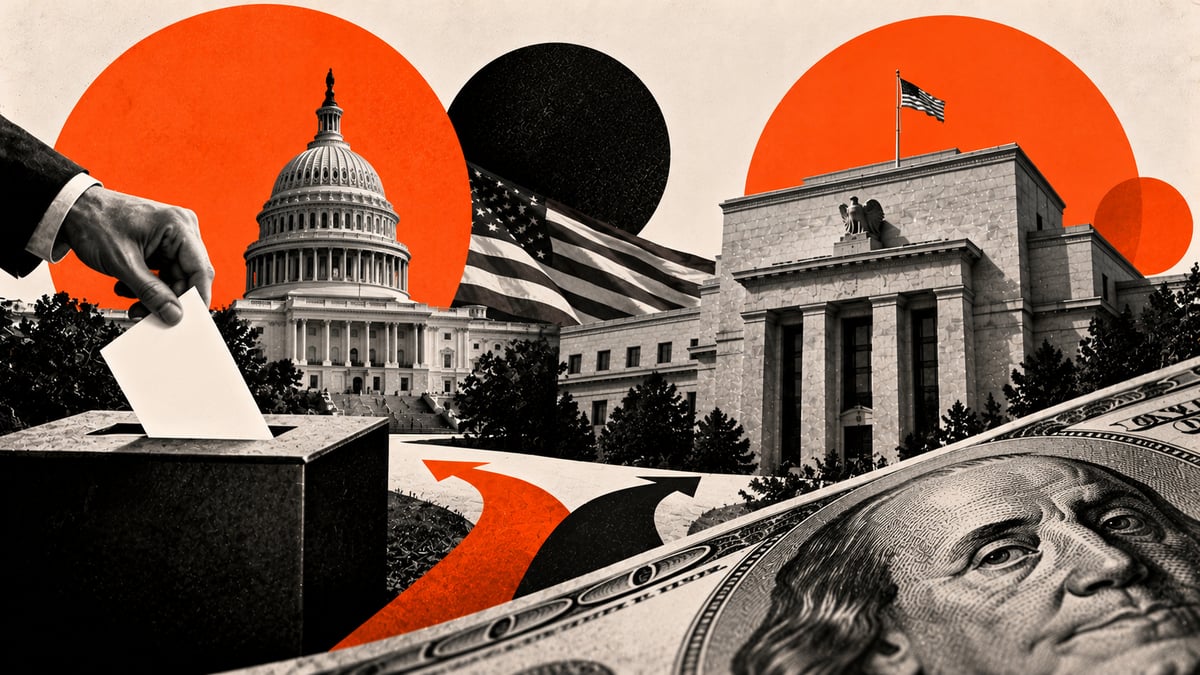
Surveys and projections suggest that the upcoming U.S. elections are leaning firmly in favor of the Democratic Party, giving Democrats a 90% chance of winning the House of Representatives and more than a 60% chance of winning the Senate, too. This trend comes amid contrasting macroeconomic indicators: U.S. GDP growth remains solid and unemployment is low, but the Republican Party’s growing unpopularity coincides with an inflation rate of 3.4%, gas prices up 40% since the 2024 elections and mortgage rates that have reached 7.5%.
Even if the Democrats do gain control of Congress, executive power would continue to shape business, regulations and foreign policy. Executive orders would ensure the economic agenda remains practically unchanged, propping up various sectors such as finance, information technology and communications.
Yet a Congress led by Democrats would be able to exert influence over federal spending and appointments, which could recalibrate budget priorities toward healthcare and reverse cuts to ecological initiatives. The importance of the Senate lies in its role in confirming appointments, especially to the Federal Reserve — the seat previously held by Jerome Powell will become vacant in January 2028.
A divided government, potentially with a Democratic Congress and a Republican executive branch, would support a moderate-duration position in fixed income and would be modestly beneficial for equities, as political decision-making would be limited. As was the case after the 2018 midterms, 10-year Treasury yields could peak during the elections and decline in their aftermath. Hence, the U.S. dollar would be steered more by growth and the Fed than by Congress.
The main risk in these favorable conditions is the debt ceiling. The U.S. Treasury could reach the legal limit of $41.1 trillion in 2027, and a Democratic Congress would have little incentive to approve a direct increase to the cap. Be prepared for lengthy negotiations, which could distort the bond market, put pressure on risky assets, damage confidence and cause a cyclical rise in term premia. This political uncertainty could periodically exert pressure on the U.S. dollar.
The dollar’s current strength (with EUR/USD now at 1.2 and the U.S. Dollar Index at 101.8) will respond to cyclical factors. High oil prices caused by the crisis in the Strait of Hormuz are favoring the dollar because the U.S. is a net exporter of energy (though prices are expected to moderate in the medium term).
Likewise, concerns about a stock market bubble brought about by artificial intelligence mean risk-averse investors are choosing the dollar as a safe haven. Only a major collapse in the AI sector, which would hamper growth and prompt interest-rate cuts, could significantly damage the U.S. dollar.
Furthermore, the U.S. growth advantage is beginning to narrow as the eurozone recovers, and expectations that the Fed will raise interest rates appear to have plateaued. Structurally, this situation points to a long-term weakening of the dollar, caused by current account deficits and reliance on inflows into AI stocks, as demand for U.S. bonds wanes.
Europe is the key unknown factor for the future of EUR/USD; political and fiscal uncertainty in France has driven increased government bond yield spreads. Nevertheless, we still forecast 1.15 in three months and 1.20 in 12 months. These forecasts may be more aggressive than the current consensus, but they are within the range of expectations.
In summary, a potential Democratic wave and the resulting government schism are producing a nuanced outlook for the dollar. While political paralysis would divert attention toward the Fed and economic growth, prolonged negotiations over the debt ceiling could generate some volatility and short-term pressure.
Yet, due to cyclical factors determining the dollar’s current value, structural dynamics and economic convergence with the eurozone reinforce the outlook for a gradual long-term depreciation of the U.S. dollar.
Las encuestas y proyecciones sugieren que las próximas elecciones estadounidenses se inclinan firmemente a favor de los demócratas, con un 90% de probabilidades de que tomen la Cámara de Representantes y más del 60% de conseguir el Senado. Esta tendencia ocurre en un contexto de indicadores macroeconómicos contrastantes: el crecimiento del producto interno bruto se mantiene sólido y el desempleo es bajo, pero la impopularidad republicana aumenta junto con una inflación del 3.4%, gasolina un 40% más cara desde las elecciones de 2024 y tasas hipotecarias que alcanzaron el 7.5%.
Incluso si los demócratas obtienen el control del Congreso, el poder ejecutivo seguiría moldeando las políticas comercial, regulatoria y exterior mediante órdenes ejecutivas, dejando la agenda económica general prácticamente sin cambios y respaldando a sectores como el financiero, el de tecnología de la información y el de las comunicaciones.
Sin embargo, un Congreso liderado por los demócratas ganaría influencia sobre el gasto federal y los nombramientos, lo que podría reorientar las prioridades presupuestarias hacia la sanidad y revertir los recortes a las iniciativas ecológicas. La importancia del Senado radica en las confirmaciones, especialmente en la Reserva Federal (Fed), donde el escaño del expresidente Powell quedará vacante en enero de 2028.
Un gobierno dividido, con un posible congreso demócrata y un poder ejecutivo republicano, respalda una moderada duración en renta fija y es levemente constructivo para las acciones, al limitar los resultados políticos. Como ocurrió en las elecciones de medio mandato de 2018, los rendimientos a diez años podrían alcanzar su máximo durante la votación y descender después. Así, el dólar se guiará más por el crecimiento y la Fed que por el Congreso.
El principal riesgo para este entorno favorable es el techo de la deuda. El Tesoro de Estados Unidos podría alcanzar el límite legal de US$ 41,1 billones en 2027, y un Congreso demócrata tendría poco incentivo para aprobar un aumento directo. Se prevén negociaciones prolongadas que podrían generar distorsiones en los bonos del Tesoro, presión sobre los activos de riesgo, menor confianza y un aumento temporal de la prima por plazo. Esta incertidumbre política podría presionar periódicamente al dólar.
La actual fortaleza del dólar, con el EUR/USD en 1,12 y el Índice del Dólar (DXY) en 101,8, responde a factores temporales. Los altos precios del petróleo por la crisis de Ormuz favorecen al dólar, dado que Estados Unidos es exportador neto de energía, aunque a medio plazo se esperan precios más moderados.
Asimismo, las dudas sobre el repunte bursátil impulsado por la inteligencia artificial (IA) generan aversión al riesgo que beneficia al dólar como refugio seguro. Solo un colapso profundo de la IA que afecte el crecimiento y provoque recortes de tasas debilitaría notablemente la divisa.
Además, la ventaja de crecimiento de Estados Unidos se desvanece ante la recuperación de la eurozona, y las expectativas de subidas de tasas de la Fed parecen haber tocado techo. Estructuralmente, el escenario apoya un debilitamiento del dólar a largo plazo por los déficits por cuenta corriente y la dependencia de flujos hacia acciones de IA ante la menor demanda de bonos del Tesoro.
Europa es la principal incógnita para el EUR/USD por la incertidumbre política y fiscal en Francia, que ha elevado los diferenciales de los bonos gubernamentales. Aun así, mantenemos las previsiones de 1.15 a tres meses y 1.20 a doce meses. Aunque son más agresivas que el consenso, se mantienen dentro del rango de expectativas.
En resumen, una potencial ola demócrata y el consecuente gobierno dividido presentan un panorama matizado para el dólar. Aunque la parálisis política desplazaría el enfoque hacia la Fed y el crecimiento económico, las prolongadas negociaciones sobre el techo de la deuda podrían generar episodios de volatilidad y presión a la baja a corto plazo.
Sin embargo, a medida que se disipen los factores cíclicos temporales que hoy sostienen a la divisa, las dinámicas estructurales y la convergencia económica con la eurozona refuerzan la perspectiva de un debilitamiento gradual del dólar a largo plazo.
This post appeared on the front page as a direct link to the original article with the above link
.